
Tech industry is among the most prominent economic sectors of the United States, entailing more than 10% of the national economy. Not only that, but the US is a world leader in digital tech: 35% of the $5 trillion global technology market is in the United States, making it the largest tech market in the world. With over 585,000 tech companies, the US tech industry employs 8,679,198 million workers.
To get a fair idea about the magnitude of the tech industry in the nation, one might focus on the fact that 27 of the 50 states have a tech sector that contributes more than $10 billion to the country’s overall economy, according to data from 2021.
Another relevant piece of information about the US tech sector is that it generates around 12.1 million jobs. Not only that, but the IT industry is also a multiplier of jobs; this means that for every job as a software development service, an estimated 4.8 additional jobs are created directly or indirectly, especially in the service sector and in the manufacturing industry. The impact of job multiplier metrics is explained as the indirect employment created for each job inside the industry.
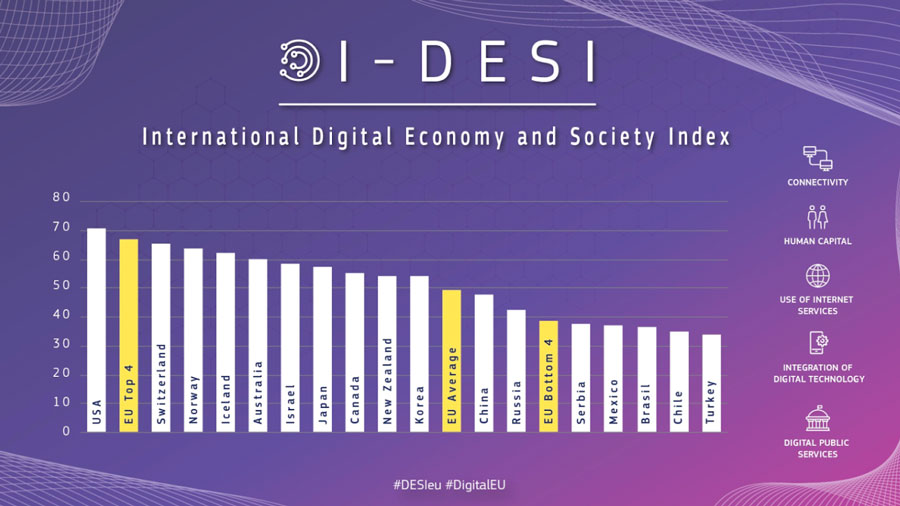
The United States’s leadership position in innovation and technology development is recognised worldwide. In the International Digital Economy and Society Index (I-DESI), an index that evaluates a nation’s efforts in terms of connectivity, digital skills, use of the internet, integration of digital technology and digital public services, the US ranks in first position:
The most emblematic tech hub in the world, Silicon Valley, is located in California, and it’s the home to the headquarters of many of the world’s largest tech companies, as well as thousands of startups. Although Silicon Valley boasts a notorious presence in pop culture, the tech industry has significant presence all across the country. Cities such as Boston, Seattle, New York, Dallas, Atlanta, Los Angeles and Denver house a large tech workforce and stand at the forefront of innovation. With hubs like these, and a favourable environment regarding regulation and taxation, the U.S. has grown into the cradle of the tech industry worldwide.
Returning to Silicon Valley’s role in the US tech scene, the San Francisco Bay Area has established itself almost as a synonym for innovation and the entrepreneurial spirit that characterises modern American society.
We could use Silicon Valley as a miniature representation of the overall direction of the digital tech industry in the nation, considering both the positive aspects of its growth and development and the negative ones.
According to the 2020 Silicon Valley Index, a report by Joint Venture Silicon Valley, a group that analyses regional issues affecting the economy and quality of life of the area, the valley can be characterised as an upward spiral that, despite recessions and the economic effects of the COVID-19 pandemic, it still grows. The area’s tech industry is booming, yet Silicon Valley workers and citizens are struggling and face a large wealth gap. The average worker in the area makes $170,000 annually (significantly more than the national average of $70,000), and yet, 33% of Silicon Valley households are not self-sufficient, meaning they require assistance from the government or community. Despite the industry’s economic success, people in the industry are not experiencing the same financial outcome. After looking at this data, it’s not surprising to see that Silicon Valley is experiencing its first decline in population in over twelve years.
Despite the looming economic uncertainty, the digital tech industry nationwide can also be described as a booming sector.
Nevertheless, the industry across the country is facing significant issues, much like the Bay Area does: wealth gap, diversity, downsizing and a struggle to remain a sector where workers can develop a sustainable and profitable professional career. One of the industry’s most concerning challenges during 2022 was hiring freezes and companies downsizing.
Despite many challenges, the digital tech industry remains strong. According to the Bureau of Economic Analysis, the digital tech economy continues to grow rapidly. Their 2022 report, data indicates that the digital economy produced $3.70 trillion in current-dollar gross output during 2021, up from $3.30 trillion in 2020.
The annual growth rate for the digital economy’s actual gross output averaged 5.6% between 2016 and 2021, much faster than the overall economy’s growth of 1.9 % over the same period.
Digital technology, as it continues to become more relevant for every area of society’s life, is dependent on companies and people’s digitalisation; this digital transformation enables technology to become mainstream, helps companies adapt to consumer’s needs and is essential for the tech industry to grow and continue its development. According to the EIB Investment Survey, digitalisation is slightly faster for US companies than in the European Union. This is vital to maintaining a healthy and growing tech industry, as digital companies generally have improved productivity, better management, higher levels of innovation, faster growth, and offer higher paying jobs compared to non-digital firms.
Brookings, in the “Digitalisation and the American Workforce” report, explains how digitalisation is happening across industries and sectors with some jobs requiring a substantial digital knowledge due to changes in the industry or the sector’s need to adapt to automation and market trends. The COVID-19 pandemic has served as a rapid
digital transformation accelerator, and its effects on the general digitalisation of the country seem to be permanent. Consumers’ fast-paced adoption of technological solutions during the early waves of the pandemic resulted in companies responding to the demand and adapting to a new world, in some regions leaping forward in tech developing several years in only a few months.
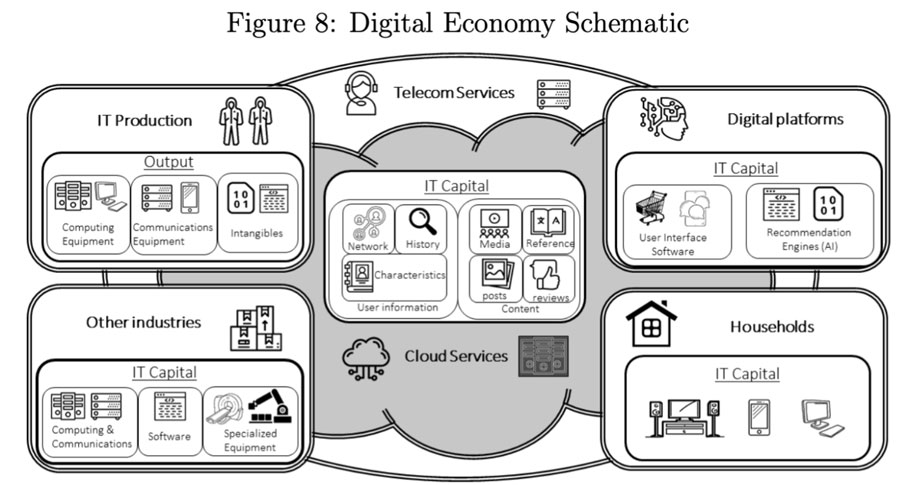
Digitalisation was a priority for the United States long before the Covid-19 pandemic hit the country. Digitalisation can lead to increased efficiency and productivity, improved access to information, and better government services for citizens. The digital economy is also a significant driver of economic growth and a substantial and increasing share of the U.S. economy. According to the Federal Reserve “The Digital Economy and Productivity” paper, from 2005 to 2020, the digital economy’s percentage of total economic value added grew from 7.8% to 10.2%. During this time, the real value-added for the digital economy increased at an average annual rate of 6.1%, which was four times the growth rate of the entire economy. It’s important to remember that the digital economy is built across different sectors, each with a mix of tangible and intangible IT capital:
From a political perspective, digitalisation can enhance democracy through increased transparency, citizen engagement, and better access to information. It’s also crucial to understand a nation’s role in macro geopolitical relationships, as digitalisation and its impact on the digital economy and a data-driven economy can be monumental in assessing a country’s economic leadership.
Data is becoming increasingly essential for a modern economy to thrive, and countries that are able to harness and exploit it are using Data Economy to their advantage. Data has sometimes been referred to as “the new oil”. However, it’s substantially different as it feeds multiple sections of the economy simultaneously, involves personal information and supports an economic structure unlike any other asset before. As the International Monetary Fund explains:
“Data is unlike other inputs, including oil, in important ways. The same data can be used by many people simultaneously without being depleted, which means its accumulation stands a better chance of boosting productivity and long-run growth. The value of data gets unlocked when it can be accessed by many firms or researchers, who then compete to innovate and generate knowledge”
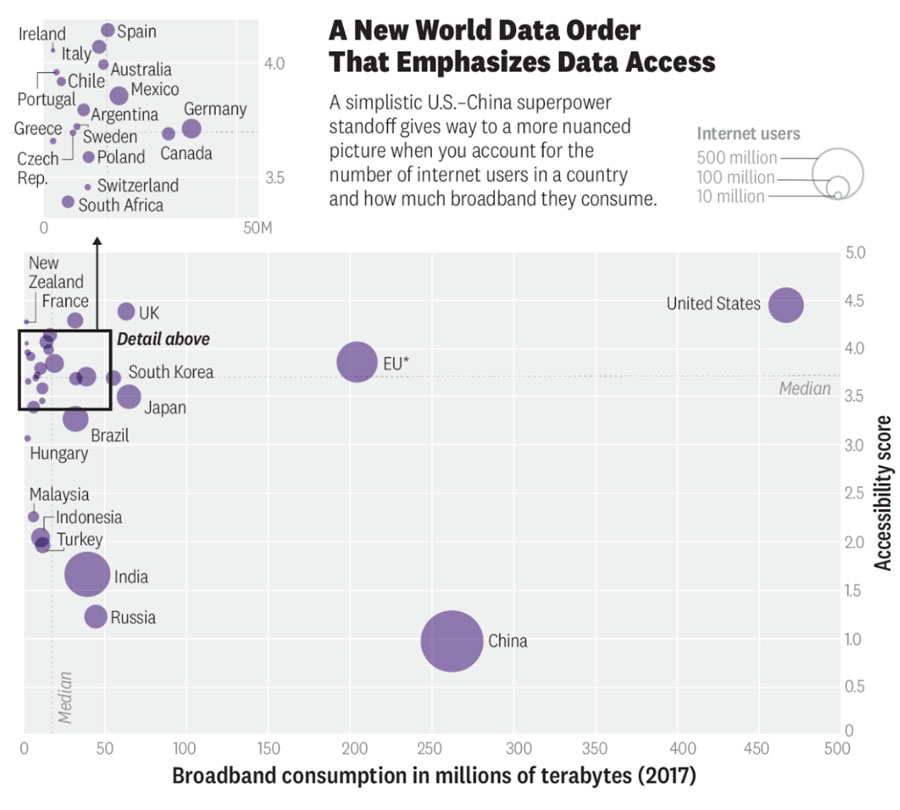
An international effort is underway to develop national accounting standards that will support consistent measurement of the data and digital economy over time and facilitate cross-country comparisons. Harvard’s Business Review proposes four-point criteria to assess a country’s rank as a “gross data product” producer, a modern version of GDP: volume, usage, accessibility and complexity. According to the article, the United States ranks in the top three countries in this new data-driven world order:
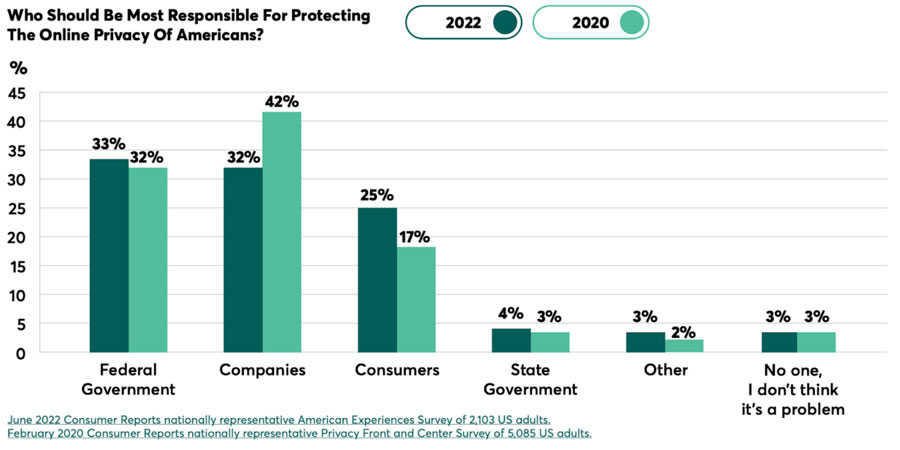
 The data economy’s significant value for the overall economy of the United States sparks a valuable debate on how companies and the government use personal data for profit. The landscape of data protection and privacy laws in the US is incredibly fragmented and compared to the European Union’s GDPR, it’s considerably less safe for individual data. The shift in Americans’ perception of the value of their data will also contribute to shaping the future of the country’s approach to data management. In a report titled “Consumer cyber readiness report”, a survey indicated that consumers had increased their accountability in staying safe online, and they feel more aware of companies and government’s need to take accountability in online data safety:
The US is widely known for its entrepreneurial culture, which has led to it becoming a hub for innovation and having a big impact on the startup culture and impact on the global tech market. According to the StartupBlink Startup Ecosystem Index 2022, the US is ranked as the most friendly country for startups, with San Francisco being the highest-ranked city for startups according to quality, quantity and the overall business environment. Completing the top 5 world-leading startup hubs are: New York, London, Los Ángeles and Boston. Considering most of those cities are located in the United States, the country’s significance and position as an epicentre of tech innovation become apparent.
The US is home to 46% of the world’s unicorn startups (startup companies with a value of over $1 billion), SaaS (Software as Service), Health-Tech and Fintech being the most successful niches of startup development. Also, 28 of the 47 decacorns existing in 2023 (decacorns are startup companies with more than $10 billion valuation) have their headquarters in the US.
The ever-growing startup scene in the US results, in part, from a large number of grants and incentives for new startup development, from federal and state grants to those offered by corporations.
Two of the biggest grant programs offered by the government are The Small Business Innovation Research (SBIR) and the Small Business Technology Transfer (STTR) programs, which the U.S. Small Business Administration created to reinforce scientific and technological innovation to strengthen the national economy.
Another incentive the federal government offers is The R&D tax credit incentive, which allows Small and Medium Enterprises (SMEs) to offset part of their corporate taxes with research and development costs.
Even though, to counteract this information with more critical insight about regulations in the US, Ember, one of our Key Opinion Leaders, mentions:
“the US laws, make innovation easier because people can just sort of Start up a business and 90% of them fail but the ones that don’t fail can get big because we don’t have the regulation that Europe has. I don’t think that’s necessarily a good thing. Like I think that Europe…. I like the fact that Europe has things like GDPR [General Data Protection Regulation]. It’s nice. Yeah, we need more of that over here”.
American startups are not just funded by grant programs or government initiatives; most of them are funded by venture capital. According to data from Statista, 2021 was a record year for VC funding, reaching approximately 333 billion dollars, nearly twice as much as in 2020. This graph shows the value of venture capital investment in the United States from 2006 to 2021:
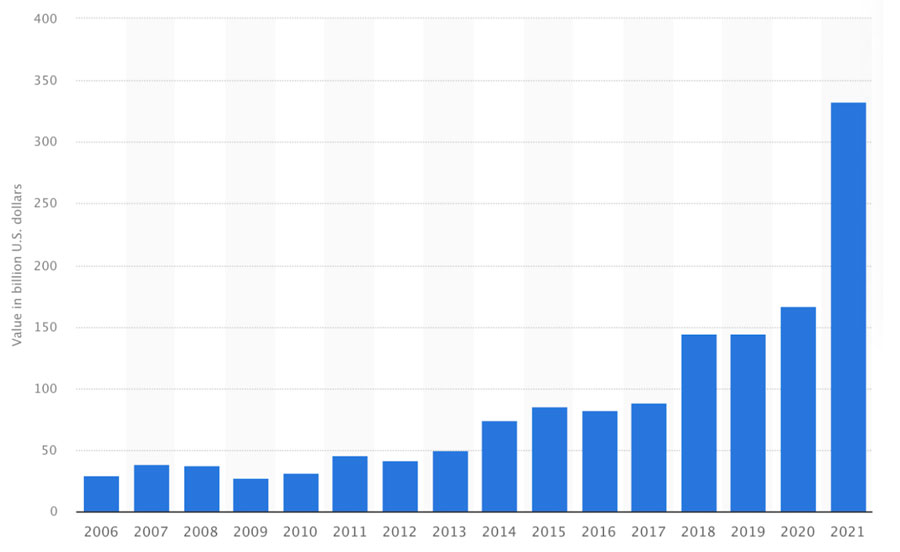
Venture capital investment in 2021 was impressive, but the trend didn’t last until 2022. By mid-2022, VC funding had dropped to 50% of 2021’s figures, according to Crunchbase. For Q4, late-stage and technology growth investment totalled $18.7 billion. That’s a decline of 67% from the same period in 2021. Although it might look like a sharp decline, it could indicate a softer approach to investment compared to a more aggressive one in 2021 and not an overall pessimistic perception of the industry. It’s key to remember that this is a global trend, and the international markets are slowing down investment rates.
According to Crunchbase, 2022’s investment decline still indicates a healthy sector and could be a cooldown from a highly volatile and unpredictable year, still experiencing the drastic effects of the Covid-19 pandemic:
Per Crunchbase data, last year actually had the second-highest total funding in the past 10 years. It’s only in comparison to the rollicking 2021 investment climate that things are looking sharply down.
The US tech job market has experienced a profound transformation in the last years due to the rapid digitalisation and the social and political changes that have occurred since the COVID-19 global pandemic. There is a lot of mediatic pressure on the US tech job market due to the recent layoffs announced by big companies, which have generated general alarmism despite the tech workforce still being healthy. According to the U.S. Bureau of Labor Statistics:
Without a doubt, if an adjective would describe the US tech workforce, that would be dynamic. As the Labor Department shows, in November 2022, there were 0.6 unemployed workers per job available, which signifies a non-static environment where employees have excellent mobility between industries and companies. At a press release, the chief research officer at CompTIA, Tim Herbert, said:
«Despite the layoffs there continues to be more employers hiring tech talent than shedding it”.
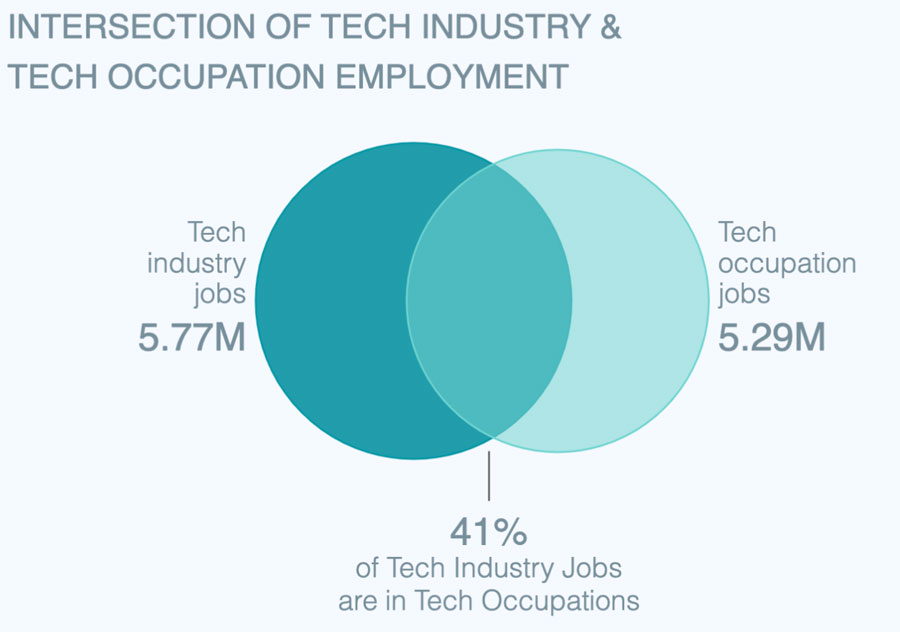
Both sides of the job market landscape, companies cutting down on staff and workers quitting their jobs, are resulting in a reshuffle of the talent pool. Jesus López, co-founder and CMO at CodersLink, writes for Forbes about this unprecedented situation for the tech market. In his opinion, the workforce adjustment will happen across sectors (many of them in need of tech talent), demand will increasingly focus on specialised talent, and the tech atmosphere will go through a cultural reinvention. As the CodersLink cofounder writes, tech talent is not exclusive to tech companies anymore: more industries require tech roles, and a readjustment of the workforce will continue to place tech talent across sectors. In the Comptia State of Tech Workforce report, this graph illustrates how tech industry jobs are at the intersection of industry and role demand:
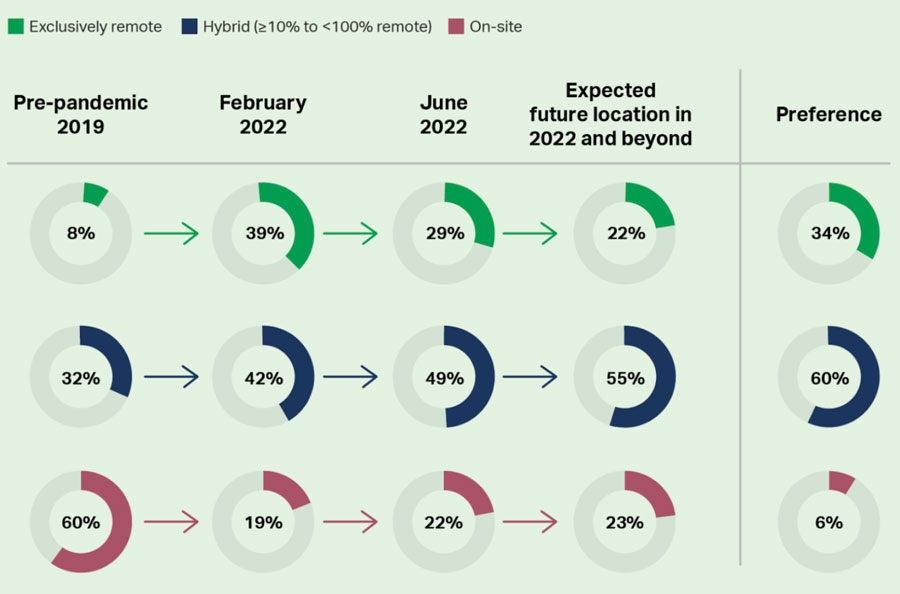
Although the tech industry and its workforce are experiencing a significant shift and adjustment period, a trend that seems to have had a permanent impact on the culture of the tech landscape is remote and hybrid work.
According to the US Census Bureau, the number of people working from home tripled between 2019 and 2021, and the number went from roughly 9 million (in 2019) to close to 28 million in 2021. In a report by McKinsey and Ipsos titled “American Opportunity Survey”, 58% of respondents (equivalent to 92 million people) report being able to work at least part of the week remotely. A large percentage of workers can work remotely full-time (35%), and 23% can work remotely part-time. A bit over 40% of respondents can’t work from home because their role or industry is incompatible with remote work:
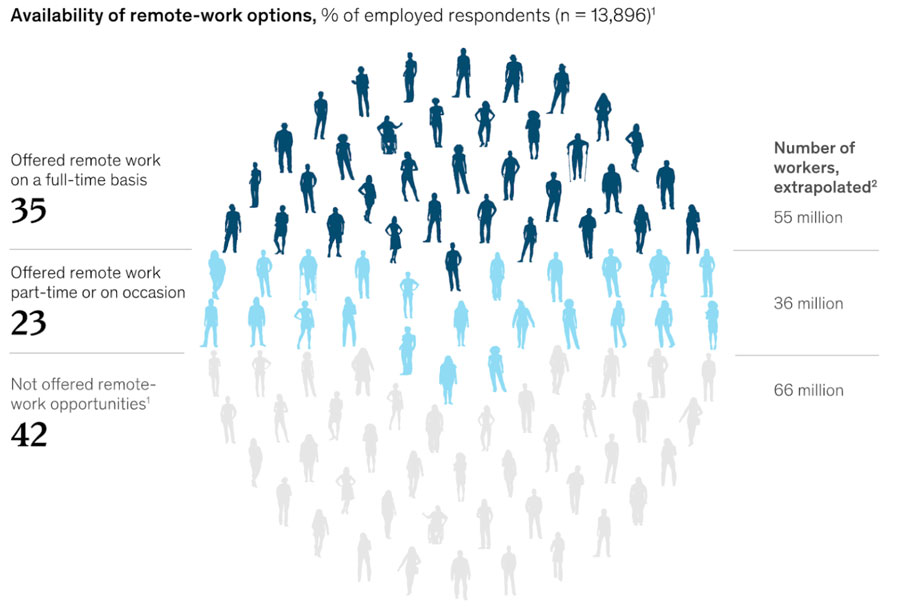 Image source: McKinsey & Company.
According to the McKinsey report, even if some industries can’t adapt to remote and hybrid work, most sectors support some flexibility. In industries that are rapidly adapting to digitalisation, employers are expecting to have remote work options.
According to data from Gallup, hybrid work increased considerably in 2022. This flexible arrangement could slowly displace full-time remote work, as it provides a comfortable situation for many workers, teams and managers. Work experiences and expectations are rapidly changing and adapting to different ways of work. In the Gallup report, a graph illustrates how remote, hybrid and on-site work has changed since the start of the Covid-19 pandemic:
Despite the tension inside the tech job market, new normals and the industry’s hiring trends becoming less aggressive, the tech industry still needs talent.
Tech hiring has slowed down compared to 2021’s hiring peak, and according to some sources, it’s approaching pre-pandemic numbers.
According to the US Bureau of Labor Statistics, the overall US unemployment rate dropped from 3.7% in November 2022 to 3.5% in December. In the technology sector, the unemployment rate dropped from 2% in November to 1.8% in December, according to CompTIA. According to CompTIA’s analysis, 30% of all technology job postings are for positions in emerging technologies, like artificial intelligence, or roles requiring emerging technology skills.
In December 2022, the tech sector saw the most job hiring in the following three occupation categories: IT services and custom software development (+7,200 jobs), other information services, such as search engines (+6,600 jobs), and data processing, hosting, and related services (+5,600 jobs).
In a Hired report called “Navigating an Uncertain Hiring Market: 2022 State of Tech Salaries”, data shows that US companies in 2022 are taking 60 days to fill an open role on average, up from 52 days in 2021. Demand for talent is driving salaries upwards, and the Hired report shows that remote wages in the US are highest, compared to the UK, Canada and the global average:
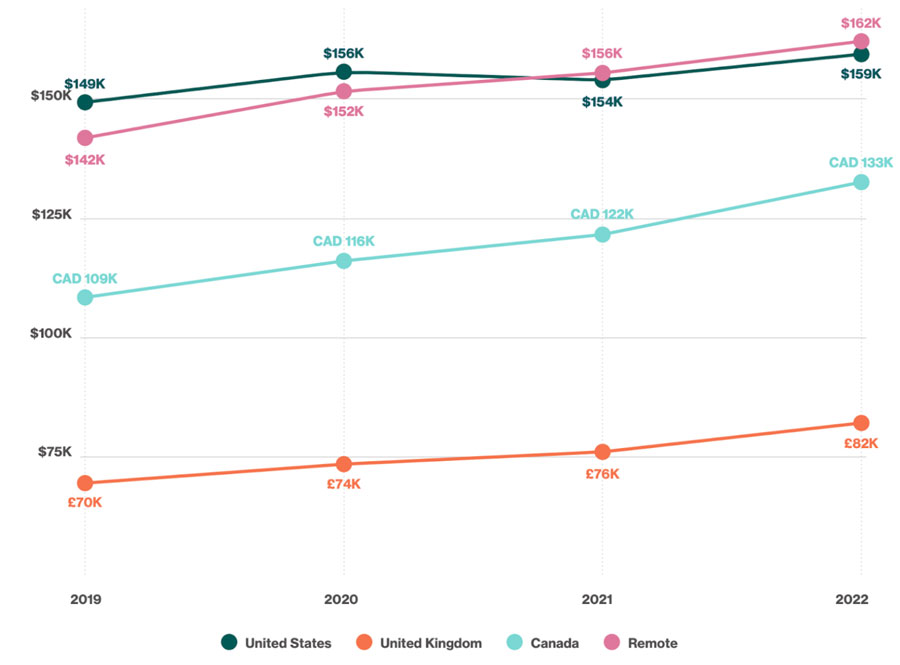
According to Hired, in the US, one of the 2022 highest salaries was for Engineering Management with remote salaries of around $198,000. Software engineers had an average local salary of $160,469, and Product managers averaged approximately $157,602.
Across all tech occupation categories, based on 2021 data, the average wage was estimated at $97,430, higher than double the median wage across all occupations of the U.S. workforce.
Beyond the general trends in the tech labour force, fast digitalisation has also brought up a problem called “the digital skill gap”, which means that the economy requires more digitally skilled workforces to remain productive. The digital skill gap is a problem that, based on a report done by Korn Ferry, could make the US lose out on $162.25 billion by 2030, which could endanger its status as a global tech leader.
According to the 2020’s US Chamber of Commerce report “Hiring in the modern talent marketplace” in 2019, over 7 million jobs in the US remained unfilled due to the lack of skills.
Research led by McKinsey Global Institute identified the foundational skills that will help citizens, not only in the tech industry but in every industry, to thrive in the future of work. They aggregated them into cognitive, interpersonal, self-leadership and digital. Each includes more specific skills, as seen in the following image.
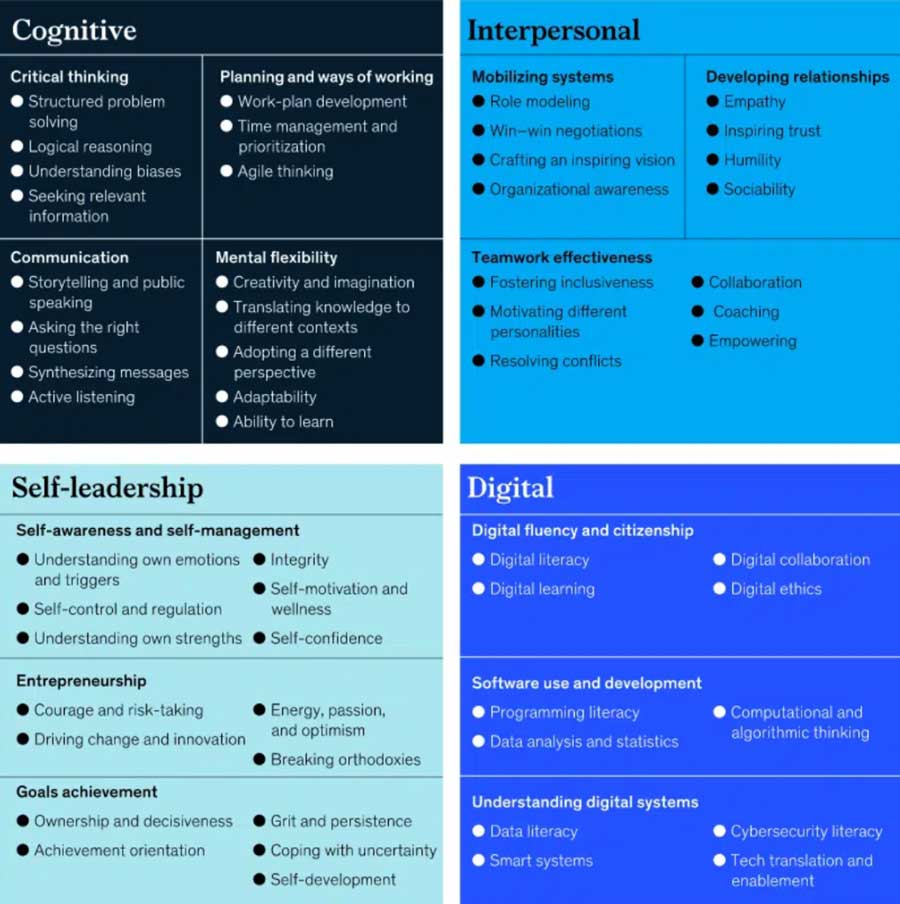 Image Source: McKinsey & Company
These kinds of skills are also called durable skills, which are defined by America Succeeds as “ a combination of how you use what you know –skills like critical thinking, communication, collaboration and creativity –as well as character skills like fortitude, growth mindset and leadership”. The same company analysed over 82 million US job postings, and the result was that 59% of job postings in the IT sector listed more than three durable skills, which shows that they are considered, at any rate, as important as technical skills. This is because they provide a mental framework that empowers workers to continuous learning, which is paramount in the current tech environment.
With the rise of unfilled tech jobs and a young generation of workers entering the labour market, it has become mandatory for the government and companies to rethink what kind of training they are providing, both for those who enter the workforce from the traditional education system and reskilling those currently working in the industry.
The US government has noticed the need to update its curricula to focus more on these core skills to lead the future of the workforce. Also, they have detected the need to improve workers’ digital skills, independently of the industry and occupation, since digitalization has arrived to stay in every productive sector. One of the Department of Commerce’s initiatives is the Digital Equity Act Program. Its core goal is to reduce the digital divide so that any American would participate in the US society and economy by acquiring the digital skills “that are needed to get an education, invest in skills training, apply for jobs, access unemployment benefits, and more”.
On the other hand, according to McKinsey & Company, 87% of companies are aware that they have or will have a skill gap issue to fix amongst their workforce. New skills are needed to catch up with the latest advances in the tech market, and the US is facing a big gap in this matter by adding reskilled employees to its strategy.
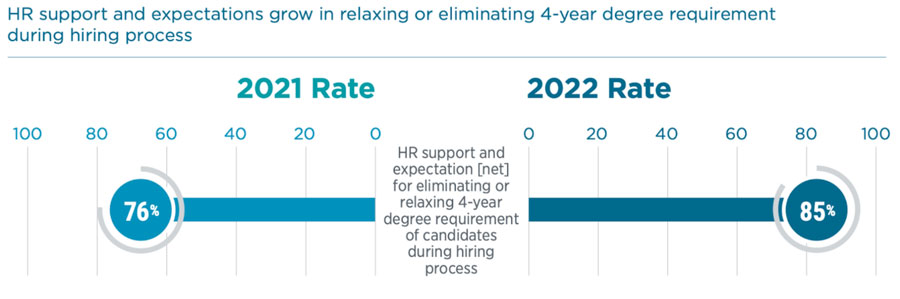
A significant change in the tech job market is that companies have begun to eliminate the degree requirement in the hiring processes in favour of skills-based hiring. This shift places value on the hard, technical and soft social skills employers require. It allows for getting more specific and unique talent.
With only one-third of the US adult population having a college degree, this is a big step forward in creating a more diverse workforce since People of Color, LatinX, and other minority communities are less likely to have a degree. The elimination of the degree requirement that has ruled the industry since the Great Recession in 2008 also gives them access to well-paid jobs.
According to CompTIA’s study “Workforce and Learning trends 2022” 45% of companies indicate using a skills-based hiring framework to guide their tech workforce recruitment and development, while 36% are considering the concept. This approach to hiring indicated a relaxed degree-based requirement:
The skills that companies look for differ if it is a small company or a bigger one.
Small companies, like early-stage startups, usually seak that the worker knows little about everything because they normally need to wear different hats. But companies need many workers with specific skills when they get bigger, which leads to specialized hiring requisites that make filling all the demanding positions more difficult.
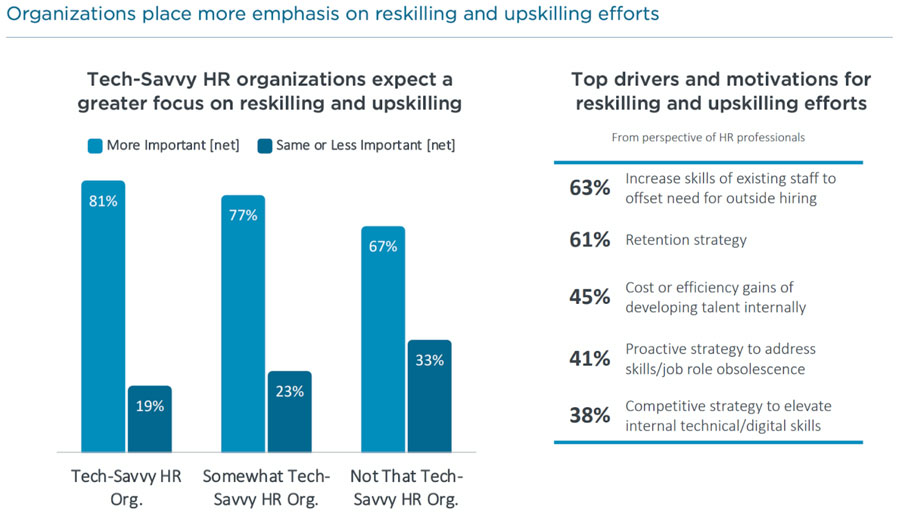
With the demand for tech talent outpacing supply and hiring becoming slower and more conservative, employers are rethinking how the access talent and upskilling and reskilling employees is becoming an essential strategy in facing challenges in the talent pipeline. According to Comptia, two-thirds of senior HR professionals believe persistent hiring constraints may become the “new normal”, and their organisations are placing a higher focus on how to re-train their employees:
Intense training programmes such as Bootcamps are becoming a growing talent pipeline investment trend in the digital tech industry, as it helps organisations align training with their specific job need in a fast yet effective manner.
The most in-demand roles in the US in 2023, according to landing.jobs, are data scientists, software engineers, cybersecurity analysts, marketing analysts, full-stack developers, UX-UI designers, web developers, project managers and quality assurance (QA) testers. Also, more specific jobs such as AI developers, cloud engineers, Web3 developers, machine learning engineers, and network administrators will be highly demanded based on the new trends that are becoming more and more mainstream.
Diversity, equity and inclusion (DEI) is a concern in the US tech industry. Based on data from the U.S. Equal Employment Opportunity Commission (EEOC), compared to the total US workforce, the tech industry employs a smaller proportion of Black Americans (7.4% versus an average of 14,4%), Latinx Americans (8% versus 13.9%) and women (26% versus 49%).
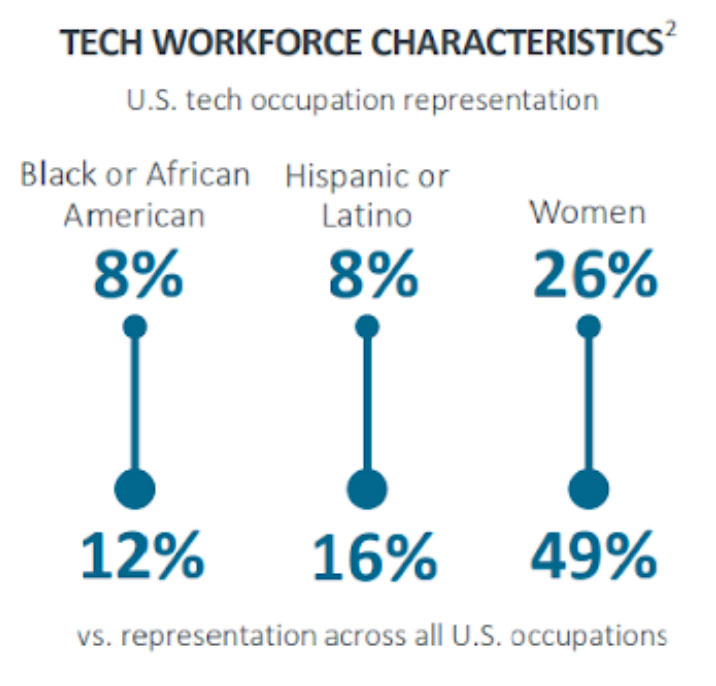 Image Source: CompTIA Cyberstates 2022
The importance of an organisation’s reputation regarding DEI is gaining weight year-over-year due to a rise in social awareness. However critical social awareness may be to transform the industry, inclusion and diversity are also intelligent business choices: data proves that diverse companies are more likely to outperform their competitors financially.
Despite companies and governments making an effort to reduce the diversity gap, there’s still a long way to go, and there are many hurdles to overcome. According to The State of Diversity in Tech Report by Dice, perception of a lack of leadership opportunities and salary and benefit inequities are the most common causes of discrimination. In Dice’s report, 48% of participants in the study claim they feel that they are not fairly compensated compared to others in the same occupation with their same skill set.
Focusing on gender as a factor of discrimination, women carry out only 26% of tech occupations, compared with 49% of women representing the total US workforce. This fact gives a general glimpse of the Gender Gap existing in the tech industry, where women are highly underrepresented.
The Gender Gap influences a women’s tech career in an intersectional way. First, it’s essential to look at the number of women who choose a STEM (science, technology, engineering and mathematics) degree. Based on data from the Integrated Postsecondary Education Data System (IPEDS), women represented 45% of STEM majors in 2020. However, only 22% earned degrees in engineering and 20% in computer science. In the US, women’s limited access to STEM degrees is not a new phenomenon: a report titled “Why so few?” examines data from over two decades to understand the factors that can explain why women are systematically tracked away from science and math throughout their education.
According to the American Association of University Women AAUW, study after study finds out that women have the ability and high test scores in STEM subjects, but even so, women are pushed away from these fields. They explain the underrepresentation is mainly because of structural and cultural barriers. Let’s take a closer look at the entry barriers women face in STEM:
- There is a lack of female role models. Historically STEM fields have been male-dominated, which has created a taboo for women working as scientists and technologists. It’s like they don’t exist in the collective mental framework. The consequence of this lack of role models is that girls don’t have people like them to admire, which causes a lack of motivation and inspiration to pursue a career in STEM. Letting schoolgirls know they have a future in this industry is an important step forward.
- Stereotypes and sexism push girls away from STEM. Without any scientific basis, there’s an idea of women being less intelligent than men, primarily related to STEM subjects. This misconception significantly impacts girls’ self-image and determines their career aspirations through more “feminine” degrees. A study by Wiley, reveals that 44% of the female respondents between 18 and 28 years were never given any information or resources to help them learn about tech career opportunities, compared with the 33% of males.
- STEM environment is hostile for women. Women who consider taking STEM subjects at school or having a related degree suffer from isolation and microaggressions, such as underestimating their opinions only for being a woman. These situations act as additional stressors that end up with many women dropping out of these lines because they feel they don’t fit in.
Because of these obstacles, girls are less likely than boys to consider a career in technology. One of our Key Opinion Leaders, Ember., told us about their experience growing up in a male-dominated environment:
Soundbite:
Nevertheless, all kinds of organisations have launched action plans to empower women through STEM degrees and are reaping up their labour. Based on data from the National Science Foundation, more women than ever are earning STEM degrees and catching up to men.
Also, as more Gen Z women enter college and the workforce, we will see an increase in the percentage of females earning STEM degrees and being interested in tech careers, as Gen Z is one of the first generations considered “digitally native”.
Once students finish their degree, it’s time to get their foot in the door of the job market. Here women experience more difficulties being hired for entry-level technical positions. This phenomenon is known as the retention gap. One example of this gap is that only 38% of women who majored in computer science are working in the field, compared to 53% of men – this happens at a similar rate with engineering degrees.
Regarding under-represented minority groups, they represented about 9% of the nation’s top computer science programs, but large tech firms employed only 5%. The lack of employment diversity in the tech industry has often been attributed to a lack of applicant diversity and self-selection of minorities away from STEM fields. However, this argument denies the responsibility of employers to hire and retain talent.
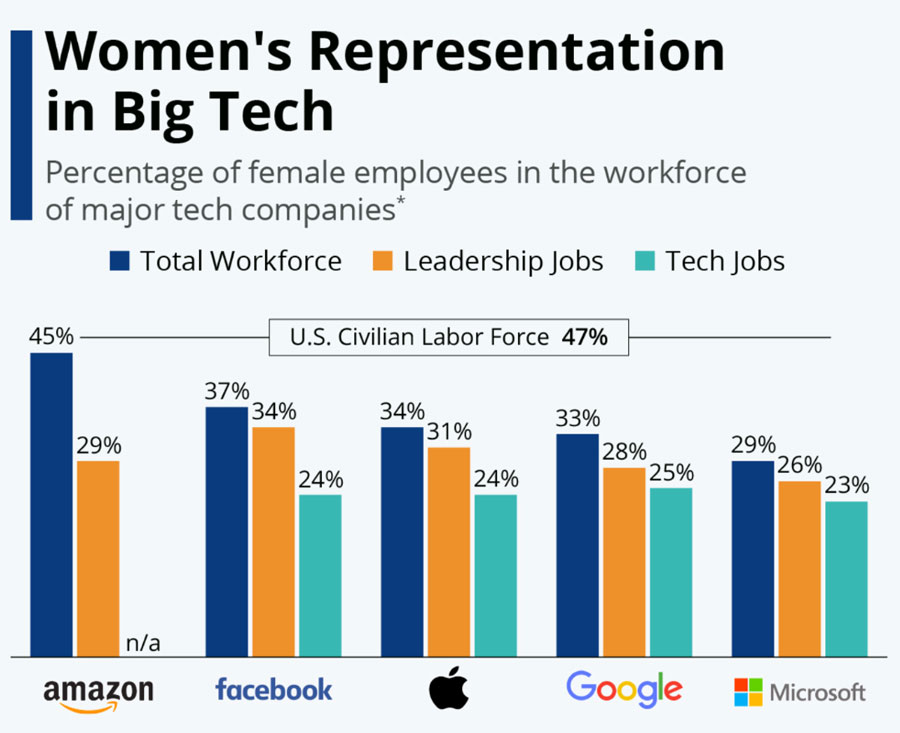 Image Source: Statista
After getting past the hiring hurdles, women face another challenge in their professional careers: the glass ceiling. This metaphorical invisible barrier hinders women and minorities from advancing in a profession. A fact that reinforces this barrier is that 66% of women state that they see no clear path for advancement or improvement within their tech careers. For many women, it comes to a stage when their careers come to a standstill. The data provided by McKinsey & Company shows that while 48% of women account for entry-level hires, they just account for 40% of first-level managers. This bottleneck continues to increase as it gets higher in the corporate rank, as shown in the image below.
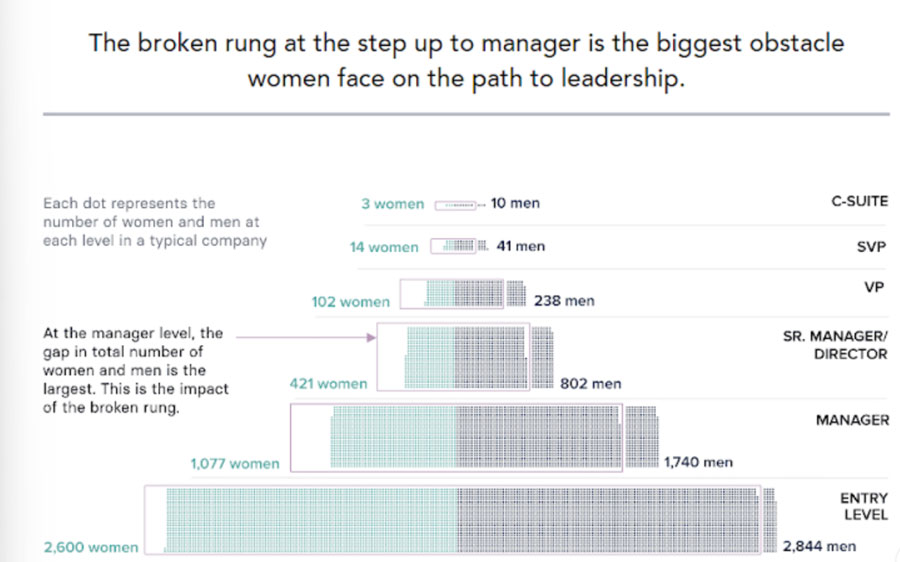 Image Source: Leanin
For Black women and Latinas, this broken rung is even more decisive.
According to Leanin, for every 100 entry-level men who are promoted to manager, just 68 Latinas and 58 Black women are promoted; this number is even lower for Native Hawaiian, Pacific Islander, and Indigenous women. Also, people with disabilities face more barriers to advancement and get less support from their managers.
This glass ceiling, called the broken rung, connects directly with wage inequalities.
On average, women in the tech industry are offered a salary of 3% less than men for the same job, at the same company, with the same experience.
Another important piece of data is that women are more likely to leave their companies, according to the McKinsey Report on Women in the Workplace. This study points to an unfavourable environment for women inside companies, summed up by the barriers they already face to achieve being there.
In this Wiley report, 68% of participants surveyed claim they have felt uncomfortable at a job due to their gender, ethnicity, socio-economic background or neurodevelopmental condition. Moreover, 50% wanted to leave a tech job because the company culture made them uncomfortable. Because of this, the option of working remotely is essential to women. The possibility of hybrid and remote work has delivered tangible benefits for many women, making work and life balance much more effortless.
The Women Tech Network predicts that at the current pace of change, it will take 133 years until the gender gap is closed. Companies need to take action and implement programs to improve their DEI policies to build a stronger industry. According to McKinsey & Company, “diversity is especially crucial in these roles to help debias the technologies that make up an ever-present evolving component of modern life”. Counting with employees of different backgrounds, experiences, and ideas helps to breed higher quality products.
Women entrepreneurs in the US face many challenges of their own, and according to a report by The Silicon Valley Bank, more than half of the country’s startups lack women on their boards. Only 14% of startups have a female CEO, and if the startup founder is a man, it’s less likely to have a woman in the COO role or leading HR marketinentrepreneurseams. Unfortunately, female founders are slightly less likely to rely on VC and more so on friends and family.
With an enormous social and cultural impact, the Great Resignation has pushed people to reflect on their relationship with work and if they are pursuing what makes them feel gratified. During 2021 and 2022, the US Bureau of Labor Statistics recorded the highest number of persons voluntarily quitting their jobs. This trend is changing the labour market and is expected to continue in 2023.
The question lies in what these people did after resigning. A study by Pew Research found that 53% of employed US adults who quit their job in 2021 changed their occupation or field of work at some point during the year. The same study states that the reasons for leaving were low pay, lack of opportunities for advancement and feeling disrespected at work.
Based on data by Pew Research, the vast majority of workers who changed their career path have seen improvements regarding salaries, more opportunities to grow, easier family conciliation and more work flexibility. Of the surveyed adults between 18 and 19 who had quit their job in 2021, 61% shifted their field of work or occupation. The percentage goes down to 45% for workers over 30.
According to a The Motley Fool survey, most career changers in America are millennials and have over 5 years of work experience. Aside from the impact of the pandemic, reasons for changing careers included improved work-life balance, higher pay, and better work culture. Nearly 40% of those surveyed stated that they pursued a new career path due to a long-standing interest, indicating that the pandemic’s disruption served as a catalyst for many to make a career change they had previously been contemplating.
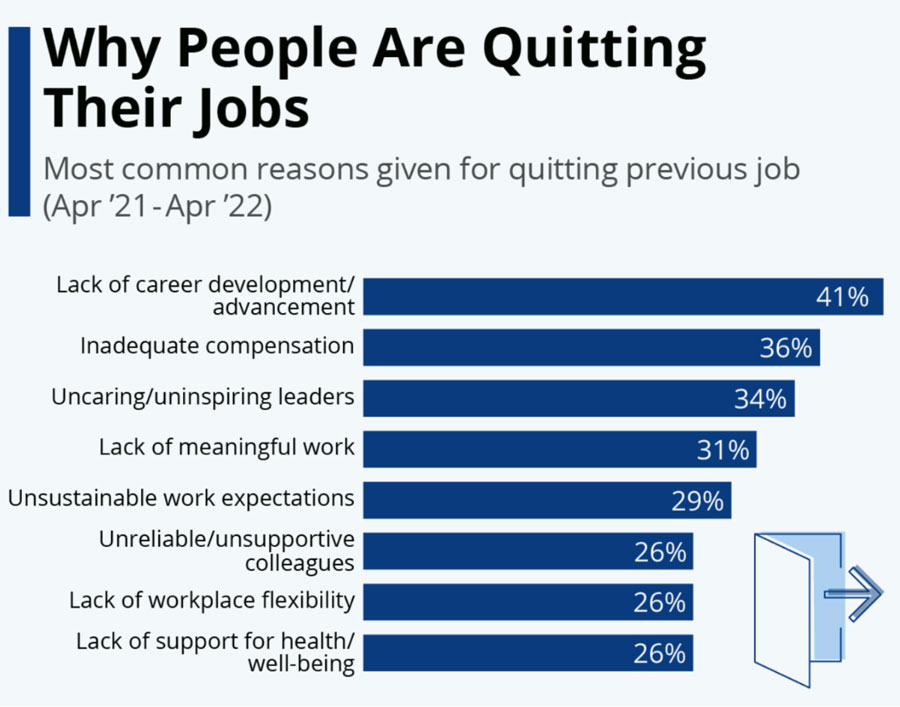 Image Source: Statista
Job mobility, known as the ability of workers to move easily from one job to another, is almost always connected with economic opportunity. According to data from Indeed, 23% of career changers reported wanting a better-paying job as a reason they left their pre-pandemic job.
No wonder, then, that the tech industry in the US is a common path for career changers to land on. The US tech market has long been regarded as a dynamic and wealthy sector and a significant engine of economic and social mobility by enabling workers to change jobs for higher compensation, better work conditions and opportunities for advancement. What’s more, a career in technology not only has attractive job prospects, but it’s also challenging and allows being at the forefront of technology innovation.
It may be complicated to join the field without a degree in engineering or science computing. However, the entry-requires are lower than expected. You can adapt many of the skills you already have from your former education and work experience to the tech field. CompTIA has listed ten skills you didn’t know could land you an IT Job: communication, organization, analytical abilities, creativity, project management, perseverance, problem-solving, resourcefulness, curiosity and interest in helping others. These soft skills are essential if you want to succeed in the tech industry, whatever field you pursue. Of course, technical skills are also necessary to get either through training, certification or hands-on experience. A way of achieving technical skills is through bootcamps and online courses like those provided by platforms like Coursera, Udemy, Alison, Codecademy, EdX, and endless more.
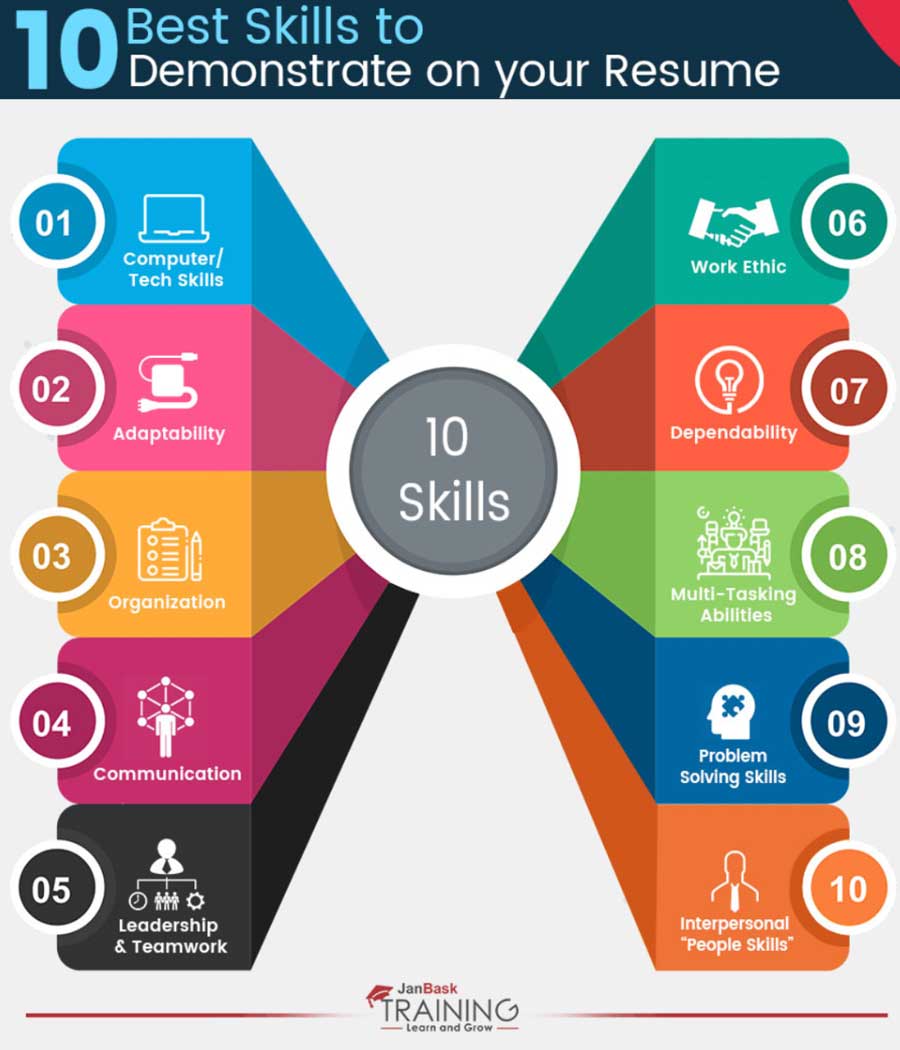 Image Source: JanbaskTraining
To hear some stories of career changers, CompTIA has a playlist on YouTube called #MyTechStory, where they have compiled a collection of unique and inspiring stories about people who are in technology careers and how they have arrived at where they are now.
Data has become the fuel of the future, with an estimated 2.5 quintillion bytes of data created daily. Most companies rely on big data to improve their productivity and enhance their strategies. However, all this data means nothing if no one analyzes it.
Here’s where data scientists organise data into usable formats and build prediction systems and machine-learning algorithms.
According to data provided by Precedence Research, the data analytics market size was presented at 41.39 billion in 2022. It’s projected to beat the $356.33 billion by 2030, which signifies a CAGR of 30.41% during this period. With data analysis, companies look for patterns beyond their historical data, providing them with better knowledge about trends and opportunities. Including data analytics in their business strategies may help them refine the product development process and improve customer retention.
In a context where data is produced at unattainable speed, it’s no wonder that data scientists, according to the US Bureau of Labor Statistics are among the employers with a higher than the average growth rate, at 36% from 2021 to 2031. About 13,500 openings for data scientists are projected yearly, with a projection of 153,900 jobs by 2031.
Regarding salaries, the average salary for a data scientist in the US is $145,668. As with other tech jobs, the lack of specialised talent and its highly-demand status has inflated data scientist wages. The most required technical skills for a data scientist are statistical analysis and computing, Deep Learning, Machine Learning, Data Visualization, Data Wrangling, Mathematics, Programming, Statistics and Big Data. In short, they need to be able to process a large amount of data and analyse it to convert it into valuable insights.
Regarding soft skills, it’s paramount that they possess strong communication skills to successfully communicate their findings with people that don’t have expertise in data analysis. Also, great data intuition is essential, which means navigating through enormous amounts of data and using intuition to find insightful information.
With technological advances such as AI, IoT and IoB, collecting data is increasingly more accessible, but analysing it is getting more and more complex. It will be necessary for organisations to guarantee the accuracy and consistency of source data. According to CompTIA IT Industry Outlook for 2023 , the largest challenge in data analytics is integrating all the data created and stored to use and manage it.
On top of that, another challenge that needs to be focused on is data ethics—defined by McKinsey & Company as “data-related practices that seek to preserve the trust of users, patients, consumers, clients, employees, and partners”. Even though there are laws that show executives what they can do with data, a comprehensive data ethics framework is necessary to know what they should do with them. With 79% of U.S adults being concerned over how companies use the collected data, data privacy is gaining importance among consumers, so managing data efficiently will still be a challenge for data analytics.
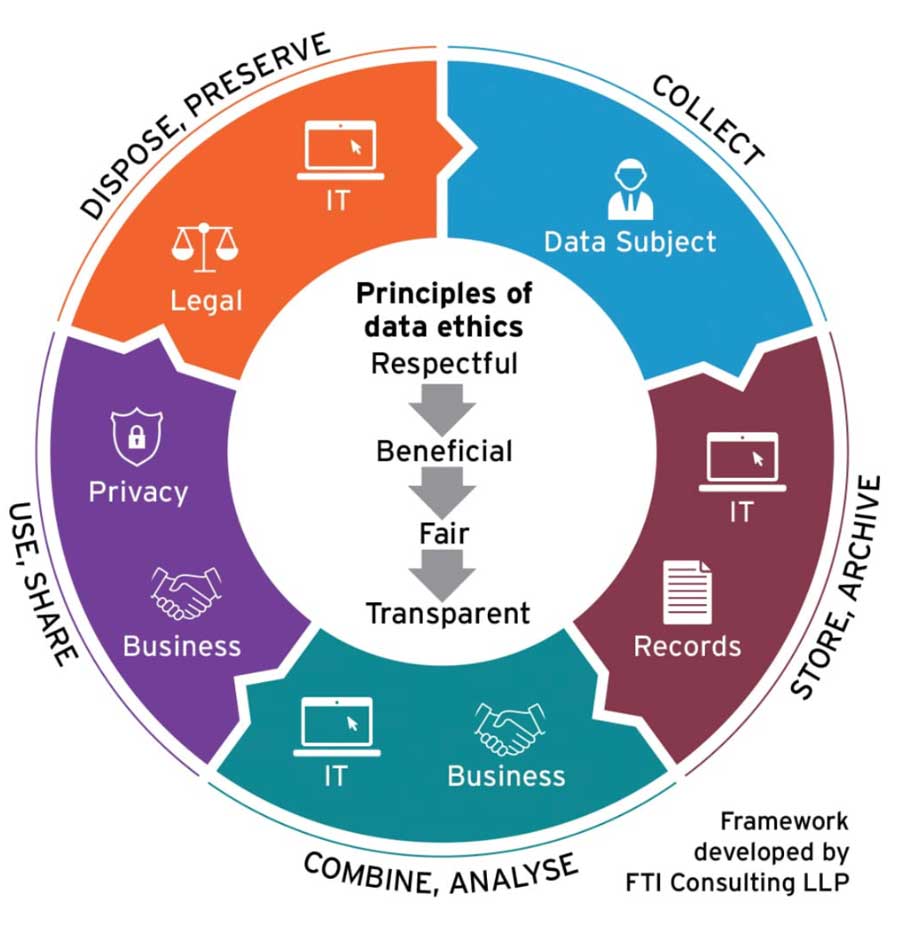 Image Source: CirculoDeLectores
The biggest trend in data analytics will be continuous intelligence and real-time insights, which means accessing, analysing, exploring, and visualising live operational data. This trend breaks with historical patterns and searches for instantaneous action recommendations.
Another trend developed since the pandemic is predictive, prescriptive and ‘X’ Analytics, or what’s the same, using AI tools to predict future diseases and natural disasters based on unstructured video, audio or text data.
Furthermore, augmented analytics has been considered the future of data analytics for many years. The automation of the data preparation process, and processes of Machine Learning and AI, it’s seen as a solution to the bias of data scientists.
It’s meaningful to know that 88% of users will not return to a site after having a bad experience, and 53% of mobile web visitors will leave a page if it doesn’t load in 3 seconds. What’s more, slow-loading websites can cost businesses $6.8 billion annually.
With the continuous expansion of the internet and mobile devices, with 4.95 billion internet users in the world and 93% of US adults using the internet, it gets essential to throw in some insights about real human users.
Here is where User Experience (UX) pops up as the process of creating products which provide meaningful, coherent and flexible experiences to users. This discipline thinks about the product as more than just a product but a cohesive and integrated set of experiences. UX create user-centric products and services, which inevitably leads to higher customer satisfaction, loyalty and engagement.
75% of consumers believe that the credibility of a website (and the brand) lies on the site’s aesthetic, so UX and its complementary discipline, User Interface Design (UI), become vital for businesses. Research by McKinsey, shows that design-led companies have higher revenue and better performance overall.
Based on the data presented by Toptal Designers , every dollar spent on UX brings between $2 and $100 in return, which supposes a high return on investment (ROI). This positive tendency will continue due to UX’s ability to solve productivity problems.
The outlook for a career in UX is favourable. The demand is steadily increasing, and according to a study by the Nielsen Norman Group , by 2050, it’s expected to be 100 million UX professionals worldwide. Due to the democratisation of technology, UX and UI skills are among the top 5 demanded tech skills for 2023 listed by Forbes. Technology needs to be usable for anyone, including those users with scarce digital skills.
The average salary for a UX Designer is $91,224 annually in the US. According to a study by Glassdoor, UX design has been ranked number six regarding entry-level salaries. UX designers probably have the broadest range of skills, including coding, analytics, psychology, qualitative and quantitative research and team building. The interdisciplinary nature of UX/UI has turned into one of the most elected paths for career changers to penetrate the tech workforce.
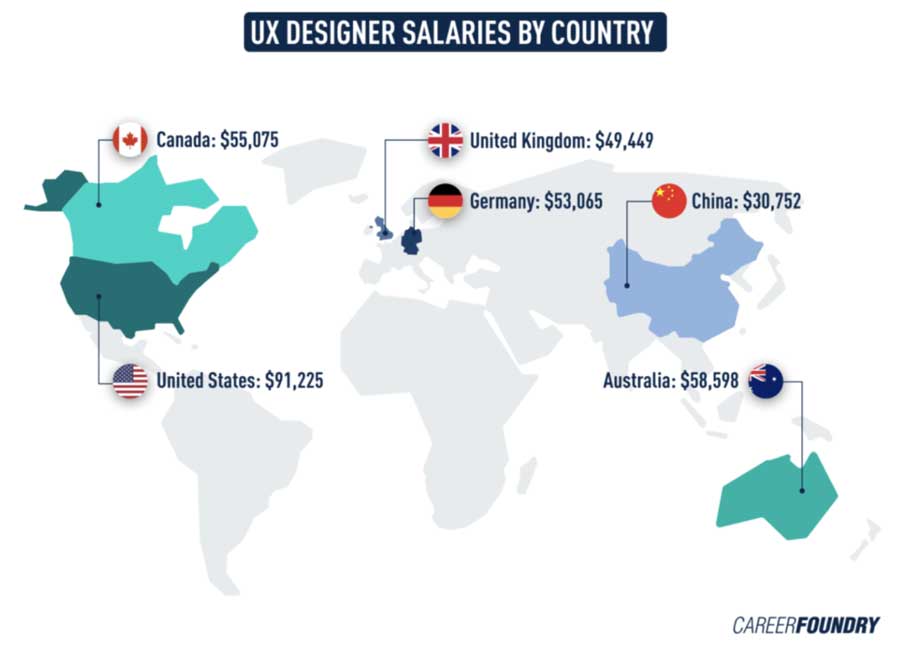 Image Source: CareerFoundry
Regarding future trends in UX and UI:
- Designing for VR/AR and 3D interfaces. As the metaverse hasn’t become disruptive, EX has gradually been incorporated into daily life. With these technologies becoming widely accessible, designers must understand how people feel and interact with the products.
- More focus on ease of use through motion design and gestural interfaces. Users expect more about their digital experience, so gestures like swiping, pinching or tapping the screen have become a great way to keep users engaged.
- Specialization of UX roles. With the growth of UX hiring, there is a proliferation of UX roles; UX writers, UX Strategists, UX researchers, Interaction Designers and Voice-Guided UI Specialists being the most in-demand in 2023.
- Creating values through qualitative UX research. After Covid-19 broke out and the consequent sanitary restrictions, UX experienced a change to more quantitative user research. This tendency is about to change as human interaction provides essential insights to improve UX.
Whit the expansion of modern technology, cybersecurity has become an ongoing menace for the US and the world. Cyber attacks happen once every 39 seconds, and 95% of these are caused by human error. 2022 was already a record-breaker for data breaches, cyberattacks, crypto heists and phishing scams, and Forbes predicts that 2023 won’t fall short.
According to IBM’s 2016 Cyber Segurity Intelligence Index, healthcare, financial services, and manufacturing are the most targeted sectors by hackers because of the huge amount of relevant personal data they store. Cybersecurity has become crucial in today’s world, with the growth of active IoT devices and AI programs recollecting an enormous quantity of data every second.
In this context, Cisco’s Security Outcomes Report states that 96% of executives place a high priority on security resilience.
Cisco defines cyber resilience as:
“The ability to anticipate, withstand, recover from, and adapt to adverse conditions, stresses, attacks, or compromises on systems that use or are enabled by cyber resources”.
This means surviving unpredictable threats and protecting the integrity of every aspect of the business.
The US is the country that spends the most on cybersecurity, approximately $3.5 billion, so it’s no wonder cybersecurity is one of the most demanded jobs. In 2022, there were 1,112,410 workers employed in cybersecurity-related jobs. Also, if we look at the number of online job listings for this kind of employment, there were 755,743 job openings. Regarding the supply and demand ratio, the national average is that there are only enough cybersecurity workers in the US to fill 68% of the jobs employers demand. According to the US Bureau of Labor Statistics, employment of information security analysts is projected to grow 35% from 2021 to 2031. Regarding the salary, an IT security analyst had a median wage of $107,492.
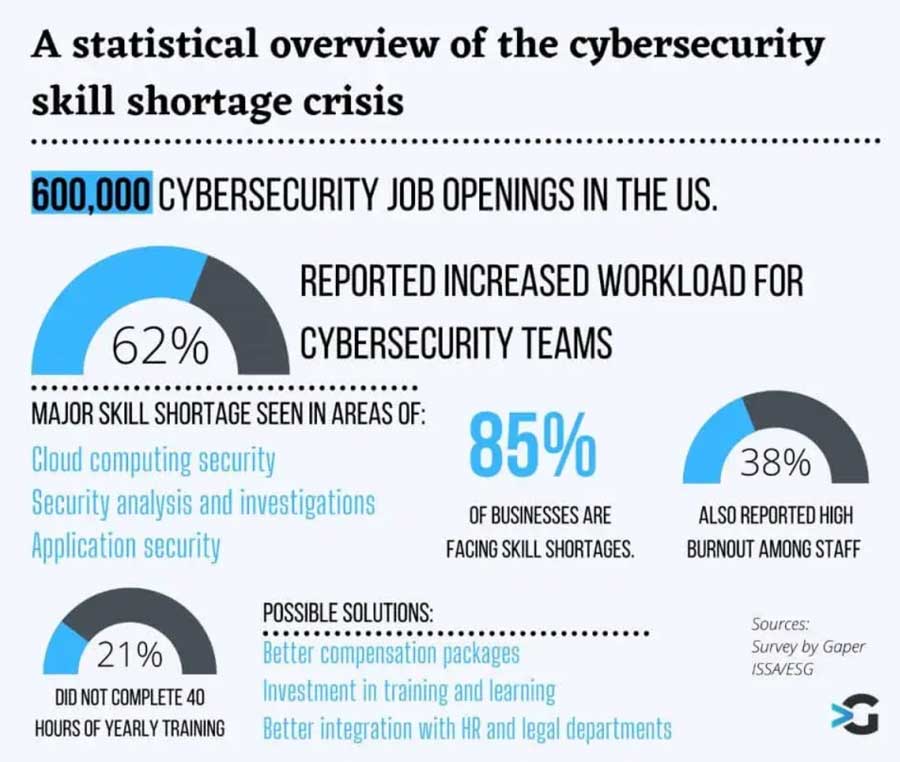 Image Source: Gaper
The general trends for cybersecurity in 2023 will be:
- Greater privacy and regulatory pressures by the government. New privacy laws will be rolling out in 2023, so businesses must adapt to these new regulations. Also, companies are obligated to report all cyber incidents.
- Zero-trust will replace Virtual Private Networks (VPN). VPNs cannot meet the scalability demands with the rising remote working trends, so Zero-Trust approaches based on the idea of “never trust, always verify” are emerging. Eliminating implicit trust and continuous validation during digital interaction enables modern digital environments to improve their security. The US government has released a memo to all federal agencies to adopt a zero-trust architecture (ZTA) by the end of 2024. According to Gartner, zero-trust network access (ZTNA) will grow by 31% in 2023 and entirely replace VPN by 2025.
- Popularization of threat detection and response tools. Threat detection tools based on AI and machine learning detect unusual patterns to detect and provide solutions to potential cyberattacks.
- Outsource cybersecurity duties. Due to the talent shortage, many companies will need to outsource their daily security operations to external consulting firms.
The Great Resignation has made many workers reflect on their priorities in life regarding work. According to the US Bureau of Labor Statistics, 47.8 million Americans voluntarily quit their jobs in 2021, which has led to a talent shortage. However, the Great Resignation didn’t start with the pandemic. Based on Harvard Business Review, the pandemic only exacerbated pre-existing conditions in the labour market that would have eventually surfaced. These pre-existing factors were the Five R’s: retirement, relocation, reconsideration, reshuffling, and reluctance.
“Workers are retiring in greater numbers but aren’t relocating in large numbers; they’re reconsidering their work-life balance and care roles; they’re making localised switches among industries, or reshuffling, rather than exiting the labour market entirely; and because of pandemic-related fears, they’re demonstrating a reluctance to return to in-person jobs”.
Personal well-being, mental health, and a better work/life balance were the top reported reasons for leaving a job. 45% of respondents told Indeed they switched jobs because their employers did not offer flexibility.
According to a Statista global study, most CIOs believe remote work is most businesses’ future. In 2022, 26% of US employees work remotely, and 36.2 million American employees are expected to work remotely by 2025. According to McKinsey & Company, most tech workers prefer to work full remotely, as seen in the following image.
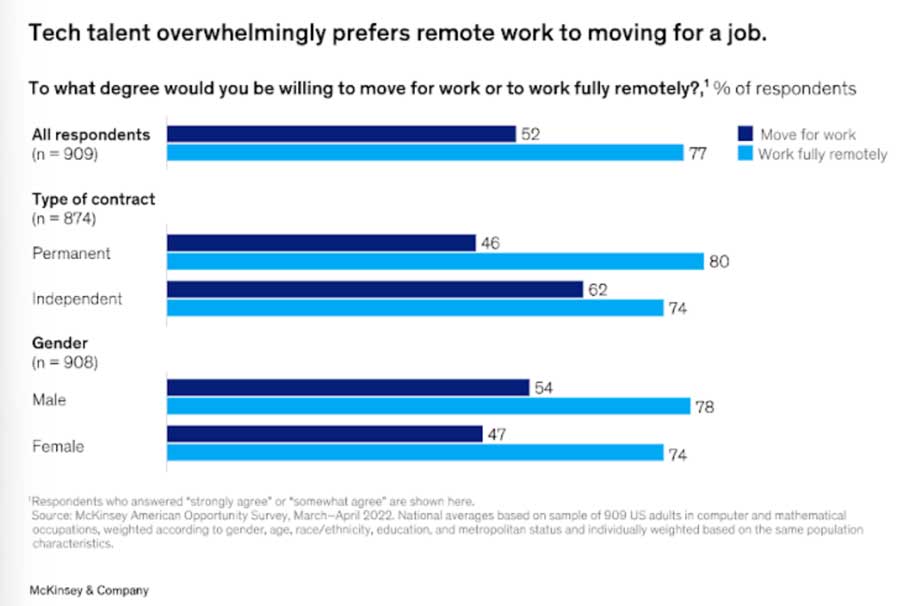 Image Source McKinsey & Company.
Empowering post-pandemic workers is a trend that won’t fade away. Businesses will need to decide on their flexibility and culture as 2023 approaches, considering whether remote work should be an employee’s exclusive option, a hybrid option, or something more constrained.
That choice will be partially based on employee productivity and performance, which are receiving fresh attention as businesses struggle with measuring employee production and quality in a decentralised, virtual work environment. At this point, most IT companies will not view remote employment and flexible scheduling as all-or-nothing decisions but rather as the norm.
Businesses’ recruitment and hiring processes are changing as they seek to hire highly qualified employees with technical knowledge and enduring skills to fill roles in data, cybersecurity, cloud, metaverse, and other fields. This rule will increase the practice of hiring new employees by looking outside the conventional pool.
This entails emphasising diversity, equity, and inclusion (DEI) initiatives and recruiting, removing the traditional necessity for many occupations of a four-year college degree, and concentrating on upskilling, on-the-job training, and certification for current employees.
Last but not least, in 2023, the issue of mental health among those working in the tech sector won’t go away. Companies will need to acknowledge the existence of the mental health problem and foster an environment that helps to reduce its adverse effects and facilitate flexibility and support.


 Image Source: