
The Netherlands is one of the top digital tech leaders in Europe, known for being the most connected country in Europe, a growth-friendly environment for tech companies and a strong startup and innovation ecosystem.
The Netherlands’ tech role in Europe is multifaceted, and many different reasons explain its leading position in the overall digitalisation of the continent. On the one hand, the Netherlands is highly connected, with over 98% of its population having a broadband connection. The Dutch digital infrastructure is solid and well-known: the European Investment Bank ranked The Netherlands as the top country in “digital intensity”. On the other hand, The Netherlands is an internationally competitive location for talent. The dutch workforce is highly skilled and multilingual. They rank, for example, as the number one country in the EF English Proficiency Index.
The Netherlands has a recognised and admired Digital Strategy that is highly focused on increasing digital skills proficiency, Artificial Intelligence and activating the value of data across all industries. The country’s efforts in achieving a leading position in connectivity, innovation and technology are internationally acknowledged: it’s recognised as an “Innovator Leader” by the European Innovation Scoreboard and ranked in 3rd position in the Digital Economy and Society Index (DESI):
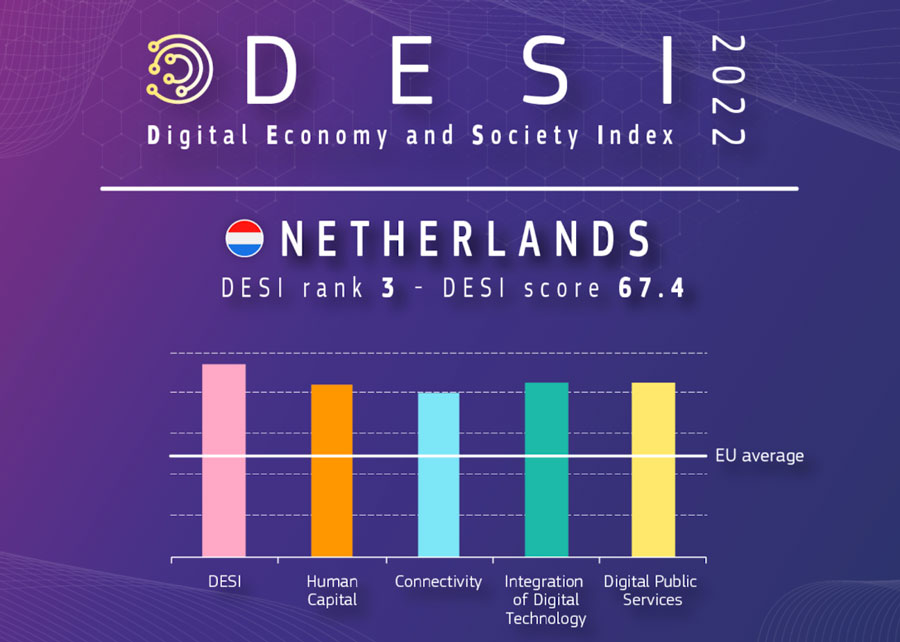 Image Source: DESI
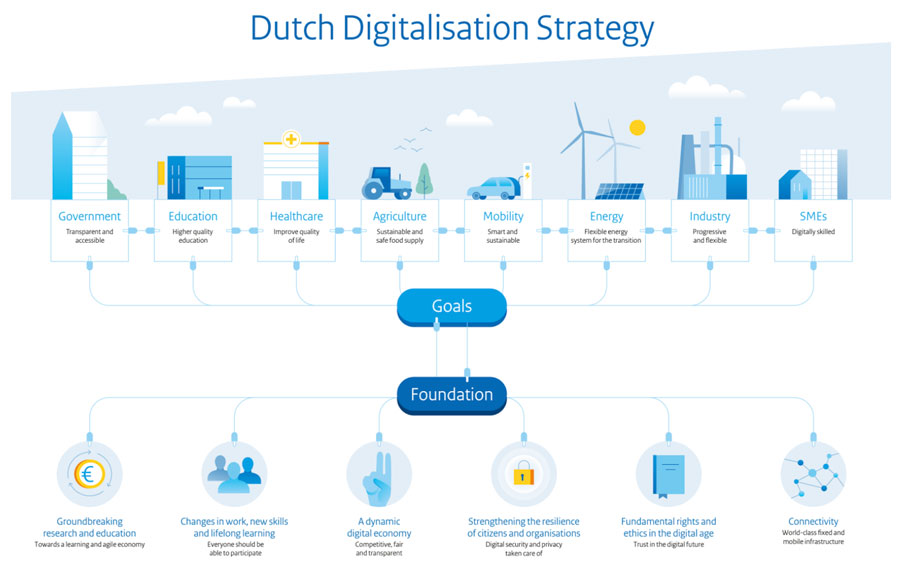
The lastest Dutch Digitalisation Strategy (DDS) was published in 2021 and focused on digital transformation in the long term, new energies, emerging technologies, and the data economy’s importance. This graph illustrates the foundation of the previous DDS, published in 2018:
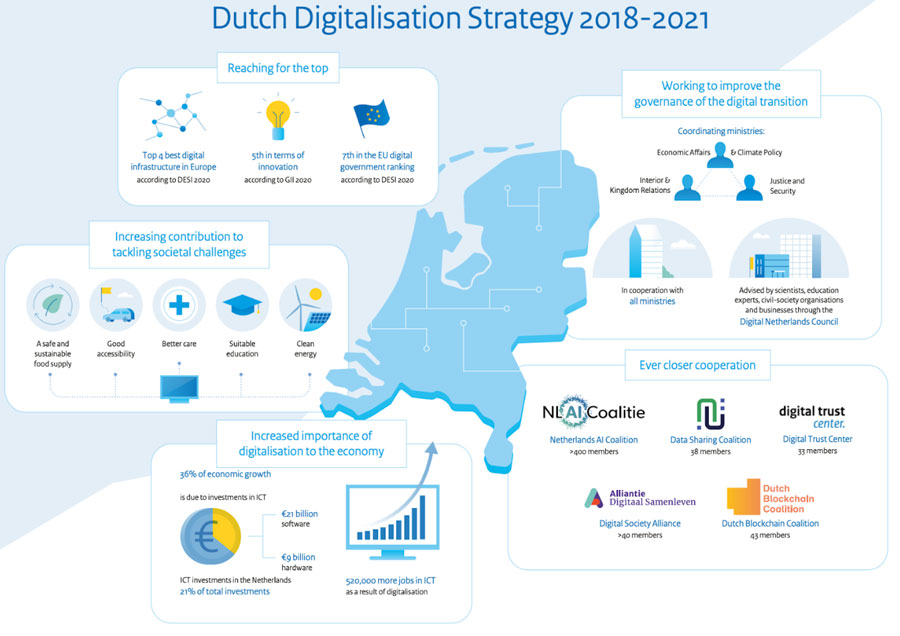
The 2018 DDS focused on digitalisation as an essential part of tackling societal challenges, such as the transition to a sustainable energy and food supply, better care and education or good accessibility. Some of the most relevant initiatives that succeeded during 2018-2021’s DDS are:
- Achieving almost 99% of internet coverage of at least 100 Mbps and ensuring 5G connectivity is available in large parts of the country.
- Heavy investment into the Dutch Cyber Security Agenda to increase cybersecurity resilience.
- Work towards digital sovereignty and the rest of the European Union to ensure digital safety and autonomy.
The 2021 DDS is highly focused on developing a regulatory framework for AI development that creates a public and private partnership that ensures safe and ethical AI. Another big area of focus for the DDS is data and its value for the economy of the country and Europe. Managing data safely and proving personal data protection is just as crucial for The Netherlands as building a reliable data-driven economy for the future. Here is an overview of the Dutch Digitalisation Strategy 2021:
 The Netherlands has a thriving tech sector thanks to both public and private efforts. As of 2020, there were over 82,000 tech companies, making up 4.3% of all companies in the country. Nearly 93% of these companies are ICT service providers. In 2019, total spending on ICT goods by companies, governments, and households reached $20.7 billion, while spending on ICT services was significantly higher at $48 billion.
For over 40 years, the Netherlands has been known for creating cutting-edge products and technologies. They have played a key role in the development of innovations like the CD (1979), DVD (1995), Python programming language (1989), and Wi-Fi (1991).
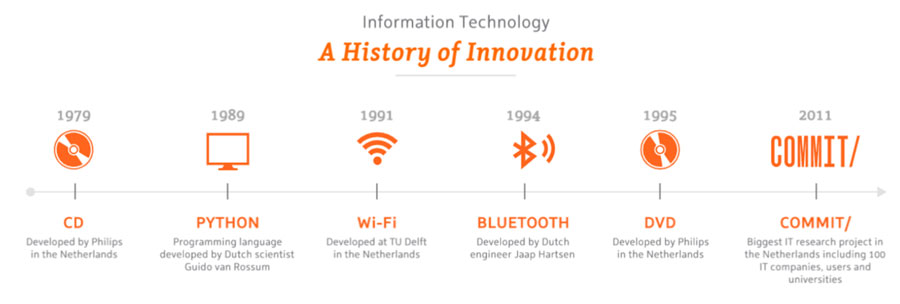 Image Source: Invest in Holland
The Netherlands continues to uphold its tradition of innovation, adapting to current trends. The government places a significant focus on artificial intelligence and cybersecurity, developing the industry and promoting education, innovation, fast and open infrastructure, security and digitalisation of industry.
Cybersecurity is a key strength of the Netherlands, with the country being a leader in the field. The Dutch cybersecurity hub is among the top in Europe and at the forefront of the latest technology. The presence of major international security organisations such as Europol and NATO, as well as the most prominent security cluster in Europe, Security Delta (HSD), further solidify the Netherlands’ position as a leader in cybersecurity.
Regarding High-tech, the Netherlands is also a significant electronics importer, being strategically located between the three leading European high-tech producers: France, Germany, and the UK. This unique geographic position helps The Netherlands maintain a strategic leadership role in high-tech’s international supply chain. The government has identified high-tech as a priority, but focusing on a niche and reinforcing the country’s leading position in the European supply chain:
“The sector is positioning itself internationally in the segment of high value, high mix, high complexity. It generally focuses on the ‘niche’ markets, usually with small batch sizes, and distinguishes itself on technological excellence. Intensive collaboration between OEMs (Original Equipment Manufacturers), specialised suppliers, and knowledge institutions makes the sector distinctive internationally”.
The growth of the Dutch technology industry impacts other sectors of the economy, such as healthtech and the agri-food sector: The Netherlands is the second largest exporter of agricultural products in the world, second to the U.S. The industry accounts for approximately 10% of the Dutch economy and employment.
According to Investment Monitor, The Netherlands ranks among the top 25 countries in the world in terms of innovation in agritech, with efforts focused on using technologies to improve the efficiency and sustainability of production. Fostering innovation within the industry will reinforce the Dutch agrifood ecosystem’s position as a world leader.
Healthtech, on the other hand, is a young market gaining significant traction in The Netherlands’ tech scene: 1,000 HealthTech startups have received about 500€M in funding. Most of them are apps focused on wellness, prevention: fitness and nutrition, sleep tracking and meditation. According to the Teachleap “Dutch healthtech 2021 report”, start-up to scale-up conversion in the sector is low, mainly due to a lack of access and systemic barriers in the healthcare system. According to the report, investment in the Netherlands is lower than in the healthtech industry in other countries, and there are difficulties in transferring the know-how from academia to the technology industry. However, healthtech is booming: it was the most invested sector in 2020, and there still is a lot of unlocked potentials.
Another sector with ample growth opportunities in The Netherlands is Fintech. According to Holland Fintech’s “Dutch Fintech Map 2022”, there are 1.124 fintech companies in The Netherlands, of which 496 were founded between 2021 and 2022. Holland Fintech has created a detailed map of the Fintech industry in the country; you can explore it here.
The Netherlands has a healthy startup ecosystem with multiple tech hubs, but Amsterdam seems to concentrate on the most significant part of the country’s tech startup scene. According to Dealroom, in 2022, Amsterdam’s tech ecosystem accounted for 227€ B, second to London in Europe and first in the European Union:
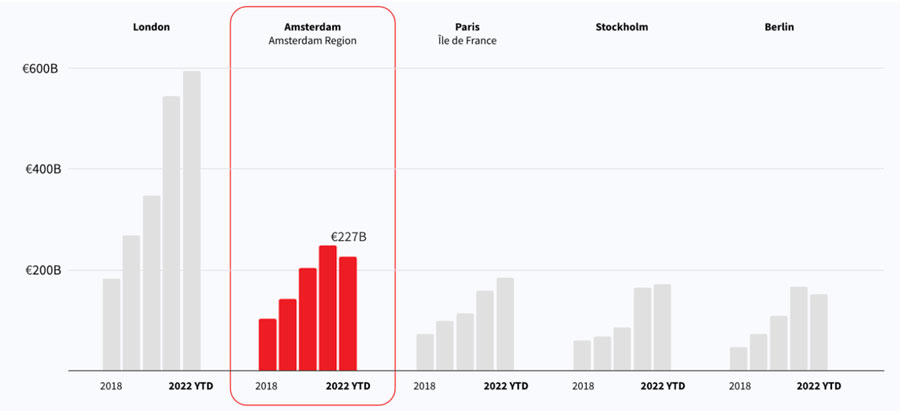
Europe’s biggest tech companies, Adyen, ASML, Just Eat Takeaway and Mollie, are located in the Netherlands and are in 4th position by total market cap of public tech companies globally. It has many more startups per 1 million population than the European average and is in the top 5 European hubs by the number of $1B+ startups.
The most remarkable thing about the Dutch startup ecosystem is its capacity for growth despite the country’s small size. Considering the small size of the country, its startup ecosystem can only be regarded as huge: according to Techleap, there are around 11,000 startups across many different industries, and over twenty of them are considered unicorns (those valued over 1B). In 2022, they raised around 698€ B in funding.
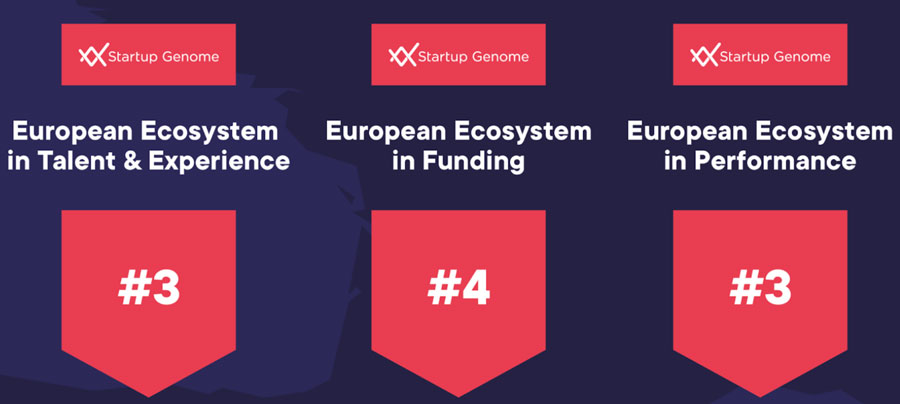
Amsterdam, the heart of the country’s startup ecosystem, is one of Europe’s most prominent tech hubs. The city doesn’t go unnoticed in the current European tech scene, as it has been listed in numerous tech ranks, admired by notorious startup networks and heavily promoted. According to Startup Genome, Amsterdam ranks high in all their most important categories:
Startups in The Netherlands are met by a tech-savvy and early adopter mindset population. The country is also culturally open to attracting talent from other countries and developing projects in innovative industries.
However, despite being a country renowned for its innovation and excellent tech adaptability, the Netherlands’ startup scene can’t be described as a very ambitious one: the start-up to scale-up conversion in the Netherlands is one of the lowest in Europe. According to “Thinking bigger”, an Utrecht University report, Dutch entrepreneurs can be limited by a “that’s big enough” mentally, which can prevent companies from becoming bigger:
“It is called the Dutch entrepreneurship paradox: we build strong innovative businesses, but we don’t focus on growth for businesses to become scaleups and unicorns and create large economic and societal value”.
According to this report, which uses data from the Global Entrepreneurship Monitor (GEM), Dutch entrepreneurs place a higher value on self-employment and starting your own business than growing it successfully:
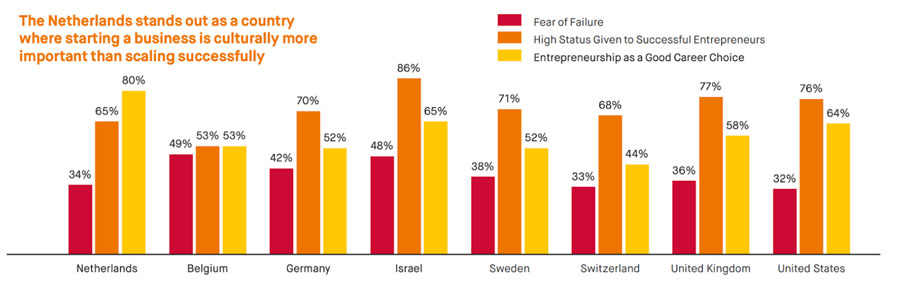 Image Source: Thinking Bigger Report
According to the “Netherland Startup Employment 2022” report, the Dutch startup ecosystem currently supports over 135,000 jobs, with an annual growth of 7.6%. This represents an increase of 64.5K net new jobs since 2018. Healthtech and Fintech are the two largest employers.
Companies established before 2005 continue to be the major employers in the startup and scale-up ecosystem, currently employing around 51,000 people across the country. However, this group of companies is now experiencing the slowest growth, at an average of 6.4% year-over-year. On the other hand, newer companies are responsible for more than 17,000 jobs.
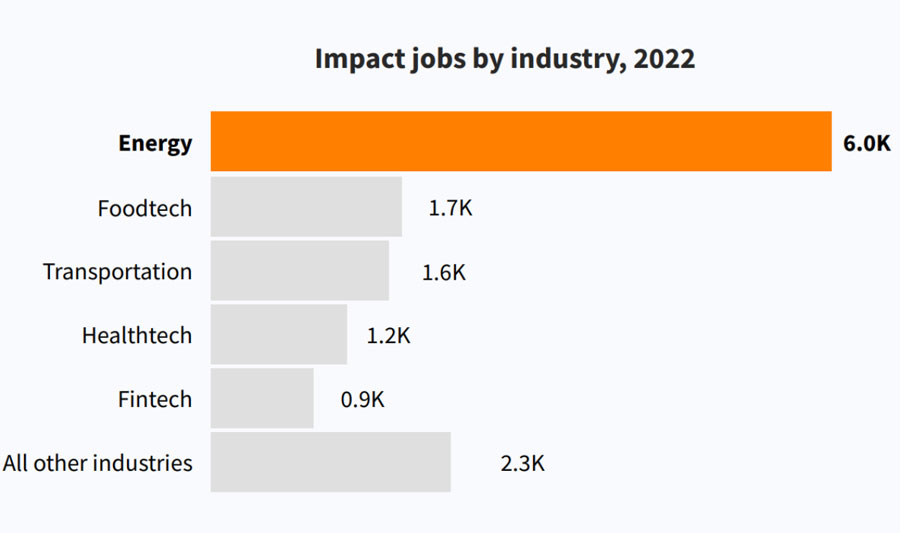
The Netherlands’ society is also aware of its challenges regarding climate change, food insecurity, and energy resilience. These challenges are global, but the Dutch predisposition to encourage solutions for these big-scale issues can foster a great environment for the next generation of startups, sometimes referred to as “Impact Startups”. These impact startups are becoming significant employers in the Dutch tech scene, generating 10% of the total number of startup jobs, up from 7% in 2021.
Impact startups were the third largest employer in the Dutch ecosystem in 2022, and they are becoming a fast-growing sector within the ecosystem. Energy, Foodtech and transportation are the fastest growing niches, according to Techleaps’s report:
 However promising this data looks, the Dutch startup scene is also struggling with one of the most extensive worldwide concerns: a talent shortage in the tech industry.
Tech-related jobs are known for being some of the most challenging positions to fill, with job openings typically remaining available for an average of 69 days, which is above the national average of 65 days. Despite this, many of the country’s most successful cases of innovation and job creation are happening across various regions in the Netherlands. In fact, 62% of all startup jobs are created outside of North Holland. The connectivity between Dutch regions remains a top priority, and talent from universities all over the country can be found migrating throughout different areas.
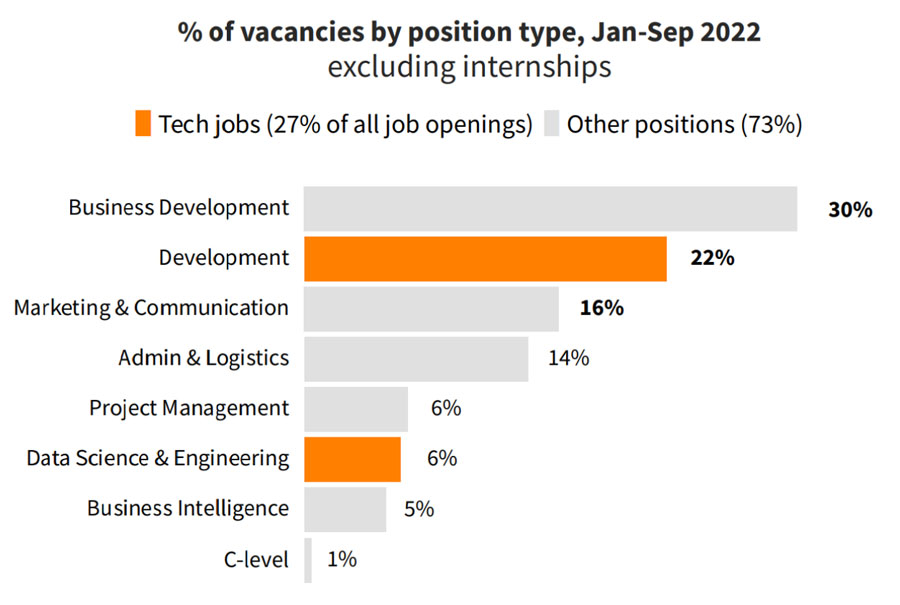
The digital technology industry is facing a major issue of talent shortage worldwide. There is a high demand for professionals with technical expertise, and with the rise of digitalisation, demand for tech-savvy individuals is only expected to increase. The Netherlands has established itself as a major tech hub in Europe, attracting both large corporations and startups to set up operations, leading to fierce competition for the best talent.
According to Fighting the odds, a deep dive into the “war on talent”, The Netherlands’ tech scene can’t rely on local talent to grow, and attracting talent is a combined effort between local and national government, education, and the tech industry itself.
At the beginning of 2022, there were 133 vacancies per 100 unemployed people, and it was the seventh consecutive quarter with an increased demand for work with little supply, according to Statistics Netherlands (CBS). The country experienced a 3.5% unemployment rate during 2022, with more open positions than people without jobs across sectors and industries.
Dealroom data shows that in 2022, the startup ecosystem in Amsterdam generated 49.200 new jobs, in addition to the 23.500 jobs created by foreign startups operating in the city. The demand for tech talent is anticipated to grow further, as illustrated in the accompanying graph.
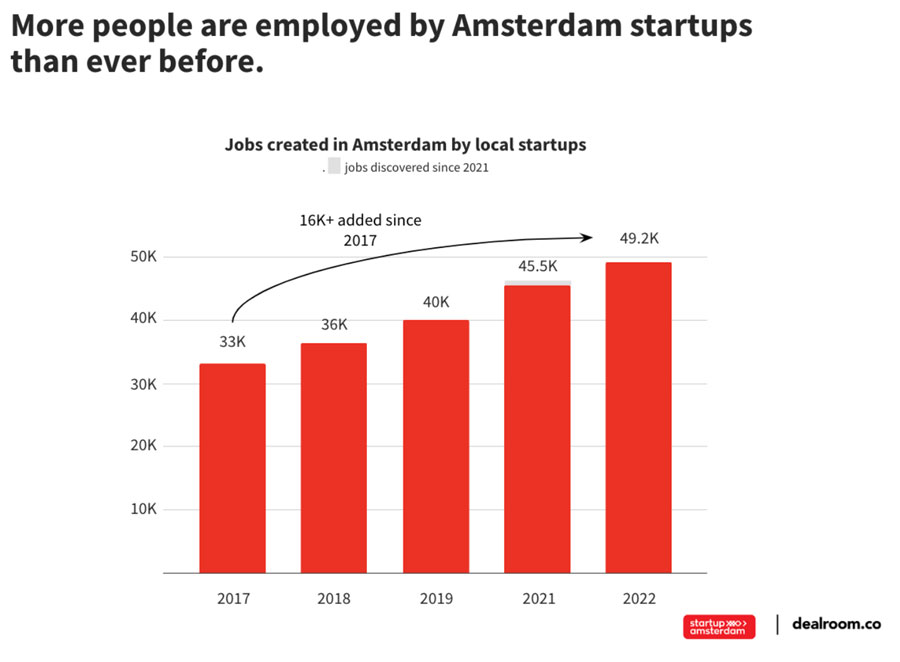 Image Source: Dealroom
According to the Netherlands Startup Employment report 2021, healthtech and fintech provide most jobs. Healthtech startups experienced significant job growth, rising from an average of 8.5% since 2018 (just above the national average of 8%) to over 13%, which is much faster than the national average (which remains at 8%). The five leading sectors in terms of startup job creation, Healthtech, Fintech, eCommerce, Energy, and Foodtech, combined, account for over 70% of all new jobs added in 2022.
The Covid-19 pandemic has accelerated the demand for tech talent. With the shift to remote work and the increased reliance on technology for communication and commerce, businesses have had to adopt and integrate digital tools and solutions rapidly. This has resulted in a higher demand for tech-savvy professionals who can develop, implement, and manage these technologies and those who can drive digital transformation and innovation in the workplace. The pandemic has further highlighted the importance of technology in our daily lives and has created new opportunities and growth areas within the tech industry.
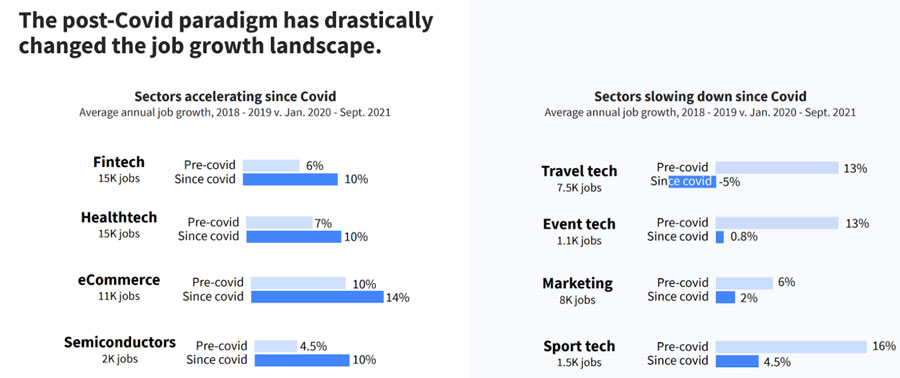 Image Source: Dealroom
According to Building a world-class Dutch start-up ecosystem by McKinsey, 56% of the tech job openings in the Netherlands are considered hard to fill, and the industry should focus on attracting international talent that could relieve the pressure. Although many tech workers in The Netherlands are foreigners, and according to the Fighting the odds report, many large tech firms have over 70% non-Dutch employees. Relocation can sometimes be an issue, but ensuring proper onboarding solutions for foreign talent can alleviate this transition. As the report points out, some barriers to attraction can be related to housing, visas, cultural fits or a welcoming city image.
The Netherlands is implementing several strategies to attract diverse talent, including the «highly skilled migrant visa» program for international workers with specific expertise to work in the country for up to five years. There is also a «fast-track immigration for non-EU citizens earning €50,000+.» Additionally, programs like Nexus Skills and Jobs aim to meet the demand for talent by attracting African talent, while Diversity in Tech focuses on attracting diverse individuals into the technology industry.
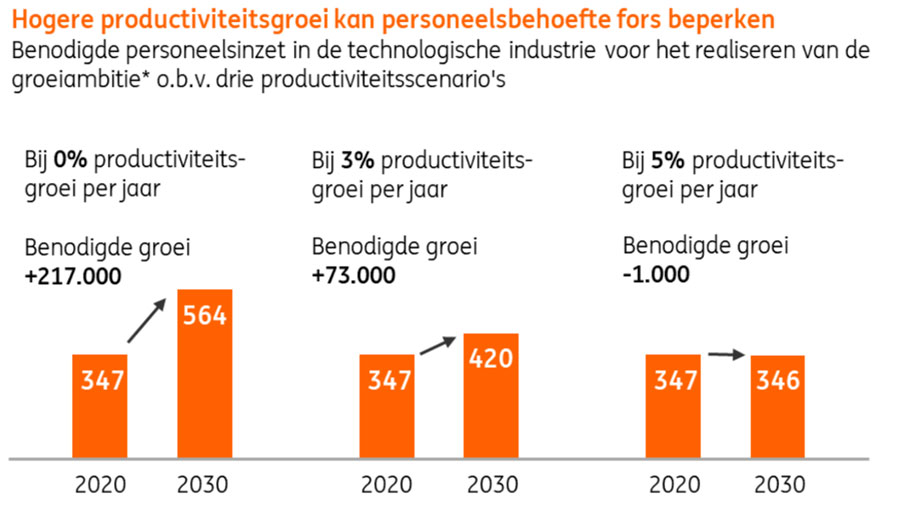
The job market has become more competitive than ever, and it’s expected to get worse in the future due to an ageing population, increased digitalisation and a higher productivity rate for the tech industry, according to an analysis by ING. In their report, ING predicted that in 2026, there will be between 15,000 and 20,000 unfilled tech jobs in the technology industry, with over half of them being for highly educated professionals and the rest for those with mid-level education.
This report also dives deep into how digitalisation and automation are changing the tech job landscape: technological progress requires more highly trained workers, but at the same time, digitalisation simplifies tasks, and that can result in a need for less highly-skilled personnel that can perform certain tasks.
Essentially, how productive the tech industry remains will determine how many workers it will need in the next decade:
Coupled with the strains the talent shortage is pulling on the tech market, the Great Resignation has also reached the Dutch workforce. This phenomenon, in which millions of workers voluntarily resign from their job worldwide, has gained considerable traction since the start of the Covid-19 pandemic and it’s especially prevalent in the United States, where employment is less regulated than in Europe and employers count fewer benefits or work-related protection from the state. Even if the number of workers quitting their jobs in The Netherlands isn’t as high as in the US, the trend is still there: almost 1,5 million people resigned and looked for a new job.
The shortage issue in the Netherlands after the Covid-19 pandemic appears to have a different basis compared to countries like the US. As stated in the article «Can we also expect a Great Resignation in the Netherlands?» by APG, the benefits provided by the government and the option to negotiate improved working conditions through collective bargaining agreements create a distinct scenario in the Netherlands, characterised as «resignation, but not a great resignation».
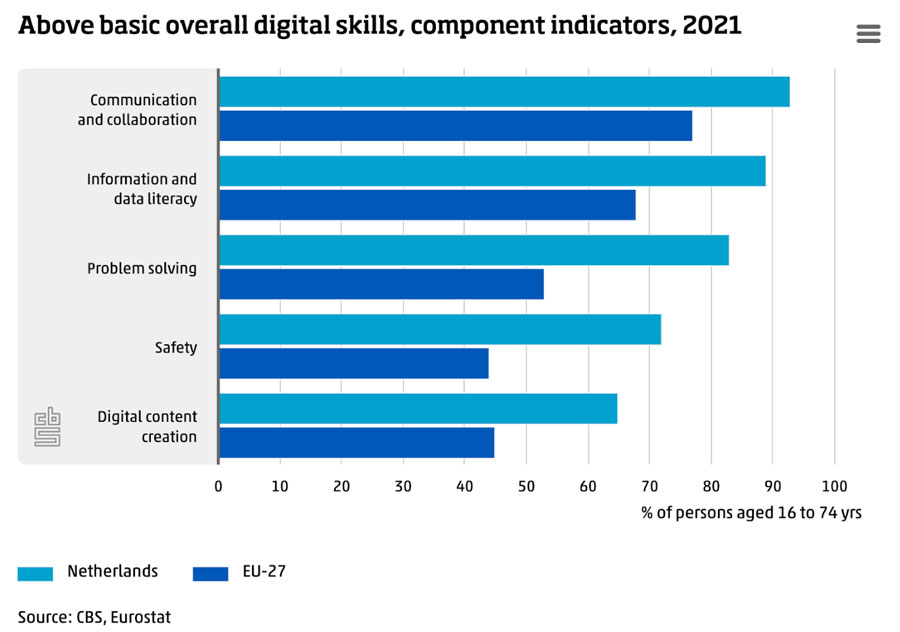
The talent shortage in The Netherlands also differs from other countries that are battling a concerning digital skill gap in their workforce; this is not the case for the Netherlands, as in 2021, nearly 80% of the Dutch population aged 16 – 74 had basic or above basic overall digital skills, versus an average 54% in the European Union.
According to Eurostat, a very large majority of dutch citizens (93%) have above basic skills in the area of digital communication: sending emails, participating in social networks, expressing opinions online or making internet phone calls. On digital information, such as searching for information or identifying fake news, 89% of dutch citizens have the above basic skills.
The Netherlands boasts a healthy and above-European average of digital skills:
As expected, the digital skill gap varies by age and education level. Amongst the age group 25 to 44, 64% had above basic competencies. However, in the 64 to 74 age group, basic competence only reached 28%.
To tackle the talent shortage in the industry, various strategies have been developed to make the benefits and compensation packages more appealing to the desired talent. HR platform Bob suggests taking into account several key factors when recruiting talent, particularly among the younger generation. According to Bob’s research, job security is a crucial aspect of career planning.
Dutch workers are less likely to feel secure in their positions and believe their skills are essential to their company compared to their European counterparts. Also, a higher proportion of Dutch workers anticipate being laid off (30%) compared to the European average (27%). Companies that provide greater security could, in turn, remain competitive in the market and hold on to talent longer.
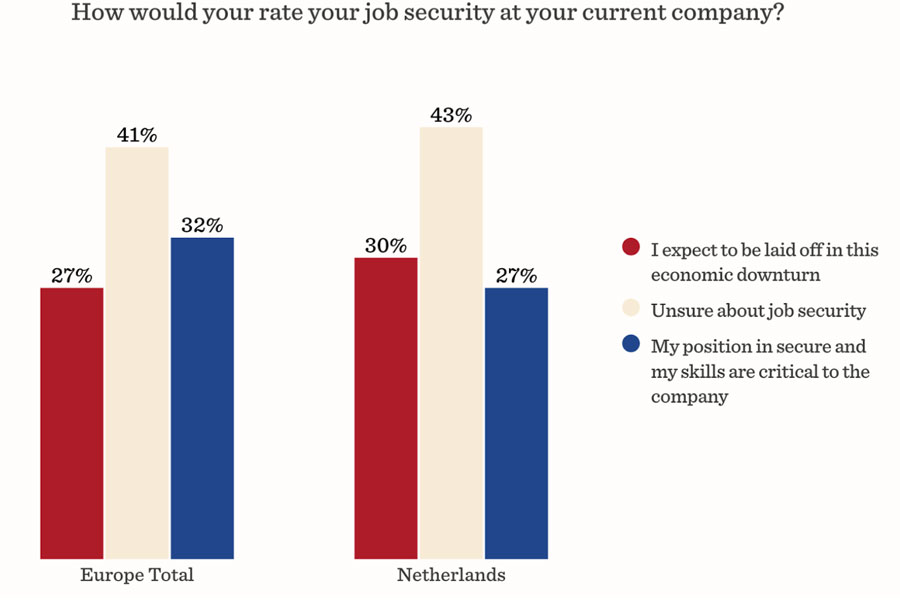 Image Source: Hibob
Katie Insley, Associate Director of HR Recruitment in the Netherlands, along with Bianca Eder, Global Head of Talent Acquisition for Upfield, and Koos Wurzer, Global Head of Employer Branding for Danone, discussed the growing trend of employee experience in the tech industry during the webinar «Discussing the Evolving World of Talent Acquisition«. They emphasised the significance of building an appealing employer brand that draws employees in and offering enticing benefits packages, flexible working hours, and options for hybrid and remote work.
Compensation, including salary, is a crucial factor in attracting and retaining talent, especially in the tech industry, where salaries are typically high. In the Netherlands, the job market is highly competitive, and to attract top talent, tech companies must offer competitive wages. According to data from 2021, the highest-paid tech positions in the Netherlands are for cloud architects, with an average annual salary of €108,359, while front-end developers receive the lowest average salary of €41,838.
The traditional model of employment, which prioritises university degrees and tenure, is being replaced by a model that focuses on skills. This skill-based recruitment strategy requires that companies reassess their talent management, hiring, and training strategies and eliminate the executive bias toward traditional hiring practices To achieve this, companies need to reevaluate their talent management, recruitment, and training practices and reduce their bias towards traditional hiring methods. By doing this, they can build a more skills-focused talent management strategy that will benefit their organisation.
The most sought-after candidates are not necessarily those with hard skills related to tech knowledge, and soft skills are becoming increasingly relevant for the digital tech industry, hiring appropriate professionals and managing employees satisfied in their roles. According to the consultancy firm Kearney:
«Looking beyond technical skills, there is a new premium on human-centred skills such as collaboration, teamwork, critical thinking, emotional intelligence and problem-solving that simply cannot be matched by technology. Learning and training must be at the top of the strategic agenda«.
In their webinar «The Evolving World of Talent Acquisition,» EMEA recruiting consultancy emphasised the significance of soft skills for both employees and leaders. They stressed that leaders must be inclusive and possess high emotional intelligence to manage remote work teams effectively. As the workforce evolves, leaders who can listen to, understand, and respond to their team’s changing needs and desires will have an advantage over those with autocratic leadership styles.
As the talent shortage continues, employers are rethinking how to access talent and upskilling, and reskilling employees is becoming an essential strategy in facing challenges in the talent pipeline. Academic institutions are having a hard adapting to the trends and the needs of the market. According to Fighting the odds | Amsterdam Economic Board:
“there is a gap between education and the labour market in the tech sector. First, the number of students pursuing a tech education is relatively low. Secondly, tech-oriented curricula do not always match the skills that are requested in practice”.
Using reskilling and upskilling as a solution to the talent shortage is essential to provide sufficient workers to maintain the tech industry’s growth. To put into perspective how crucial this trend is, The World Economic Forum projected in its Future of Jobs Report 2020 that half of all employees worldwide would need reskilling by 2025.
Considering the Edtech sector’s size in the Netherlands, it’s not surprising to know more and more tech companies are steering towards this new-found education strategy to navigate uncertain staffing times, with workforce transformation being the largest segment in the sector.
A constant-learning mindset in a company can be key to ensuring its growth and survival in a market that is struggling to educate people as fast as the industry need.
The technology industry has long been seen as a male-dominated field due to gender stereotypes, but there is now a shift towards breaking these stereotypes in the workplace. However, the representation of women in tech remains unequal to that of men, and this difference in gender representation is what we call the Gender Gap.
According to the Dutch D&I in Digital Benchmark, by DiversityHero, an initiative that has mapped diversity in the Dutch digital sector for the first time, the overall representation of women in the digital industry is 38%. When it comes to IT operations, the share of women drops to 13%. The Dutch D&I in Digital Benchmark challenges companies to strive for the policy target of 50% women in ICT by 2030.
The number of female representation varies wildly, as other organisations consider women’s participation in the industry a lot lower. For example, Equals Amsterdam claims that women only make up 18% of the overall tech industry.
In different roles, the percentage of women varies. For example, data from DiversityHero shows that women are more represented in UX and Ui design and QA than in IT or web development:
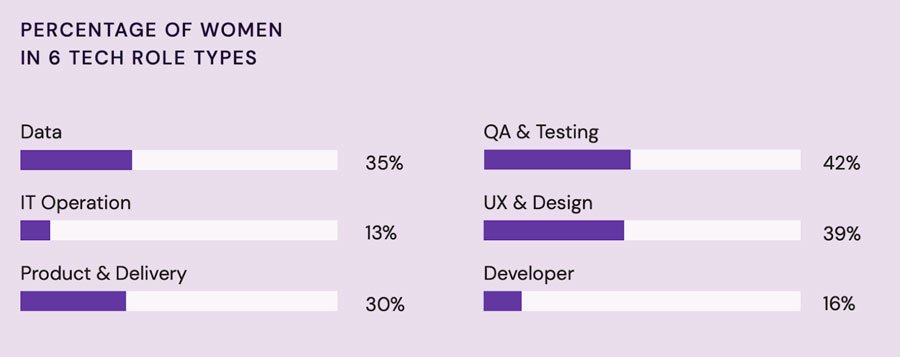 Image Source: Diversity Hero
When it comes to leadership positions, only 36% of women hold a management position in the industry, of which 25% are CEOs, according to DiversityHero.
Female entrepreneurship in the Netherlands is also lower than male entrepreneurship, although data seems to indicate the numbers are up. According to the “Think Bigger” report, women have been increasingly embracing entrepreneurship in recent years. Female participation in early-stage entrepreneurial activity has risen from 2% to 8% of the adult population between 18-64 years old since 2005.
At the start of the 21st century, women were only half as likely to be involved in early-stage entrepreneurship, but now they account for two-thirds of this activity. This trend aligns with the growth in the number of self-employed women, which has almost doubled since 2003, while the number of self-employed men has only increased by 60%.
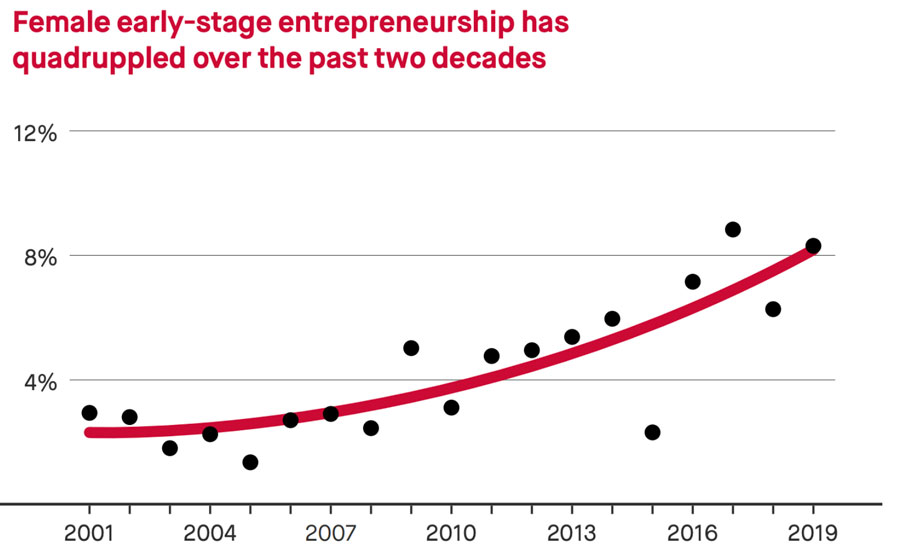 Image Source: Thinking Bigger Report
Secrecy regarding diversity, equality, and inclusion does little to alleviate the situation. In a 2020 report by Equileap, where they analysed gender inequality across industries, they found that 88% of Dutch firms do not disclose gender-based pay information. Almost all of the companies in the dataset (99%) have not disclosed any strategy for closing the gender pay gap.
Additionally, 21% of these companies do not publish gender diversity data, indicating a trend of secrecy or disregard for this sensitive issue. Considering the gender gap in the Netherlands also manifests itself in a pay gap, hiding information about equality practices can only contribute to increasing stereotypes, myths and inaccurate information about women’s role in the workforce.
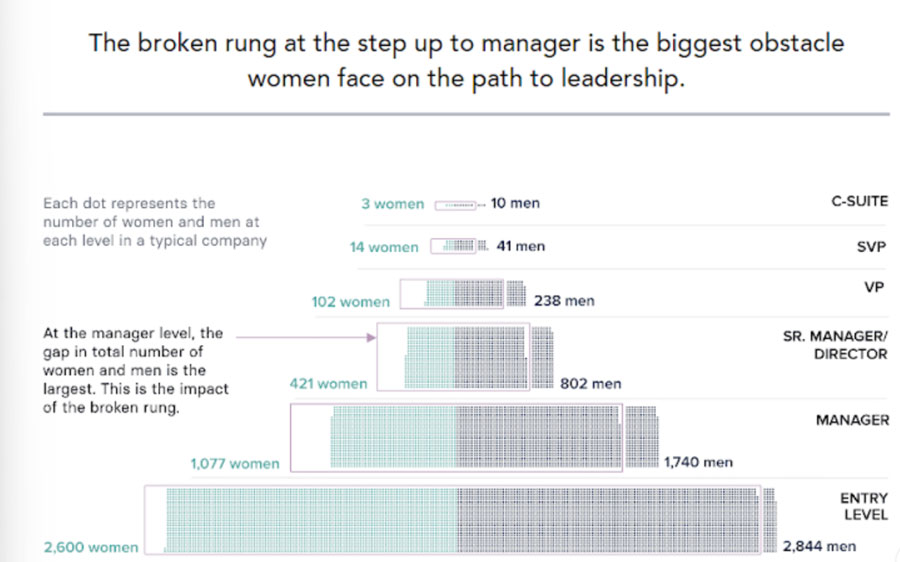
Sifted, in collaboration with Teachleap.nl, suggests that the solution to increasing gender diversity in the industry is not only to recruit women into entry-level positions but also to promote them to leadership roles, such as middle management and company management, and provide access to investment opportunities.
In Amsterdam, a network of organisations and communities exists with the goal of promoting workplace equality and diversity. These groups host events and launch initiatives aimed at supporting female entrepreneurs and professionals in realising their dreams and career aspirations by providing resources and encouragement.
A curious campaign launched in 2022 called Mijn naam is Peter, by Women Inc, with the purpose of drawing attention to the unequal gender division in the dutch workplace. With a LinkedIn name change, they intended to indicate that the female presence is so low in the tech industry that there are more men called Peter than women CEOs.
In a 2018 research study, McKinsey claims a self-perpetuating system explains the inequality in the Dutch labour market, resulting in untapped female potential. In the Netherlands, there are firmly held societal views and norms that significantly impact the education and career choices of women and men and often result in women getting stuck in an unequal position in the market:
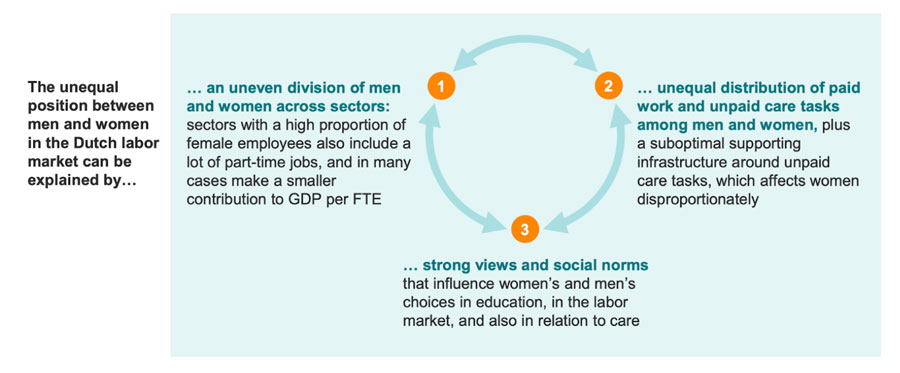 In the same report, data shows that “female-dominated industries” such as healthcare or education are typically full of women working part-time, and this seems to be a typically Dutch phenomenon.
In the Netherlands, 70% and 48% of roles in healthcare and education, respectively are filled by women working on a part-time basis. What’s more, 57% of women who work part-time attribute it to unpaid care duties, housework, and informal care, compared to only 27% of men. Expensive childcare and unpaid household duties are significantly relevant to women’s choice of work.
The Gender Gap influences a women’s tech career in an intersectional way. First, looking at the number of women who choose a STEM (science, technology, engineering and mathematics) degree is essential.
The Netherlands has one of the lowest share of women in STEM in Europe. During high school, women are less inclined to enrol in STEM courses, yet they perform as their male classmates both at high school and university levels. Improving study success in STEM higher education could also help the labour market shortage for STEM graduates.
The shortage of female role models in STEM has perpetuated the male-dominated nature of the field and created a notion that women do not belong in science and technology. This lack of representation leads to a lack of motivation and inspiration for girls to pursue STEM careers. Raising awareness and showcasing successful women in STEM can help change this perception and encourage girls to consider a future in this industry.
Stereotypes and sexism also discourage girls from pursuing STEM, as the baseless idea that women are less intelligent in these subjects negatively affects their self-image and influences them to choose more «feminine» career paths.
Gender-based job stereotypes persist, and they can severely influence a person’s choice of career path. Sahar Yadegari, director of VHTO, an organisation aimed at promoting gender diversity in STEM, stated that «many companies are not yet prepared for diversity. They want women on their team, but only if they fit the mold of being ‘one of the guys.'»
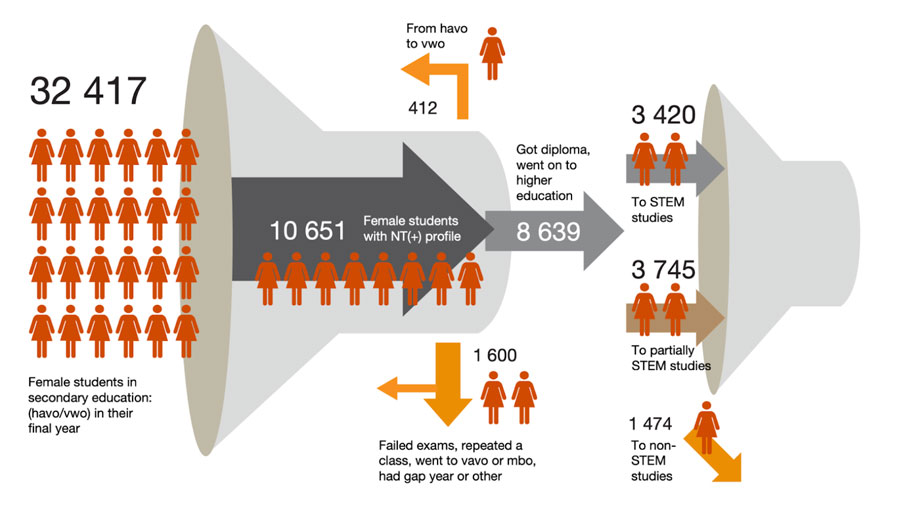
Even when women in the Netherlands choose to study a STEM degree, there is less progression into technical careers, with only 29% of women with a technical degree having a career in technology, compared to 47% of men.
The next image represents the STEM education pipeline in the Netherlands, according to a PWC report:
In a McKinsey report called “Building a world-class Dutch start-up ecosystem”, where they explore some key actions to elevate the Netherlands’ tech landscape, they cite “increasing the number of female founders” as an important transformative action.
Promoting structured mentoring programs and networking events, increasing public awareness of gender bias in funding processes, and promoting more diversity in venture capital could lead to an additional 115-170 start-ups in the Netherlands being founded each year by 2030.
McKinsey makes a strong case for labour parity showing data that proves parity isn’t just a “women problem”. It’s, in fact, an economic problem: female workers are contributing less to the country’s Gross Domestic Product (GDP) compared to men (in part due to part-time jobs). If women joined the labour market at the same rate as men, they could add over €100 billion to the country’s GDP.
Nancy Poleon, the founder of the personal branding programme BrandedU, discussed the state of female presence in the dutch tech scene in the panel “Are we equal yet?”. Regarding encouraging women to pursue leadership roles in tech, she mentions:
«You’ve got to go out there and tell your story so you can be visible. And you’ve got to tell it in a way that’s confident. Because the truth is: without confidence you will miss opportunities. A Hewlett Packard internal report found that men apply for a job or promotion when they meet 60% of the qualifications, but women apply only if they meet 100%. So most women don’t even have the confidence to try!”
PWC suggests several strategies to integrate women into the tech industry. These include focusing on education, hiring and training women in tech roles, promoting inclusive environments through changes to gender stereotypes, equal recruitment practices, and eliminating sexist language.
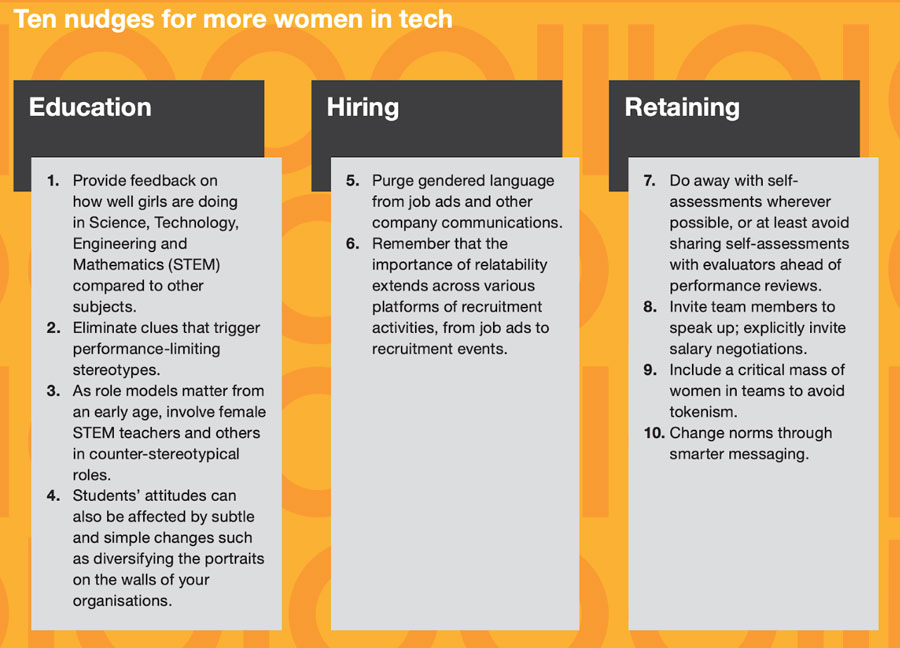 Image Source: PWC
In the Netherlands, several initiatives aim to bridge the gender gap in the technology sector by offering different approaches. These include establishing networks for women in the industry (such as Equals), reskilling female talent, sharing success stories to create female role models, providing information to increase understanding and change mindsets about tech industry jobs, and raising awareness in businesses about creating inclusive and unbiased recruitment processes.
Platforms like Dutch women in tech (DWTI) can share stories that inspire and educate the industry to understand how vital diversity is for the sector’s growth.
According to Data Reporta, there are almost 17 million internet users in the Netherlands, with one of the highest internet penetrations in Europe. The country’s e-commerce is also notably significant, ranked as the seventh-largest e-commerce market in Europe. In 2021, the Dutch e-commerce industry was valued at 30.6 billion euros, surpassing 373 million online orders. In the last decade, the Dutch e-commerce market has grown by over 20 billion euros and shows no signs of stopping.
It is no surprise that in such a favourable environment, developers, particularly full-stack developers, will remain one of the most sought-after roles. According to the 2022 Netherlands Report State of the Software Developer Nation the demand for software developers reached unprecedented highs in 2021 due to record-breaking tech IPOs. This led to sky-rocketing salaries that can currently reach €64,000 per year.
Retaining developer talent in the Netherlands goes beyond just offering attractive salaries; it also requires good leadership. As per the 2022 Netherlands Report State of the Software Developer Nation, 52.4% of developers are leaving their roles due to poor leadership or management, and 30% are actively seeking new job opportunities within the next 12 months. This makes retaining talent and cultivating good leadership a top priority.
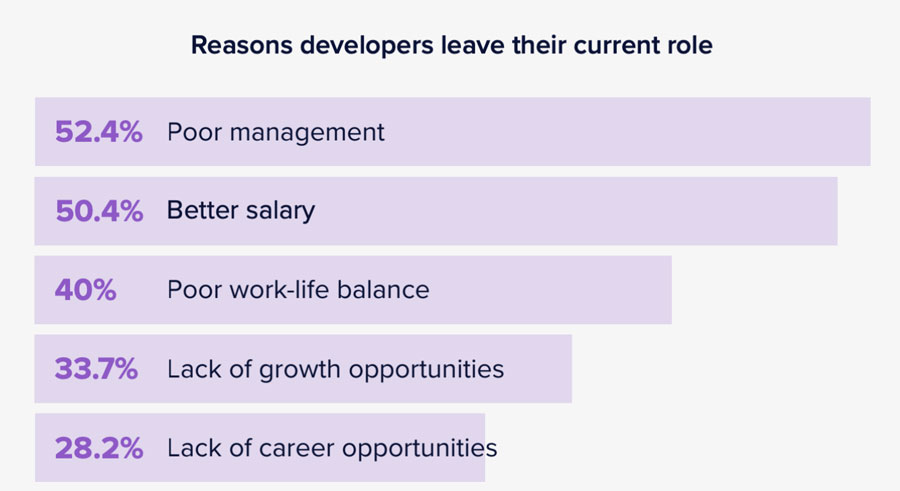 Image Source: Offerzen
The Dutch web development industry constantly evolves, with new trends emerging yearly.
Some of the key trends to look for in the coming years are:
- Progressive Web Apps (PWAs) provide a cost-effective alternative to traditional native apps and can be accessed from any device, offering an immersive and usable website experience for consumers. They are considered more user-friendly and more engaging.
- Artificial Intelligence (AI) and Machine Learning (ML) are gaining traction in the global web development industry, providing personalised and efficient customer experiences in various areas of life. The Netherlands aims to build and maintain a distinctive position in the development and application of AI to benefit society and expand its international competitive position. The Netherlands AI Coalition (NL AIC) is a public-private partnership that collaborates to accelerate and connect AI developments and initiatives in the country.
- The Internet of Things (IoT) is one of the most powerful web development trends. The incorporation of IoT edge technology in web development will bring about changes to the front-end interface and user interactions, among others. The front-end interface will serve as the means for users to interact with devices such as cameras, sensors, and other connected devices on the Internet. According to Statista, the number of IoT-connected devices is expected to reach nearly 75 billion by 2025.
- The Internet of Behavior (IoB) is an ecosystem that collects data on people’s behaviour. It’s a powerful tool for companies to deeply understand their customers and improve their marketing and sales. By implementing machine learning algorithms, IoB can capture, analyse and respond to customer behaviour, providing valuable insights and resolving issues quickly. Additionally, IoB can enhance the security of public places and other networks.
- The use of blockchain in web development has been productive and is rapidly influencing the business community. Blockchain is ideal for secure payments, wallets, and intellectual properties, and with core players like Amazon and Azure providing blockchain as a service, it confirms its impact on web development.
- According to the State of the Software Developer Nation, most developers are interested in working with Python and Go. JavaScript frameworks continue to dominate the top five, and React remains the most popular framework among developers in the Netherlands.
As technology advances and integrates more deeply into our lives, the need for well-designed and user-friendly products and services will grow. The shift of companies towards digital products and services creates a demand for UX and UI designers to create positive online experiences.
Adopting a user-centric approach is increasingly recognised as key to increasing customer satisfaction, engagement, and loyalty. Conversely, poor user experiences can result in decreased usage and customer retention. Design roles will remain important in the rapidly-growing app industry and smart devices, as well as in emerging sectors such as Mixed Reality, Augmented Reality, and AI. In the Netherlands, the average salary for a UX designer was close to 38,000€ in 2022, but with the evolution of the role, salaries may adapt to market changes.
According to this Informaat State of UX report, UX maturity has increased considerably in the last five to seven years. In previous reports, UX was mainly given ad-hoc attention in a few projects, but in 2020, UX is now receiving structural attention in projects and programs in 50% of organisations. Higher management is also paying more attention to UX, and in some cases, UX is now part of the business strategy. Higher UX maturity seems to indicate higher UX and UI specialisation.
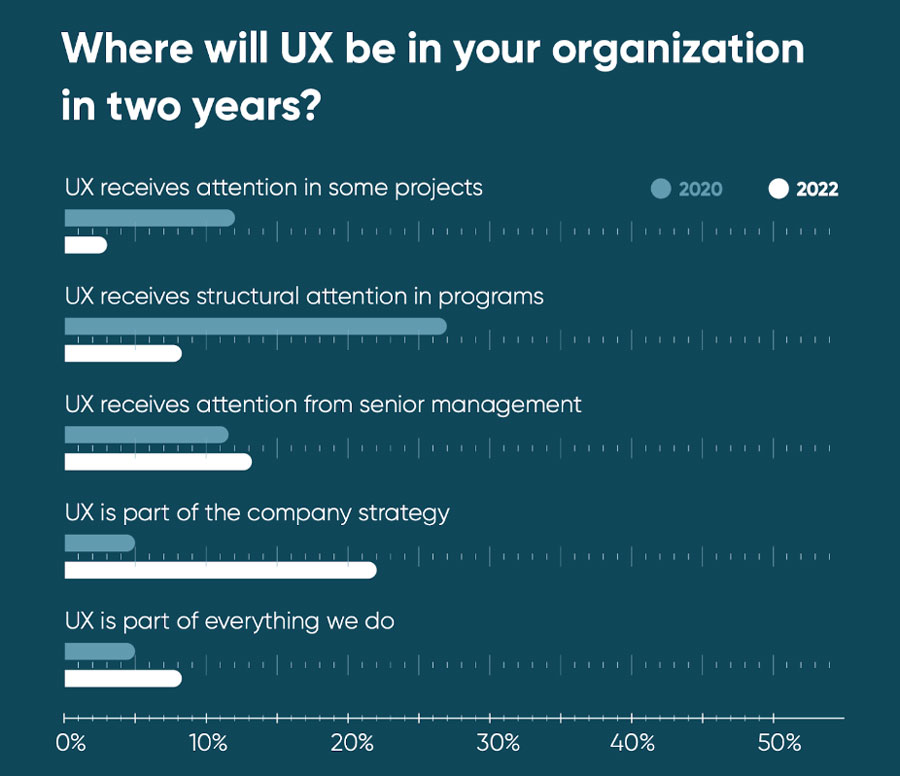 Image Source: The State of UX in The Netherlands
The demand for diversity within UX work teams is set to rise, necessitating more advanced UX roles that can readily adapt to changes. Companies with high UX maturity are now hiring service designers and customer journey designers, with newer positions like UX researcher, UX architect, and business designer emerging. Moreover, the seniority of UX teams is growing, with more than half of UX professionals having over 5 years of experience in many teams.
According to UX managers, this is due to the increasing complexity of UX challenges brought about by cross-functional and cross-departmental activities throughout projects and channels.
The State of UX report by UX Collective suggests that the crisis may result in the downsizing of design teams, leading some to seek more versatile profiles and adaptable leaders. In response to these challenges, positions of greater seniority, such as «Resourceful Makers», are emerging, capable of navigating through new obstacles and rapid industry changes. In a fast-paced industry, keeping up with the acquisition of new skills can be a challenge.
The disparity between the design curriculum taught in schools and the actual demands of a design job have never been greater. Designers who are able to secure a position are expected to produce a significant volume of work quickly, often with minimal margin for error.
Some anticipated trends that will shape the UX and UI market in the near future include:
- The rise of minimal or contactless interfaces, like voice commands, which have become more popular in response to the COVID-19 pandemic. These interfaces are expected to become more widespread in public services and household products.
- An increased focus on motion design and gestural interfaces, as users interact with devices in more seamless ways and gestures become a more significant aspect of human-machine interaction.
- Continued growth in VR and AR design, particularly in the e-commerce sector, as these technologies transform the way users interact with digital environments and require UX and UI professionals to learn new design methods to create immersive and seamless experiences.
- Cross-platform development, as users expect consistent and valuable design across multiple devices and platforms.
- The growing importance of accessibility as the tech industry strives to be more inclusive and diverse.
- The use of AI in the UX/UI design process, such as using AI tools to save time or assist with organisation and analysis.
In 2023, the shift towards the product management operating model will lead to significant restructuring and mission changes in many IT organisations. To achieve maximum product success, it will be crucial for product management teams to hire and develop the right mix of talent as they strive to enhance their advanced capabilities. Consequently, there will be an increasing demand for management positions that can effectively lead these processes, including Project Managers, Product Owners, and Scrum Masters.
As the field of digital product management continues to evolve, proficiency in advanced skills such as data analytics, the Internet of Things (IoT), data-based platform business models, and multi-experience design will become increasingly vital. Leaders in this space will need to stay up-to-date with emerging trends to guide their teams more effectively and create more successful outcomes.
The role of a product manager has evolved to become increasingly complex and multidimensional in response to technological advancements and the need for greater agility in manufacturing. In addition to defining and overseeing product strategy, product managers must now wear many hats and become proficient in a variety of areas, such as technology tools, finance, and timelines, to be successful in their role. They are expected to deliver on growth targets set by executives while meeting the needs of customers and the market.
Product managers are also taking on new responsibilities in response to changes in technology and trends. Three ways their responsibilities have shifted include an increased focus on customer experience, a greater emphasis on data-driven decision-making, and a need to collaborate more effectively with cross-functional teams. As manufacturing continues to evolve, product managers must stay on top of emerging trends to remain at the forefront of their field.
As per the Product Management Benchmark 2022 report, the average annual salary for product managers in 2022 was more than $100,000 before taxes, making it the third-highest paying job globally and second-highest paying job in Europe.
The report predicts that the salaries will remain the same for the current year. Investments in product managers have been increasing and are projected to continue to rise. The importance of the product manager role varies depending on the type of organisation, with agile systems and startups seeing the role as a key differentiator and leader, while more chaotic or bureaucratic organisations view it as just another position.
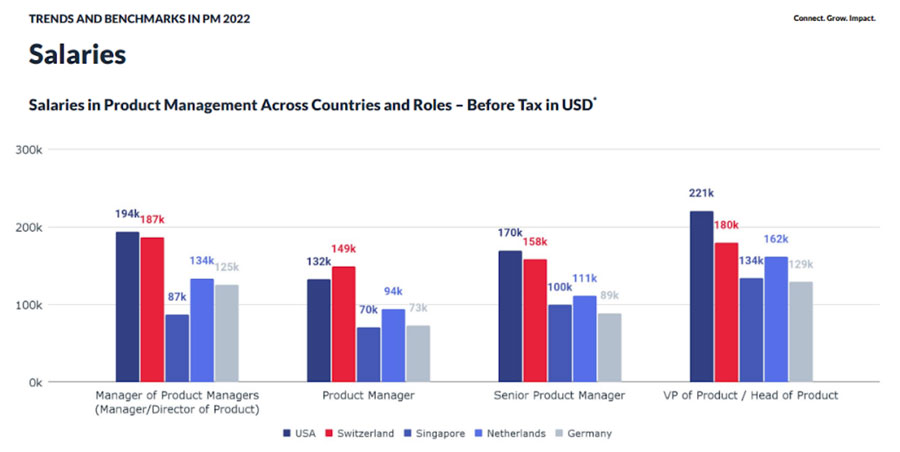 Image Source: Product Management Festival
In the coming years, product management is set to witness a surge in trends, including the application of machine learning concepts and AI tools to aid the decision-making process of product managers. With the ongoing innovation in AI, product managers are expected to leverage the technology to become more efficient, as highlighted by the IBM Global AI Adoption Index 2022, where 21% of product managers rank among the top 10 AI user groups globally.
Additionally, there will be a deeper focus on data management platforms without neglecting the empathy for users, as PMs increasingly rely on big data while maintaining a balance between quantitative and qualitative approaches.
Furthermore, product managers will put more emphasis on long-term strategies, with 48% of respondents from the 2022 Product Excellence Report citing the establishment of clear product vision and strategies as the most challenging aspect of product management. Given the current economic uncertainty, product managers must invest more effort in strategic planning.
The world is facing significant uncertainty due to various factors, such as the impact of the Covid-19 pandemic, war, economic instability, inflation, and climate change. These challenges require leaders to change their planning and strategy towards prevention and good management practices while focusing on the economy. According to PwC’s 26th CEO Survey, the vast majority of CEOs are future-proofing their companies, investing in automation processes and systems with an aim to make future-oriented investments possible.
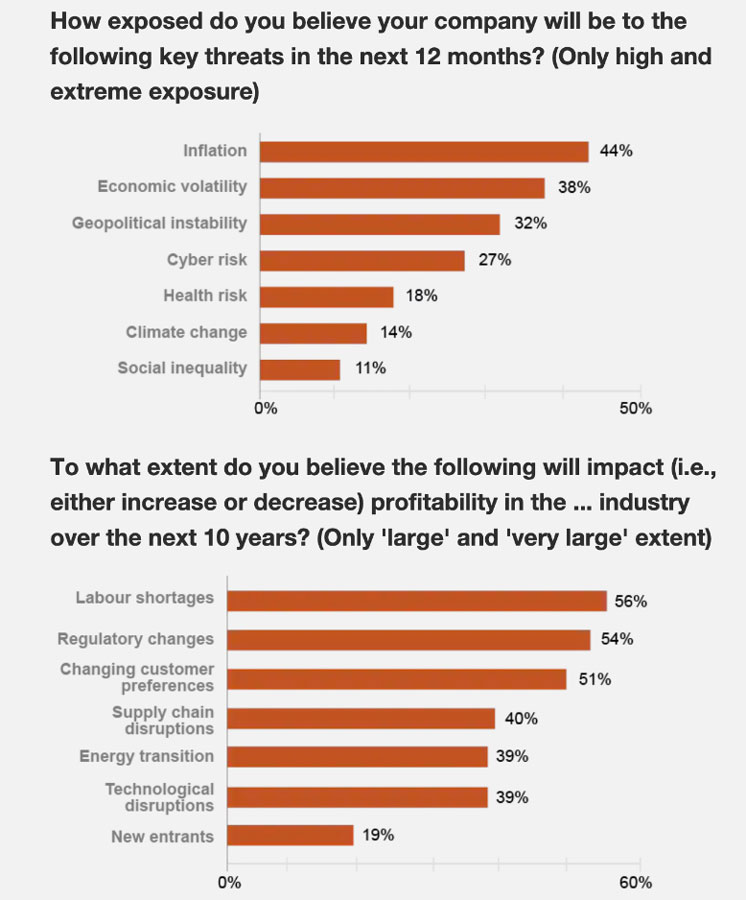 Image Source: PWC
In 2023, technology will shape the scenario for the coming years, with significant technological changes expected to impact the digital world. Most industry experts agree on some of the technology trends for 2023 and beyond, including generative artificial intelligence, the metaverse, digital twins, extended reality, augmented reality, Web 3, cloud-native platforms, data, and cybersecurity.
These trends will impact the tech industry and bring about a paradigm shift in different sectors. The increase in digitalisation, new legislation, and the search for talent will change the way we communicate and do things.
According to PwC’s survey, most investments in the coming years will focus on automating processes and systems, deploying technology, and upskilling the workforce. These investments will form the basis for technological advancements in the coming years.
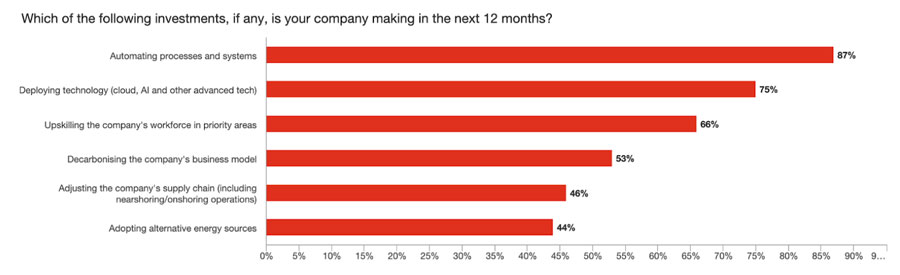 Image Source: PWC
To stay relevant and viable, tech companies are also focusing on sustainability and social responsibility, as consumers are increasingly demanding that companies take an ethical approach to business. They are prioritising eco-friendly practices, such as using renewable energy and reducing waste, and are implementing diversity and inclusion initiatives to ensure a diverse workforce and equitable practices.
Overall, Dutch tech companies are demonstrating a willingness to adapt and evolve while prioritising innovation, sustainability, and social responsibility. This approach is helping them stay ahead of the curve and remain competitive in a rapidly changing industry.


 Image Source:
 Image Source:
  Image Source: