What you'll find out
Digital Technology Vision in SPAIN
Spain's performance: opportunities in digital skills acquisition and SMEs technology integration
When assessing a European Union (EU) country’s digital performance, DESI, which stands for Digital Economy and Society Index, is an important and reliable source.
DESI summarises different digital-related indicators and tracks the progress of all European Union countries.
The following quote, obtained from the official European Union’s website, where many in-depth digital-related reports can be found, gives us a brief explanation of DESI and its purpose:
«Since 2014, the European Commission has monitored Member States’ progress in digital and published annual Digital Economy and Society Index (DESI) reports. Each year, the reports include country profiles, which help Member States identify areas for priority action, and thematic chapters providing an EU-level analysis in the key digital policy areas. The DESI Index ranks Member States according to their level of digitalisation and analyses their relative progress over the last five years, considering their starting point.»
DESI provides a main score as a result of measuring four different aspects related to digital progress:
- Human capital: measures and monitors Internet user skills, advanced skills and development to ensure people are equipped for the digital decade.
- Connectivity: measures both supply and demand of fixed and mobile broadband.
- Integration of digital technology: assess the integration of new technologies in businesses and eCommerce.
- Digital public services: if and how citizens and governments are enjoying the full potential of digital technologies in public services.
Spain’s latest assessment is comprised in the DESI 2022 report. According to this report, the country ranks 7th out of 27 EU Member States. Connectivity continues to be its greatest strength, ranking 3rd for a consecutive second year and being considered a regional leader. Spain has also been a front-runner in the EU when it comes to digital public services, and it continues to improve its services as well as its infrastructures that align with new developments and respond to people’s and enterprises’ growing needs, particularly in health, digital identification, cybersecurity, mobile apps and integrating AI.
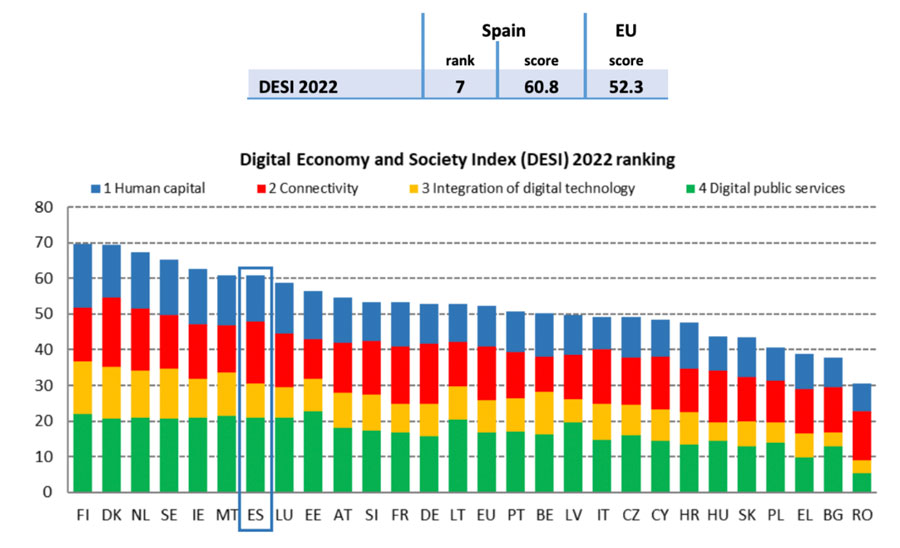
Image Source: DESI Spain
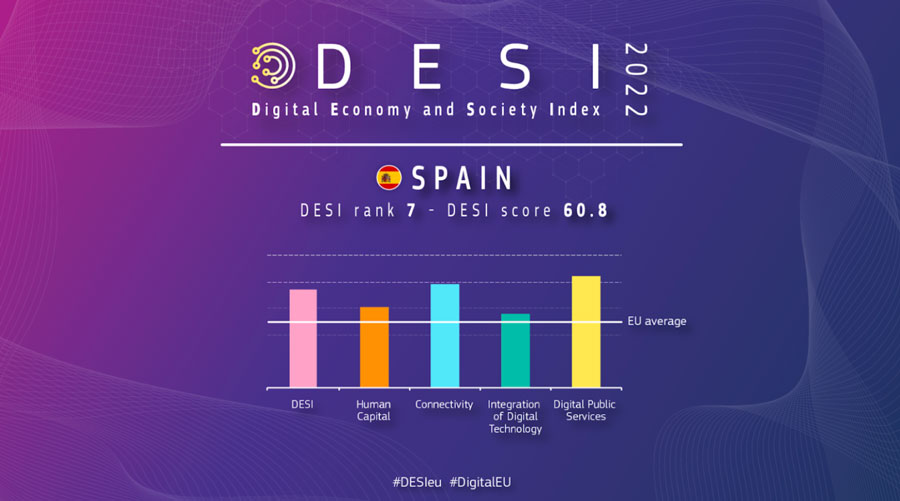
Human capital and integration of digital technology are where Spain has its biggest opportunities.
According to the DESI 2022 report, specifically the human capital section, ICT specialists’ employment in Spain is below the EU average, which affects the country’s growth and productivity prospects. This is particularly hard on small and medium-sized enterprises (SMEs) and micro-enterprises.
Regarding the integration of digital technologies, again, SMEs are the ones significantly affected. They are lagging behind on new and advanced technologies such as cloud or big data, which gets complicated even more by the lack of a critical mass of digitally-trained workers.
According to a document on the digitalisation plan developed by the government, SMEs constitute a significant characteristic of the Spanish economy. Together with micro-SMEs and the self-employed, they account for 98.99% of all companies and 49.58% of employment in Spain.
They are intimately linked to human capital needs as, for an increase in their productivity to happen, workers need to be trained in digital as well. Cooperation and networking between SMEs should also be vital in multiplying positive results. It is expected that measures taken by the government will help support the acquisition of digital skills by the Spanish workforce and significantly help SMEs with their digital integration.
Another relevant source of information is AMETIC, an association representing Spain’s digital industry. They call themselves the Voice of the Digital Industry, and close to the end of the last year, in October, they published the Digital Economy 2022 Barometer, a report that comprises different indicators for the industry. Although measuring 2021’s performance, the latest they have on record, AMETIC’s barometer gives us complementary information for understanding Spain’s Digital Tech Industry. In 2021, the industry had grown 5.2% compared to the previous year, reaching a total size of 114.493 million euros, thus recovering from the pandemic.
In an article for Computer World Spain, expanding this information, we find a quote from Pedro Mier, president of AMETIC, who affirms that the industry grew 20% in 2021, a percentage above the one shown for the whole economy.
Aligned with DESI’s indicators for 2022, at least for digital public services, Antonio Cimorra, director for Agenda Digital and Sector Studies for AMETIC, in the same article, explains that digital transformation of enterprises and the public administration has been significant in having positive results for the industry. Public investment, in particular, had increased by 96% between 2020 and 2021, impacting technologies related to AI, security, collaboration and connectivity software, but most of all, cloud and data.
As a recent example of this, at the beginning of 2023, Jose Luis Elechiguerra, responsible for Global Engineering at BBVA, published an article explaining how he believed disruptive technologies, such as cloud, big data, but also AI and biometrics, were the key for offering better solutions to clients in the banking sector.
Still, as we’ve mentioned before, integrating digital technologies into enterprises, especially SMEs, and developing the appropriate skills are challenges the country will need to face to be able to take advantage of these tech advancements.
The Government's strategy for addressing challenges
In July 2020, the Spanish government launched España Digital 2025, a strategic route for the country’s digital transformation, which recognised the impact technology and the digital industry has in post-pandemic economic recovery.
In this video, Carme Artigas, Secretary of State of Digitalisation and Artificial Intelligence, a department dependent on the Ministry of Economic Affairs and Digital Transformation, explains the reasoning behind this plan and its purpose.
Amongst other ideas, Carme explains how the tech sector, as of 2020, accounted for 19% of the country’s GDP. An important of the country’s economic recovery post-covid implies narrowing digital gaps across individuals and collectives, which in turn has the potential for reducing gaps and inequalities in other dimensions of social life like the ones based on gender, age and territory; she explains why the strategy’s budget accounts for a third of the Recovery and Resilience Plan’s budget (RRP), showing the significance given to the matter.
The strategy, as explained in España Digital 2025, considers these three levels crucial for Spain’s digital transformation: digitalisation of industry and business (especially SMEs), digitalisation of R&D+i and improving the population’s digital skills. Performing better in these indicators should result in «increased productivity, better working conditions, better connectivity and better development opportunities». Thus, responding accordingly to DESI’s assessment of Spain’s more significant challenges.
The following image, obtained from the same document, gives us an overview of Spain’s strengths, weaknesses, challenges and opportunities.
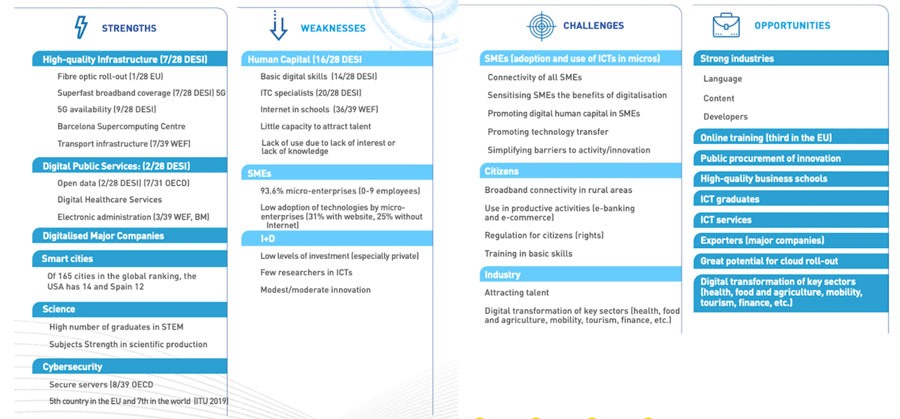
Image Source: Digital Spain 2025
The strategy is a living document as it is continuously being updated and adapted to new circumstances. Thus, the Spanish government, responsive to the evolution of challenges, as of July 2021, updated the strategy, now called España Digital 2026, and incorporated not only new priorities but two new axes called Strategic Projects for Recovery and Economic Transformation (PERTE: Proyectos Estratégicos para la Recuperación y Transformación Económica) and the Retech initiative, a network composed of outstanding and transformative strategic projects proposed by autonomic communities.
In the noted link for the España Digital Strategy 2026, a section called Related Content shows a variety of reports (see picture below) that could be of interest for in-depth research on specific sectorial strategies such as the National Plan for Digital Competencies, the SMEs Digitalisation Plan or the AI’s National Strategy.
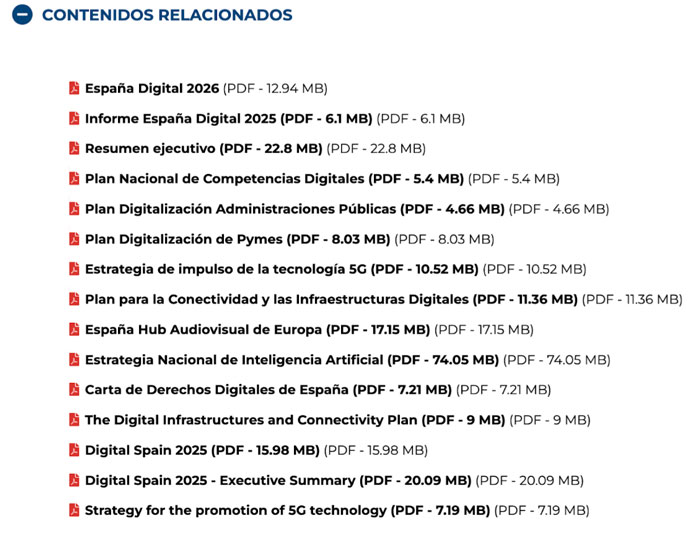
Image Source: España Digital 2026
Digital Eye, a digital transformation observatory, shares a summarized and graphic visualization of the updates done on the strategy (see image below) and explains how the digital agenda has been aligned with the updates being done on the Recovery and Resilience Plan (RRP) and also with Europe’s Digital Compass.
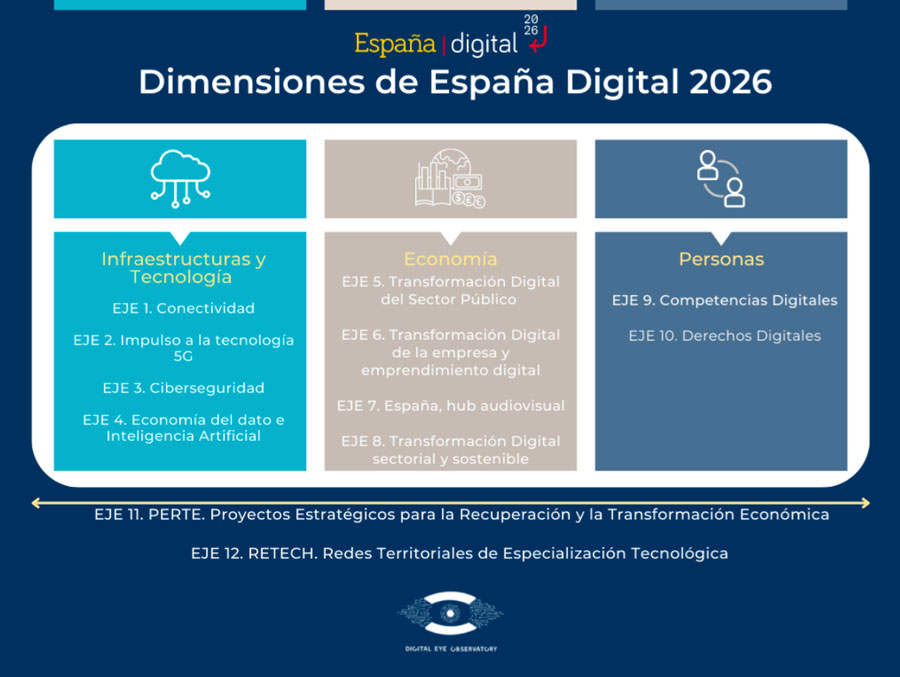
Image Source: Digital Eye
Startups and innovation hubs: a source of growth
The digital & tech startup ecosystem in Spain is growing rapidly. It is one of the most important ones in Europe, according to Invest In Spain, a website from the Ministry of Industry, Commerce and Tourism, looking to promote the country as an attractive opportunity for investors everywhere in the world, especially for foreign capitals being higher than 80% of total investment received by startups.
Inside this website, there is also information and resources for entrepreneurs like Rising Up Spain, a program specially designed for foreign startups who want to establish themselves in the country with the help of a local partner.
At the inauguration of a congress in Valencia called Connected Industry 4.0, it was announced that the government would support a program called PADIH (Programa de Apoyo a Los Digital Innovation Hubs) which amounts to 37.59 million euros. The purpose of this program will be to create a network of digital innovation European centres (around 25) that will help SMEs (close to 1253) with the incorporation of advanced digital tools necessary for them to overcome the challenges brought by the digital transition of the country.
Also, the Startup Law, the first in Europe oriented to create an innovative entrepreneurship ecosystem, is another example of the attention given to this matter in the country. Companies that match the law’s definition of what a startup is (age, location, nationality of employees, amongst others) can be benefited from different policies regarding fiscal, labour, economic and social issues to help them better develop and grow in the sector.
To further our understanding of why startups are of such importance in the country, dealroom.co, in a combined effort with different organisations, has led the development of a 2021 report about the Spanish tech ecosystem, providing an interesting outlook on the opportunities this sector offers for the whole country.
Spain has been a startup ecosystem flying under the international radar, but not anymore. It has five times in value since 2015, and it has reached €46 billion euros driven primarily by homegrown unicorns (when a company reaches a billion dollar value) such as Glovo, Wallbox and Flywire.
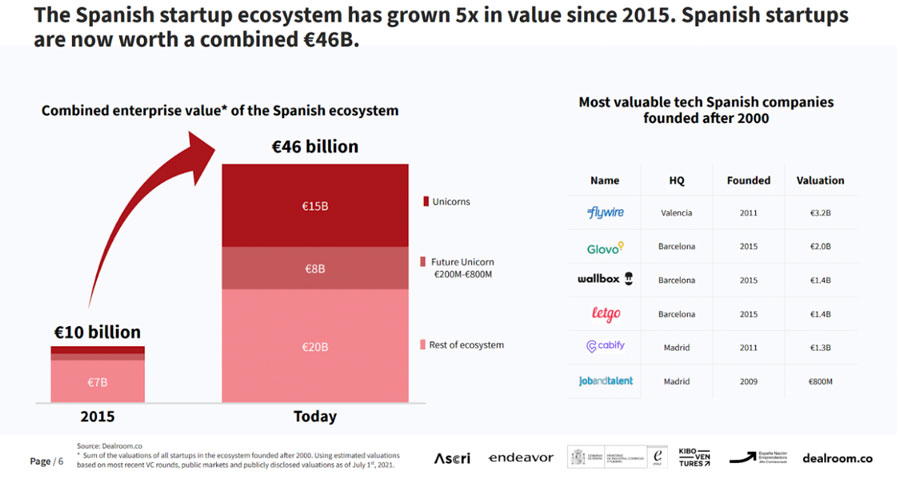
Image Source: Dealroom.co
Venture Capital investment has grown faster in Spain than in any other European country besides the Netherlands in the first half of 2021. Mostly because of startups in Barcelona and Madrid. More investment has been raised in the first half of 2021 than in all of 2020.
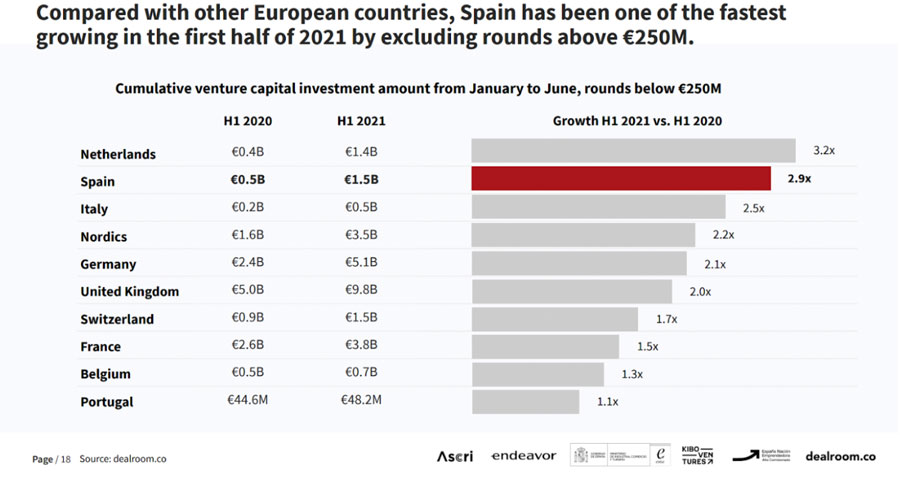
Image Source: Dealroom.co
Madrid and Barcelona are now established, attractive startup hubs, but many other towns and cities also foster startup activity and attract investor attention.
According to an article by Business Insider, the communities of Andalucía and Valencia are not so far behind these two cities. In addition, regions like La Rioja, Canarias and Navarra are also making their way to get the attention of the innovation and startup landscape.
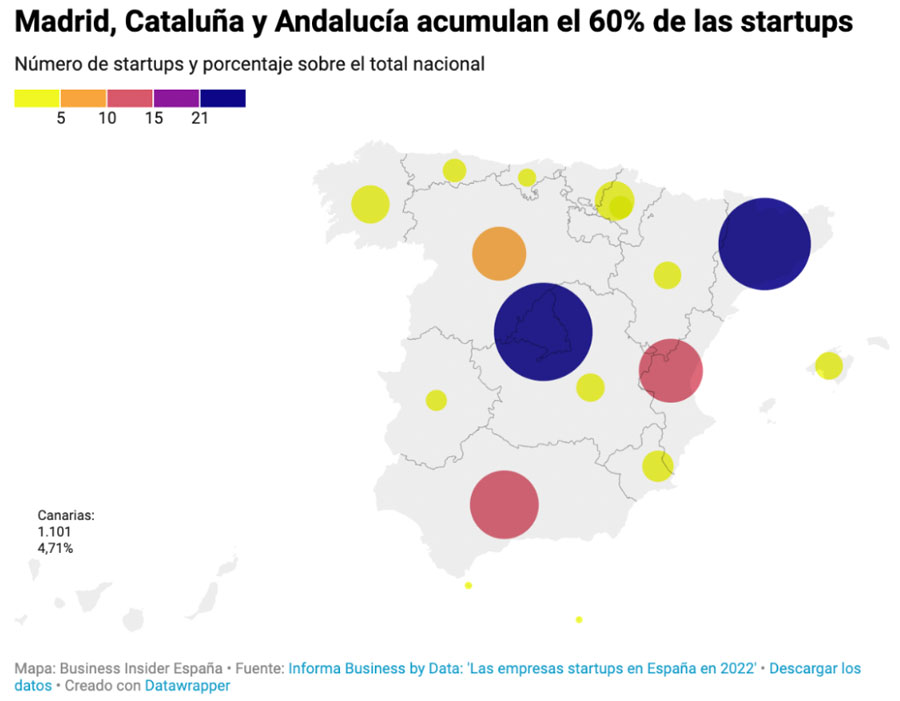
Image Source: Business Insider
Finally, going back to dealroom.co’s report, there is still a considerable capacity for growth in Spain as investment is still largely dominated by domestic players. They point out that addressing critical challenges around talent could unlock significant ecosystem growth.
The growing attention on startups has to do a lot with their capacity to thrive under challenging economic circumstances like the one we’re experiencing today. According to Endeavor, they are an engine for economic recovery. After the 2008 and 2009 financial crises, the number of new tech companies more than doubled. Today, tech companies are securing significant funding and getting unicorn status.
This article from La Razón, reminds us that Cabify was the first company to reach unicorn status in 2018, 7 years after its creation. Other companies after that include Glovo, Job and Talent, eDreams, Idealista, Wallbox, TravelPeerk, Flywire, Eevo and Factorial. Miguel Ferrer, Digital strategy director, explains that in 2025 the goal will be higher, with startups having to multiply by 10 the previous unicorn filtering amount. He says that Wallbox, eDreames, Glovo or Job and Talent are companies expected to achieve sometime in the future.
From a more conservative take on the matter, Business Insider analyses information on startups’ exits over the last couple of years. An exit is defined as that moment where a startup ends, whether it is sold, gets fusioned with another or closes. Reaching unicorn status is also an exit. So, according to the numbers, startups’ exit in Spain for 2022 amounted to 1.200 million euros, whereas in 2021 they reached 3.600 million and in 2020, the year of the pandemic, 2.600 million. The amount for 2022 was closest to what the exit amounted in 2018 which was 800 million. These makes it difficult to predict if 2023 will be a better year.
Workplace gap: existing problem between supply and demand in digital technology
Closing the gap: a matter of both quantity and quality
AMETIC’s 2022 Barometer offers more detailed information regarding different aspects of the digital industry, such as company profiling, Gross Domestic Product (GDP) impact, innovation share, e-commerce, etc. And between these, there is information on the job market. According to AMETIC’s Barometer, employment in the tech industry increased in 2021 at a 10% rate compared to the previous year, reaching a historical size of 582.412 employees.
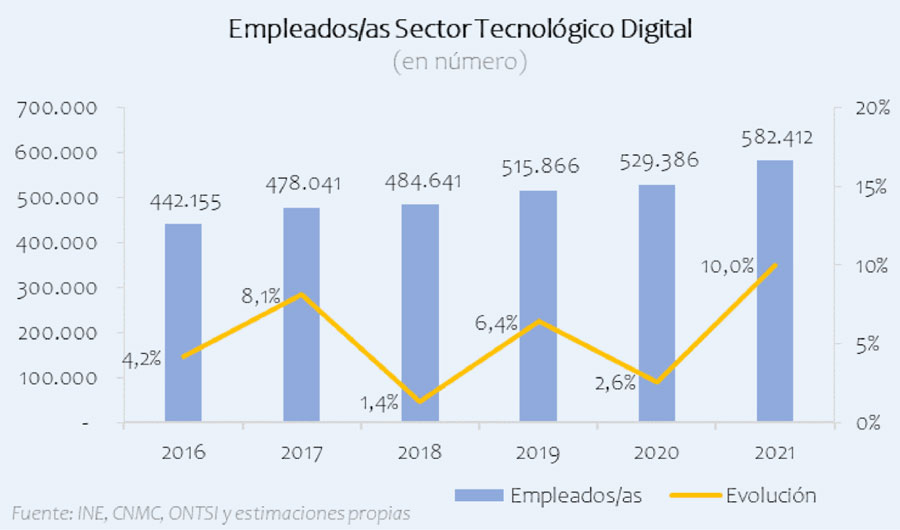
Image Source: Ametic
The growth is surprising, considering that just a few years, in 2019, the number of tech employees in Spain sat at about 250.000 people. Although there are many new job openings, reflecting how the market is growing, a large number of vacancies remained uncovered in 2021, according to a study done by Vass and Autonoma University of Madrid published in June of 2022.
This is, according to Tech Cities 2021, an illustrative map of tech talent demand in Spain:
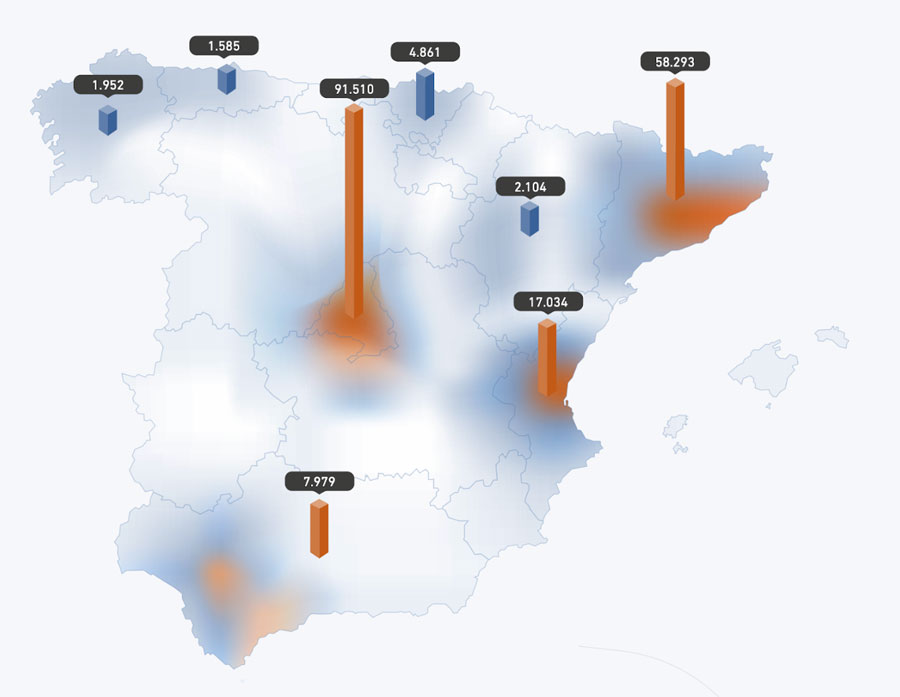
In an article published at the end of 2022, there were 73.000 vacancies in the ICT sector during 2021. In their 2022 report on the tech industry’s demand for talent, Digital ES estimated that, in May 2022, the number of open vacancies in the sector reached over 100.000. Antonio Rueda, founder of Vass and also a university professor, claims Spain should create 1.3 million ICT specialists by 2030 to be able to cover the European Commission’s digitalisation objectives, but based on the steady pace, the country wouldn’t be able to reach more than 400 thousand.
According to the Vass and Autonoma University study, the reasons for this talent shortage are a lack of skill development in the workforce and possibly being left behind by the accelerated pace of the country’s digital transformation. The study points out universities’ insufficient capacity to address the challenge. As a result, other types of professional formations as well as bootcamps, are already representing 53% of the total of people being hired.
Regarding technical skills, the report states that Spanish companies value ones related to cloud computing, front-end web development, Big Data, microservice architecture and new work methodology control. On the other hand, the most important soft skills are teamwork and cooperation, adaptation to change, learning abilities, and a sense of duty and responsibility. Aside from improving educational content and skill training, more could also be done to motivate potential young students to enter the ICT sector. According to a study organised by the Ministry of Education and Professional Formation, ICT careers continue to attract a small fraction of all incoming students. In 2020, only 6% enrolled in a related career in Spain.
Spain starts from a relatively good position in terms of the development of digital society within the European Union countries, as 27,8% of its population is digitally fluent:

Image Source: Sociedad Digital
According to the «State System of Education Indicators» (SEIE), published by the Ministry of Education and Vocational Training, Spanish citizens have adequate digital skills overall. Considering the entire adult population, from 16 to 74 years old, 64.2% of Spaniards have digital skills, with a slightly higher percentage among men (65.7%) than among women (62.6%). In total, the Spanish figure is more than 10 points above the European average (54%) and four points above the 2020 percentage (60.2%).
By community or autonomous city, the highest percentages of the population with basic or advanced digital skills are Melilla (73%), Madrid (72%) and the Valencian Community (68.2%).
Spain’s level of comfort in using digital skills is evident by how varied internet usage is. In the following graph, from late 2020, data shows that a majority of Spanish citizens use the internet for almost all areas of their life:
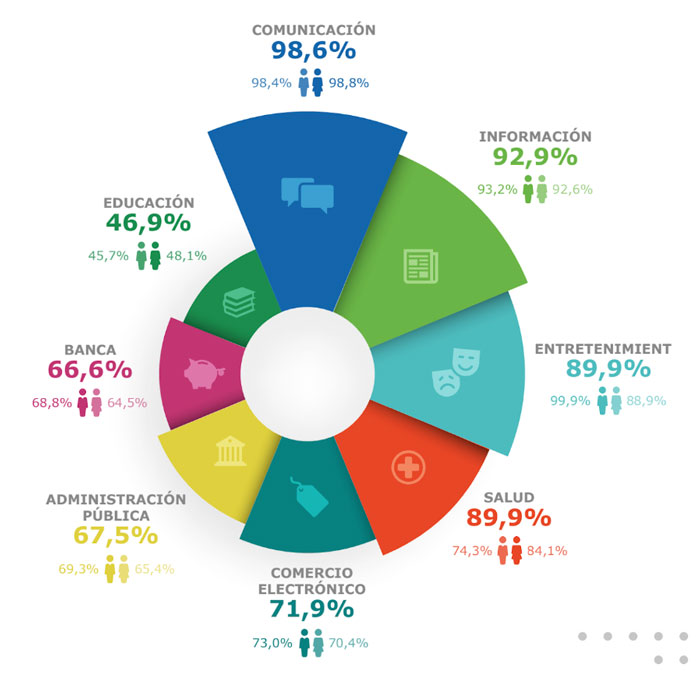
Image Source: Ontsi
The question of how the tech industry, education and the state can help leverage this digital personal literacy to boost the much-needed talent pool for the tech industry remains open.
No matter the reasons for the skill gap, developing digital talent has become an absolute priority for Spain’s digitalisation process and the future of its digital tech industry. According to a World Economic Forum report in collaboration with PwC, «among the Western European countries included, Spain has the potential to achieve the most economic gains from upskilling in digital, with a potential boost to GDP in absolute terms of $132 billion, equivalent to 6.7% of GDP, which could also generate an additional 220,000 jobs, or 1.2% of total employment.»
What can be done? Some ideas on how to mind the gap
According to an analysis by Vass Foundation, there are five decisive players whose behaviour will impact the solution of this gap: educational institutes, public administration, businesses, people and society, and communication media.
Educational institutions can bring newer and shorter programs, and the public administration can offer incentives for the education demanded by employment. In 2021, the Spanish government already took a step forward when they announced a restructuring in Formación Profesional (2-year courses for highly skilled professions).
For Gerard Esparducer, general director of ERNI Consulting Spain, a company dedicated to software, part of the solution relies on making STEM education more attractive and less complex, investing in professional reskilling and creating the conditions for bringing foreign talent more flexible. There is also an opportunity to reduce the barriers that set universities and companies aside. A 2021 analysis from the firm PwC called «Keys and Strategic Investment for Spain 5.0. Towards a more competitive and sustainable 2030″ found that there are substantial barriers between universities and companies in Spain, difficulting cooperation like the present financial situation, the limited capacity of organisational structure (primarily SMEs) to participate in activities and projects. Companies’ lack of financial resources makes cooperation with universities a very low priority. The report concludes that a better approach between researchers and companies is needed to build personal relationships. They also recommend developing incubators and accelerators between companies, universities, and business schools to share knowledge and talent and align expectations on what is needed in the business world.
In an article written by one of AMETIC’s Managing Directors, Francisco Hortigüela, other recommendations are suggested to overcome this gap. The visibility of experts in the field, for example, at educational centres, can be a way to inspire and motivate students in STEM-related careers. The figure of the mentor or role model becomes particularly significant.
The article also shares some successful programs that have helped youngsters learn and create through digital technology.
Businesses can play an active role in shaping the future workforce by collaborating and taking a leadership role in creating educational programs related to technology. By doing so, they can help drive the cultural shift that recognises technology as an essential aspect of all industries. By participating in developing technology-focused education programs, businesses can help ensure that the next generation of workers is equipped with the skills and knowledge necessary to succeed in a rapidly changing technological landscape. Additionally, by partnering with educational institutions and taking an active role in developing technology curriculums, businesses can help align the skills and knowledge of students with the needs of the modern workforce, creating a more seamless transition from education to employment.
The National Plan for Digital Skills is another initiative, part of the government’s Recovery and Resilience Plan, which has as its main goal to guarantee the digital inclusion and training of the whole country. This plan goes beyond the workforce to help set the ground base for the whole country’s digital transformation. As found in a recent study on the matter by IVIE (Instituto Valenciano de Investigaciones Económicas), variables such as educational level, age and wealth have proven to determine the probabilities of acquiring advanced digital skills. These should be taken into account when thinking about the future of the workforce because for it to be able to match what’s demanded in the job market by companies, differences based on age, wealth, and education will have to be solved.
Gender gap. How big is the gender gap in the digital tech industry, and how is it affecting the sector?
Spain is the sixth country with the highest gender equality indices among European Union countries, according to the annual classification presented by the European Institute for Gender Equality (EIGE). In the past year, we have moved up two positions and are almost six points above the European average, but full equality is still far away.
Like many other industries, the tech industry in Spain has historically suffered from a significant gender gap: women have been underrepresented in technical and leadership roles, and this has led to a lack of diversity in the industry as a whole.
The technology sector in Spain is rapidly growing, with over 530,000 people directly employed in the industry. According to the Mujer y Tecnología report by Experis, the number of positions for technology professionals doubles every two years, making it one of the most in-demand sectors in the country. However, the report highlights that there is still a significant gender gap in the industry, with only 20.6% of employees being women. This is below the ratio of women in the active Spanish population, which is 32.2%. The report also proposes solutions to address this issue, including the need for at least half of the 240,000 qualified professionals the industry expects to hire this year to be women, increasing their representation in the sector.
The report «Mujeres e Innovación», by the Spanish Observatory for Women, Science, and Innovation, data suggests that one out of every three Spanish companies had female ICT specialists, while only 6% had at least 50% of their specialists being women:
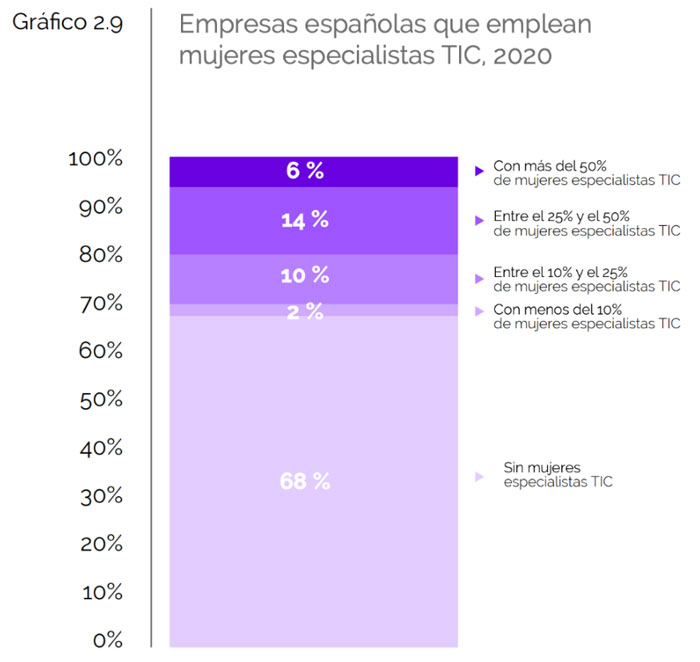
Image Source: Ciencia.gov.es
According to the Yo Trabajo Gratis report by UGT (“I work for free”), in the EU, women, on average, earn 13% less per hour than men. This equals one and a half months of salary per year (47 days of pay). In Spain, women earn 9.4% less than men in compensation per hour. That amounts to 34 days per year that they work for free. Starting from a wage gap of 16.2% in 2010, it increased to 18.7% in 2012 but decreased to 9.4% in 2020.As a result, Spain ranks eighth in the lowest wage gap in hourly salary among its European neighbours:
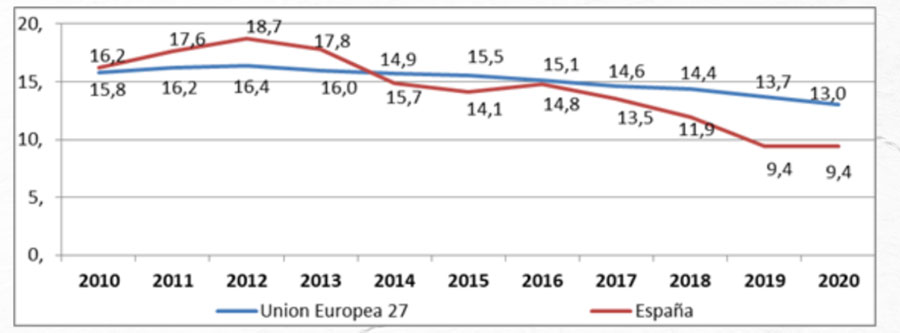
Image Source: UGT
The Spanish government is taking steps to close the gender pay gap through the Real Decreto 902/2020 on equal pay between women and men. This law allows individuals to know about the pay gap and wage discrimination that exists in the workplace, intending to correct and eliminate it through mandatory pay records in all companies in the country, regardless of size, and salary audits that must be negotiated within equality plans. This move towards greater transparency is expected to help close the gender pay gap in the country.
The gender gap is rooted in education
The gender gap in the technology industry often starts long before women enter the workforce. One of the key factors is the underrepresentation of women in technology-related education and training programs. This can limit the pool of qualified female candidates for technology jobs and perpetuate the gender imbalance in the industry. According to this UNESCO report, only 35% of students enrolled in higher education STEM-related degrees are women, and only 3% of female higher education students study Information and Communication Technology (ICT) subjects.
The «Data and Figures 2020-2021» report by the Ministry of Education and Vocational Training found that in the 2019-2020 academic year, women made up 55.3% of all enrolled students. Although the gender distribution in different areas of education is varied, the biggest disparities can be seen in Engineering and Architecture fields. The report supports this finding, revealing that just 29% of students enrolled in engineering programs are women, and an even lower 13.4% in computer science university degrees.
According to a 2022 report Titled Radiografía de la brecha de género en la formación STEAM (“Examining the Gender Gap in STEAM Education») by the Spanish Ministry of Education, science is studied much more by women than men in Spain. More women are enrolled in biomedicine (75% of students are women), medicine (68.7%), biochemistry (65.8%) and biotechnology (61.7%), although in high school, only 5% of women say they will dedicate themselves to «professions in the field of science and engineering, while the percentage of boys is 15.3%».
The absence of women is noticeable in careers such as computer science, dominated by men (87% of males), telecommunications (77%), industrial (74%) and physics (73%). According to official data, they are equal in chemistry, with 51% women.
This graph illustrates the number of female students studying STEM-related degrees in 2020:
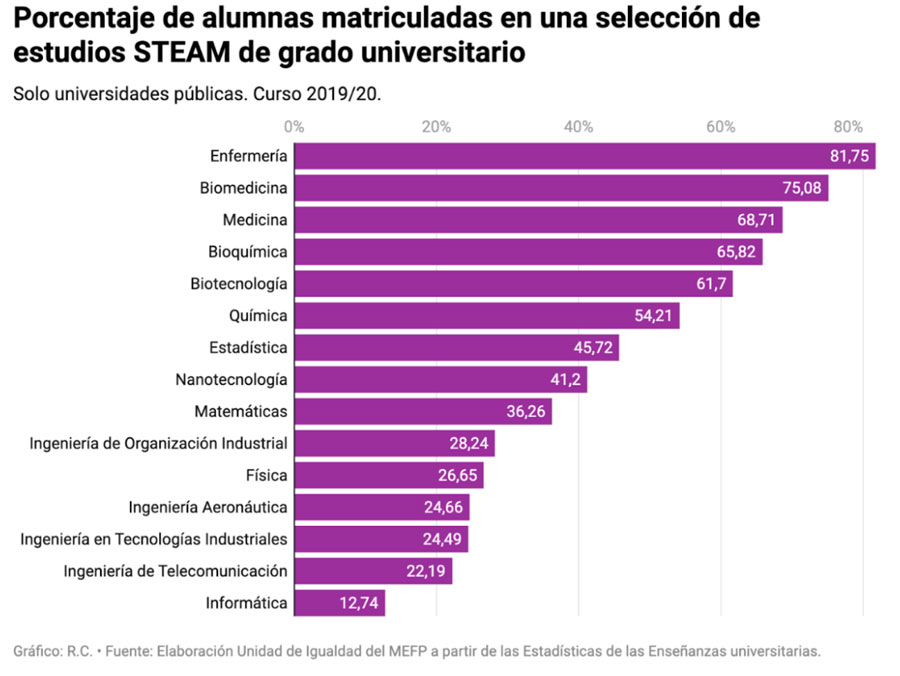
Image Source: El Correo
The chart demonstrates that among STEM (Science, Technology, Engineering, and Mathematics) degrees, those in the technology field, including Computer Science and IT, have the lowest representation of female students.
Evidence suggests that the underrepresentation of women in STEM fields has nothing to do with their ability or performance. According to the Fundación “La Caixa” in a report titled “El ámbito de las STEM no atrae el talento femenino” (The STEM field does not attract female talent), women who enrol in STEM degrees at universities have a lower dropout rate compared to men, with the gap being between 2-6 percentage points. Additionally, academic performance, measured by the percentage of approved credits compared to enrolled credits, has shown that women in STEM outperform men in most subjects. In the academic year 2019-2020, women passed around 88% of the courses they enrolled in compared to 80% for men.
The Spanish government is questioning why new generations continue to choose similar career paths as previous generations. According to the Ministry of Education in the Radiografía de la brecha de género en la formación STEAM, this is due to a differentiated socialisation of boys and girls, along with strong gender stereotypes and biases that reinforce a segregated model where boys are expected to invent and calculate. In contrast, girls are expected to care for and attend to the community’s well-being. This bias can be seen in the percentage of women choosing degrees in areas such as Nursing or education. The document concludes that girls start to shy away from these disciplines in elementary education, and that’s when action must be taken.
The startup ecosystem needs more women
The Covid-19 pandemic has significantly impacted women entrepreneurs in Spain, causing a decline in their ability to start and grow businesses. The economic turmoil brought about by the pandemic has resulted in a reduction in available funding and investment opportunities, making it harder for women to launch new ventures. As a result of these challenges, Spain has dropped from 9th place to 15th place in the MIWE2021, a report that analyses the conditions for female entrepreneurship in 65 economies worldwide. This decline highlights the challenges women entrepreneurs in Spain continue to face and the need for greater support and resources to help them overcome these challenges and succeed in their ventures.
According to the SouthSummit Entrepreneurial Map 2022, women only make up a small part of the Spanish startup ecosystem, precisely 20%, a figure that has not changed in the last eight years. More alarming is the fact that six out of ten startups are founded solely by men, and only 6% have been launched solely by women.
In the report, data shows that 51% of women are serial entrepreneurs compared to 62% of men. Additionally, 42% of women state that they have failed in a previous entrepreneurial venture, and only 24% indicate that they have successfully sold a startup, 9% less than men. What’s more, 39% of female founders don’t remain in the management team over time.
As for the sectors with the highest female presence, the 2022 ranking has changed compared to 2021, with health taking the top spot, followed by social impact and fintech. An analysis by Oliver Wyman showed that Spain was the country with the most female fintech startup executives in Europe, at 25%, which is higher than the average of 20% across the continent. Despite this, the percentage is still far from gender parity in a traditionally male-dominated sector.
Regarding the reasons behind starting a business in the SouthSummit report, more women cited recognising an opportunity in the market as their motivation. At the same time, men tended to give the response: «I’ve always wanted to be an entrepreneur».
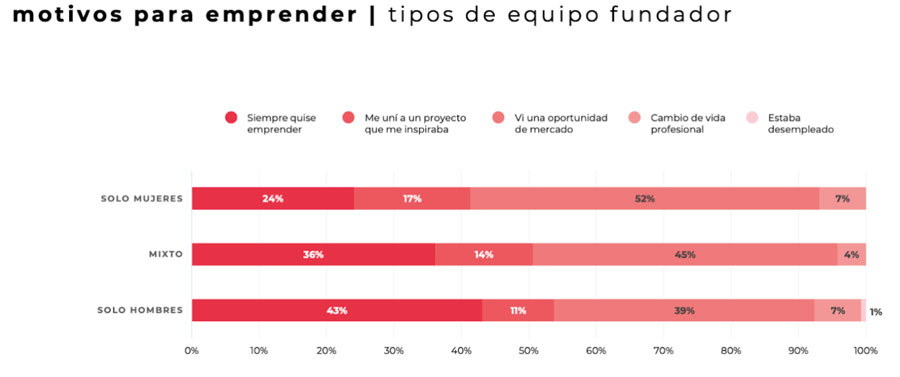
Image Source: South Summit
The W Startup Community created the first ever female entrepreneurial research in Spain, titled “El emprendimiento digital femenino en España” (Female Digital Entrepreneurship in Spain), focused exclusively on understanding why and how women start businesses in the digital tech industry.
The research found that the profile of women who venture into the digital field in Spain is quite broad, although the largest concentration is under these characteristics:
- Between 35 and 45 years old, highly qualified (with a university degree and a Master’s or PhD).
- With professional experience, employed by a third party at the time of venturing, with at least 15 years of work experience. Having reached a position of responsibility in the business world, as a middle manager or even in top management.
- She feels that she has enough capabilities to venture (82.6%) despite improving her knowledge of creating and managing businesses.
- Some female entrepreneurs (44.1%) acknowledge that they decided to venture to improve family life with personal and work life. The majority have done so, however, to increase their independence. This is what they call the #motherfounders movement, mother entrepreneurs.
One of the biggest challenges they face is funding. The following graph illustrates how the primary source of financing was the entrepreneur’s family and friends (62.1%).
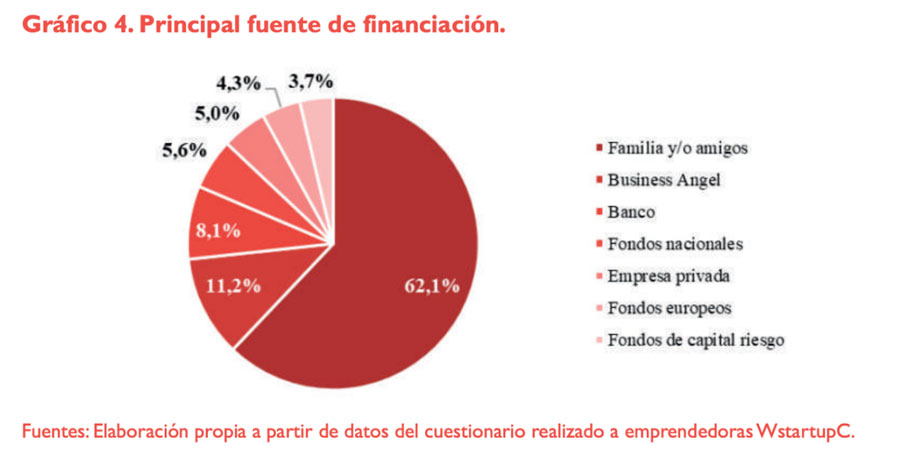
Image Source: W Startup Community
A Business Angel was involved in 11.2%, while only 8% involved a bank. In a much smaller measure, financing was obtained from another private company (5%), national public funds (5.6%) or European funds (4.3%). The participation of venture capital funds was the lowest (3.7%), which can be partly explained by the early stage in which most of these companies are, but also by the configuration of Spanish entrepreneurship ecosystems. Of those who received funds from a Business Angel, all except one were men, probably because they are the majority in general terms.
What do experts say?
Javier is a seasoned software developer who has been in the industry since the dot-com era. He is the co-founder of a company that specialises in facilitating the creation of large-scale data products. Prior to this, he served as the CTO at a major tech company. With his extensive experience and technical expertise, Javier has established himself as a leader in the field of technology and software development.
“I fell in love with software the first time I wrote some assembly code. Being able to tell computers what to do was like magic. Also I wanted to be a videogame developer (which I managed to do after some years) I started to look for my first job the after the dot-com-buble just happened and the tech sector in Spain was not in the best possible shape. I found a job as a digitizer, basically someone would give me some documents on paper and type them on a computer. Nobody in the tech industry would do this job today but I learned a lot, I managed to automate most of the process. After that I started to work on videogames, 3D. embedded devices and finally moved to the startup world, mainly on deep tech, where I passed through several startups and corporates”.
E. is a skilled and dedicated computer professional with a diverse background in the industry. She opted to study computer science after a two-week introduction course.
Despite initially liking her degree, she dropped out after two years. Disappointed with her studies, she made the bold decision to switch to multimedia engineering and pursue her dream of developing video games. She went on to earn a Master’s degree in computer science research. With a passion for technology and a drive to continuously learn and grow, Elena is a valuable asset to any team.
Beyond her technical expertise, Elena is also an active participant in various panels and events, where she shares her experiences and advocates for women in the tech industry. She is committed to promoting diversity and inclusivity in the field and inspiring the next generation of female technology leaders.
Diana is a seasoned UX researcher and designer with a background in social anthropology. Originally from Colombia, she relocated to Spain shortly after the Covid-19 pandemic began. With extensive experience working for big international companies across Europe and Latin America, leading and setting up UX teams, Diana has honed her user-centred design and research skills. Today, she leverages her expertise as a UX consultant, bringing a unique blend of design and anthropological insights to her client’s projects.
«Initially, I started to merge anthropology with market research and user research… then I worked on innovation and was more involved in service design and marketing. At that time UX was not in the boom but there were already design methodologies that were being implemented in innovation processes».
Diana experienced first-hand how the UX market flourished, and she got to build her career as a UX designer using her business experience and user-centric approach to innovation.
The industry changes and so do we
Javier starts by saying he feels pessimistic about how the last few years have shaped the tech industry:
“Especially in the last 10 years. The tech industry grew a lot and it came with a lot of “growing pains”: immature tech, non skilled and professional people and even scams. There were pretty interesting developments between 2005 and 2010, for example, the modern web frameworks, mobile development, internet being mature but we have spent almost a decade reimplementing everything in javascript (since nodejs started to be popular and browsers more capable). I’d call the 2010-2020 the “boilerplate” decade of the tech industry. Lately with deep learning developments and the new PaaS and DaaS systems we are seeing some good progress”.
E. is less pessimistic about the current state of the tech industry in Spain and can see some favourable changes, particularly involving the sector’s culture. For example, she explains how difficult it was, in a pre-covid industry, to find a flexible job that allowed you to work from home. She explains how company culture is very important to her and how much it influences her choice of employer.
She enjoys a company culture that fosters learning and encourages people to feel flexible. She dislikes the idea of people “pretending to work until it’s time to go”, and in general, she believes the industry’s mindset has evolved favourably.
According to E., not everything in the tech industry is positive. She has noticed a shift in the industry that makes it appear more volatile, with many people switching jobs and many new people entering the industry due to the growth potential. However, this has resulted in a salary bubble and constant recruitment that is not sustainable in the long term.
Soundbite:
Regarding salaries and how the shortage of talent is increasing the pressure for talent acquisitions, E. says:
Soundbite:
E. also adds:
“and also .. and that’s a personal opinion… I think that a lot of people like I just asking for a lot of money for something that is not that much but there’s a bubble mmm, there are not as many developers or technical people as needed right now for all the company. So you have to pay more to retain talent and there’s some how to explode. So I think that at some point, he will be, I know everything will change a bit, salaries will stabilize”.
Regarding the skill mismatch and how it’s impacting the industry, Javier also shares his opinion:
“There is a huge gap between supply and demand for skilled workers but I guess that happens in every industry. And of course there is a gap in general because you see how salaries are rising, and that’s for a reason. Newcomers are in my opinion under prepared but that’s what you shoud expect when the demand is higher and you need to hire fast”.
According to E., the tech industry in Spain has seen a surge in newcomers and talent in recent years. However, she believes that more mentorship should be available to help these individuals grow and reach their full potential. E. believes mentorship is crucial for developing the tech industry and helping bridge the skill gap. In addition, she feels that a mentorship program could benefit both new and experienced tech professionals and help foster a supportive and inclusive environment within the industry.
Soundbite:
Diana is taking a step from the industry during the last months of 2022 to study for a master’s degree and rethink her career’s next step. She currently feels UX is saturated and feels the tech industry is generally experiencing a crisis. In her opinion, the tech industry in Europe seems to have a different approach compared to Latin America. While the latter is more growth-oriented, Europe appears to be less focused on growth and more on stability. Diana’s perspective on the comparison between the two regions, as someone who constantly works between both markets, highlights the diversity of the tech industry and how it can vary greatly from one region to another.
In general, she believes UX designers and researchers in Spain are mostly growing in the public sector. Public innovation seems to be a relevant niche for Diana, as she considers the private market much more saturated and with far fewer personal growth opportunities.
First hand experiences: the gender gap
E. has experienced a gender gap in tech from the moment she started studying, being the only woman enrolled in her Computer Science degree. However, she makes a note of saying that, even if she was the only student, many of the teachers were female:
“And the funny thing is that in computer science I had a lot of women teachers. And those were the ones that I, I know that the inspired me the most, I had a databases teacher with they databases like, and …She was so awesome. I mean, I I follow her now on Twitter and she’s a great”.
In a different job, she also experiences biases and stereotypes that aren’t related to women’s performance is the job:
At the beginning of her career, she also experienced many comments that were directed at highlighting how different her gender was in the industry. She gives one example but mentions this is not an isolated event:
“But one of the things that I would never forget is that they said, in there in the interview, some feel like it’s great that you’re working for us because you seem to have a lot of knowledge and even you are woman, which is weird in the in this field and like …I didn’t want them to put that into words, you know, like you don’t need to do that. “
She was the first female employee in the engineering department in her first job. In a way, this made her feel like a number or a quota to fill. Despite this feeling, she knows she did a great technical interview and is proud to say she believes they hired her for her skills.
E., who actively participates and manages events to highlight inclusion in the industry, is tired of hearing that there aren’t enough women in the field. She says:
“So when people say they don’t find woman, it’s lies because you haven’t put enough efforts in building a network in …a diverse network”
She believes the industry must make a more substantial effort to inspire women, encouraging networks and shining a spotlight on them so slowly they can become less invisible.
Diana has also experienced significant biases throughout her career. In her experience, being responsible for large teams with a decision-making role inside a large company is more difficult if you are a woman. She explains how, in general, she likes to surround herself with women in her team because she recognises that as a female in a leadership position, you have to adopt a stronger personality.
She mentions one particular situation she experienced and how that has shaped a lot of her views on the matter:
“I had an episode of harassment at this company I’m telling you about. This man was supposed to give me some work, some prototypes… and then he would tell me no, that I had to wait and so I had to talk to the coordination manager. Then he developed a problem with me and started harassing me and saying things… I had to talk to the manager again and tell her what was happening. I had a lot of support from the women in the company. But in the end, the company did nothing because they had invested a lot in him, so they relocated him, separated him from my team, and that’s it. It was something that really affected me.” (translated from Spanish)
She explains how hurt she felt when the company chose to value the man in the situation and not her, who felt the problem had escalated to the point where her safety was compromised. As a result, she left the company shortly after.
She thinks that behind an inclusive exterior, the industry still experiences many biases, homophobia and sexism that are always under the surface.
Javier also adds:
“Clearly [ there is a gender gap ], I think we made huge mistakes several decades ago polazing professions by gender and we are paying for it today. It’s getting better because of the work many organizations have been doing in the last few years to make it visible, but we’ll probably need 20 more years until we don’t talk about the gender gap. I hope the new generations will not look to tech like a “male only” thing”.
Experience of employees with career changes
In recent years, a trend referred to as «the great resignation» has had a major impact on the job market in various countries, affecting individuals’ career choices and reasons for staying in their current job or industry. It might be more accurate to call it «the great reshuffle,» as in Europe, it’s more about people moving to different jobs or industries in search of better opportunities.
This trend is complex and diverse, reflecting a cultural change in workers’ attitudes and companies’ hiring strategies. Key factors contributing to this transformation in the job market include a focus on company culture and values alignment, the rise of remote work, a heightened emphasis on work-life balance, and the availability of attractive job alternatives.
A. was born and raised in Spain; she completed a Bachelor of Arts degree in English Philology and a minor in Translation from the University of Oviedo. She then furthered their education by obtaining a Master of Arts in American Literature and Culture at Leeds University. With a passion for education, she also earned a Master’s degree in Education to teach English as a subject in secondary schools in Spain through VIU. To expand her teaching skills, she completed a PGCE program in the UK, becoming qualified as a secondary school teacher in the country.
A. is a skilled content writer specialising in creating materials for SaaS companies. Their expertise includes writing blogs, tutorials, and other forms of digital content. She invests time and effort in research and continuous learning to stay ahead of the curve. With a deep understanding of technology and its theories, she is constantly seeking opportunities to expand her knowledge and skills, including taking courses and attending seminars
A. is no stranger to career path changes: Originally, she wanted to become a university professor but changed her mind along the way and chose to teach high schoolers. As she completed her studies, she worked in other industries:
“After 3 years of working in retail in the UK, I completed a PGCE and started teaching Modern Foreign Languages (Spanish and French) in a school in Yorkshire. I wanted to teach English, but the bursary for that were quite limited and weren’t viable for me to quit my job and pursue a career in education. When I managed to get a job in a secondary school, it wasn’t in a subject area I was keen on, and I resented the work quite quickly”.
Feeling disappointed with her career as a teacher, where stress and the long hours took a toll on her, she decided to start doing copywriting. This is when:
“I didn’t look for opportunities in tech at this stage, rather the opportunities found me later down the lane”.
A initially found the switch to writing digital tech articles to be challenging as she had no prior knowledge or interest in the sector. The learning process involved extensive research and was made difficult by the new and complex topics she encountered. At the same time, she knew she had strong writing skills and felt capable of researching and understanding the tech industry’s whole picture to write about it. The tech industry also offered some new possibilities her previous work did not: she could work from home with flexible hours and also move back to Spain.
She’s currently happy with her job, and in her words:
“I’m starting to like it. It feels great to take some technical jargon and put it in plain English for everyone to understand, which brings with it a sense of fulfillment and success I hadn’t find in other areas of copywriting. However, different clients have different needs, audiences, and tones of voice, which make the process of writing for them harder than it would if I was just working for one client”.
In the future, A. sees herself continuing her job as a digital tech content producer. However, she would like to improve her skills and training.
Nacho’s passion was sociology, and he studied for a Bachelor’s Degree at university, interested in understanding human behaviour. He admits, at the time, his choice of the study had little to do with a professional path:
“I had ZERO view on the professional side of it, I thought I would stay in the academia as a techer or something similar, but I naively had no set my view that far in the future (I think I would have chosen a more “safe” carrer like engineering or something like that if I´d thought with “future” eyes)”.
Despite his initial naivety towards his future career path, he ended up using his sociology degree for many different things:
“I’ve lived in 3 different countries, created an NGO and switched careers just to be able to do what I love: research. But NO I don’t regret any of it. I believe my value as professional has increased a lot because of my weird mixed background, and broad view”.
This adventurous outlook on life and his ability to adapt and not fear change have enabled him to change his career on numerous occasions:
“I had to make an NGO just to be able to conduct research (needs assessment at that time), because I didn’t managed to get a “regular” job. Then I switched to political consultancy in LATAM, and mixed it with big data, to improve my research “repertoire”. And then switched to the Tech industry so I could come back to Europe and have a chance in this rough market. It all worked out in the end: but the road was NGO to tech-banking and tech-news-finance so yep, the experience has been tough but enjoyable so far”.
His switch to tech was motivated by personal reasons; he wanted to move back to Spain, and he wanted to utilise his existing skills in a job that could provide stability and a good salary.
“When I wanted to come back to Europe, I needed to make my profile more attractive and my wife directed me in the right direction of UX, because saying that you are a researcher can make a lot of people laugh in your face while calling it UX researcher sounds super fancy and cool, eventhough is 99.99999999% the same thing, adding usability testing, and changing the mindset to a more design driven research, but in the end we want to understand humans behavior, and in this case those humans are called USERS”.
His wife, an anthropologist, helped him understand the similarities between anthropology, sociology, and UX. This allowed him to create a sound structure for his skills and abilities and move into tech more smoothly. He completed a bootcamp in UXER school so that he could provide some credentials, but he felt very confident in his skills before that. As he explains:
“I believe in the case of researcher to UXR, 90% of the skills I already had them. Not been biased, making moderation guides, empathy, etc etc etc, I already had, but there was a whole new set of skills for doing usability testing and shifting the mindset to a more product and user centered one was the biggest shift. As for the question: basically all the researcher skills that I had before, definetly helped me a LOT to be eligible in UXR”.
Just like A., Nacho feels happy in his current line of work. He doesn’t see himself leaving the tech industry as he has found a good balance between research and design, and he likes the industry’s flexibility.
Trends by sectors:
Web development
With an internet penetration rate of about 94% and almost 44 million internet users, Spanish users spend over 6 hours daily on the web. According to research by ONTSI (Observatorio Nacional de Tecnología y Sociedad), 79.4% of internet users make online purchases, approximately 26.2 million people, and the e-commerce industry is growing. These trends indicate that software development is becoming increasingly vital in Spain and holds significant opportunities for professionals in the field.
The job platform Infojobs presented in 2021 their «State of the Labor Market in Spain» where we can see the huge demand for IT professionals in Spain. Specifically, during 2021, just on this platform, almost 200,000 job vacancies were posted by companies (21% more than the previous year) seeking this professional profile. And within the computer science and telecommunications category, the most sought-after are software developers. Of the posted vacancies, 58.000 were for software developers.
On average, eleven people applied for each job listing seeking software developers. This is a very low level of competition, much lower than the average recorded by Infojobs, which is 53 resumes per job posting.
According to Telefónica’s «Map of Employment«, software developer positions are in the highest demand among «digital jobs», with a total of 17,161 vacancies, and a higher concentration of these vacancies can be found in Madrid.
The average salary for a web developer in Spain, according to data from Paysacale is around €35,968.
The proliferation of the internet and electronic devices has dramatically impacted daily life, touching upon nearly every aspect, from shopping to entertainment, education, work, transportation, banking, healthcare, and even social interactions. The internet has become an integral part of people’s daily routine, influencing their decisions and habits in multiple and interconnected ways. The demand for web and software development professionals will continue to rise in this rapidly expanding digital landscape. As the internet and technology play an increasingly important role in all aspects of life, the need for skilled individuals in these fields will only grow.
One example is the growth of cloud computing, AI, and data analytics, which require skilled professionals in software development and will continue to have a high demand for these skills in the near future. The outlook for 2023 suggests that industries will invest in advanced technologies such as cloud computing, web 3.0, AI, machine learning, metaverse, AR/VR, IoT, and software 2.0. These technologies will continue to gain widespread adoption and become increasingly integral to daily internet usage. The pace of innovation is rapidly accelerating, driving significant progress in technology research and development every year.
Other technology trends to keep an eye on in 2023 include:
- Low-code/No-code platforms are becoming increasingly popular due to their ability to accelerate innovation and speed up project delivery.
- Progressive Web Apps (PWAs) are simpler to develop and maintain and offer a better user experience.
- Microservices architecture, which enables teams to work more efficiently and manage larger amounts of data.
- The impact of 5G networks on internet speeds will significantly advance technologies such as virtual reality and artificial intelligence.
- Cross-platform app development allows developers to create apps that can easily switch between Android and iOS for a seamless user experience.
- The rapidly growing Internet of Behavior (IoB) is a new form of human-machine interaction that is gaining popularity.
Data Analytics
The Open Data Maturity 2022 study evaluates the maturity of European countries in the field of open data and provides an overview of good practices applied in Europe, which can be transferred to other national and local contexts. Both EU-27 member states and other countries in the region participate in the study. Spain has achieved a score of 92%, thirteen points above the EU27 average. With this score, it is among the leading group.
With this score, Spain falls within the group referred to as trendsetters. Countries that belong to this group stand out for their strong commitment to open data, which is reflected in an advanced strategy, mature platforms, and an active methodology for measuring the impact of open data.
In this context, it’s no wonder that data scientists are amongst the highest sought-after professionals in the industry. According to this report, by Hays Executive and the Ayuntamiento de Madrid, which analyses the demand for data roles in Spain, 63% of job vacancies are located in Madrid. In all the cases interviewed, companies show their preference for hiring profiles with basic education from STEM university degrees; only 12.5% of the sample has profiles that are not necessarily from these characteristics, but they have technical training.
Regarding salaries, according to Glassdoor, the average wage for a data professional is 30,000€.
In the coming years, it will be essential for organisations to focus on developing their employees’ skills in data-related areas such as data collection, processing, and analysis. This will ensure that teams have a strong foundation in data skills, which is crucial for organisations as they transition towards a data-driven culture where decisions are based on data insights instead of intuition. This shift towards «data democratisation» empowers teams by making data more accessible, allowing them to work more effectively.
Real-time or «modern data» has become a valuable asset for companies, enabling them to make informed decisions based on the latest information. However, effectively utilising and extracting value from live data requires a team of highly skilled data experts.
Data as a Service (DaaS) is becoming a common solution, allowing companies to access and utilise pre-gathered, curated, and processed data sets. This reduces the cost of building their own data and enables companies to use third-party data to inform their decision-making, product development, and user experiences.
UX/UI Design
The growth of UX and UI design can be attributed to the PC revolution, the web revolution, and positive media coverage. According to a study by the Nielsen Norman Group, there are expected to be 100 million UX professionals by 2050.
UX and UI design is a highly sought-after field, ranking among the top 10 in-demand skills of 2022. It offers a diverse job market, with opportunities in a variety of industries, company sizes, and teams.
As the industry changes and evolves, UX designers must also adapt and expand their skill set to stay competitive. This includes proficiency in code, design, leadership, and analytics, among others. The role is becoming more inclusive and requiring a more well-rounded approach.
The increasing demand for specialisation within the industry is evident in job listings, with companies searching for specific UX/UI design experts, such as UX researchers, gestural interface specialists, voice-guided UI specialists, or interaction designers.
To remain competitive, UX and UI professionals must continually diversify their expertise, and newcomers must choose a well-defined specialisation to grow in.
According to the 2022 Salary Guide by Prosperity Digital, salaries for UX and UI designers (and adjacent roles) are varied:
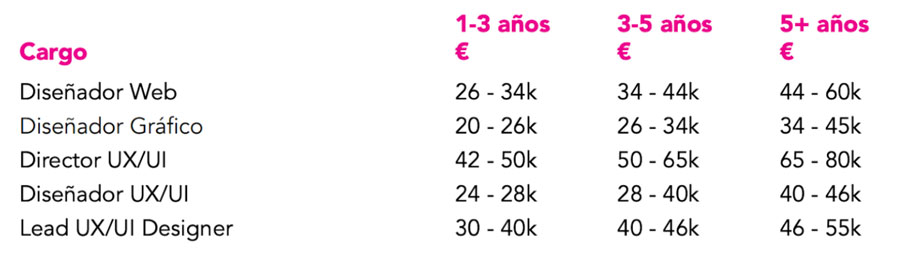
Glassdor gives an estimate and suggests that the average wage for this role in Spain is around 32,500€.
This interesting UX salary report, by Cris Busquets, analyses salaries across the country and surveys different professionals. One of their findings is that there is a gender pay gap, which stands at 12.5%. What’s more, it becomes more apparent as more responsibility is taken on.
Cybersecurity
According to the Global Cybersecurity Index 2020, Spain is in 4th place in the list ranking only behind the US, UK, Saudia Arabia and Estonia, with the same score as South Korea and Singapur. This position gives insights into the country’s cybersecurity abilities and the government’s efforts to respond to the threats of digital crime.
Spain has become a major player in the cybersecurity market in recent years, with a growing number of companies specialising in the field and a growing demand for cybersecurity solutions. This growth can be attributed to several factors, including an increase in cybercrime and hacking incidents, the increasing use of technology in business and personal life, and the increasing importance of data protection.
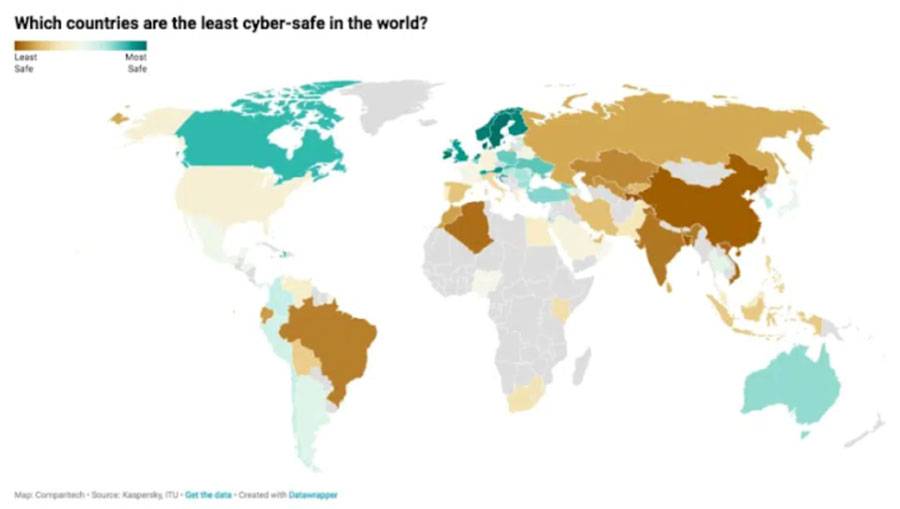
During the pandemic, Spain was one of the countries, together with the US, that was most impacted by malware infections, according to Comparitech. Spain is in the top 3 countries with the highest percentage of organisations successfully attacked, with 91,8%. Also, Spain leads the ranking of Internet users aged 16 to 64 who are worried about how companies use their data online, with 52% of the population worrying about the misuse of personal data.
In this context, the Spanish cybersecurity market is expected to register a CAGR of 7.2% during the period 2022-2027. Another meaningful insight is the fact that 65% of organisations will augment their cybersecurity expenses.
The country’s business sectors are increasingly adopting digital platforms, broadening their reach through the internet. However, this shift has exposed many entities to data breaches and cyber-attacks, making them more vulnerable to these threats. Companies are rising to the challenge by offering new and advanced cybersecurity solutions to meet this growing demand for protection and security. These solutions aim to provide businesses and individuals with a secure and protected experience, safeguarding their digital assets and operations.
Despite the growing demand for cybersecurity solutions in Spain, the market faces a shortage of skilled professionals to meet the needs and keep pace with growth. A major contributor to this shortage is the arrival of multinational corporations in the country, which tends to attract top cybersecurity talent, leaving a shortage of human capital for the rest of the market. According to a study by the (ISC)² Cybersecurity Workforce Study , Spain has a total of 124,226 cybersecurity professionals, and it’s expected to grow by 23.2%. The same study estimates the Spanish Cybersecurity Gap with 60.436
lacking cybersecurity workers. There is an urgent need for talent development in the field to address this imbalance and meet the increasing demand for cybersecurity solutions. This will help build a pool of skilled professionals to meet the growing demand for cybersecurity services and protect against the rising cyber-attack threat.
Regarding wages, the average salary for a cybersecurity analyst in Spain is €36.427 a year. Compared with the average salary in Spain, located at €24.165, one can determine that cybersecurity skills are well-paid.
Some of the expected trends in the Spanish cybersecurity scene are:
- New governmental initiatives to improve cybersecurity and cyber-resilience. In 2023, Spain, as a member of the EU, will have to adapt to the NIS2, the new measures by the European Council to regulate cybersecurity across the Union. These efforts are aimed at improving the union’s cyber-resilience, which means: “the ability to anticipate, withstand, recover from, and adapt to adverse conditions, stresses, attacks, or compromises on systems that use or are enabled by cyber resources”.
- Growing adoption of AI and machine learning. These technologies have the potential to revolutionise the field of cybersecurity, as they allow organisations to quickly and accurately detect and respond to cyber threats. They can also help organisations identify potential vulnerabilities and predict future threats, allowing them to take proactive measures to protect their systems and data. Implementing AI-based security systems that use machine learning algorithms to detect and respond to cyber threats in real time allows companies to respond more quickly and effectively to threats, reducing the risk of data breaches and cyberattacks.
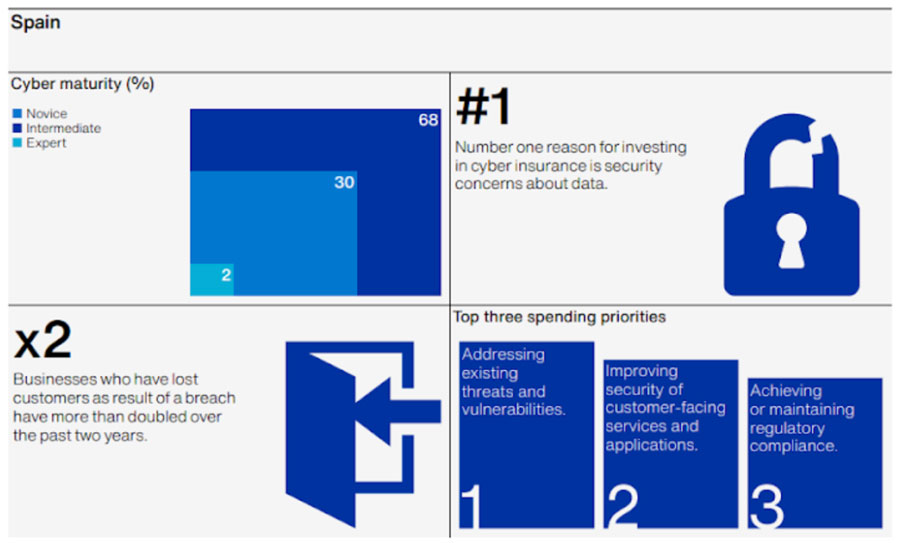
Image Source: Hiscox Group
Image Source: Comparitech
Product Management
Professionals in product management occupy a unique space between technical know-how, strategic thinking, and organisational expertise. They may not be as abundant as those in marketing or sales, but they command high respect and salaries far exceeding the average for other industries. Startups, in particular, place a premium on product management expertise as the product they offer is often the only tool they have to drive rapid growth.
The growing popularity of product-led marketing has greatly increased awareness of the role of Product Managers. This position encompasses a diverse skill set that requires a combination of technical knowledge, strategic thinking, and organisational skills. These individuals wear many hats and play a crucial role in a company’s success.
Due to the high demand for talented Product Managers, the recruitment process can be challenging, and salaries have increased to retain and attract top talent. In 2022, the average salary for Product Managers was around 44.000€. Increases in salary have led to a temporary boom in the market, but as the field becomes more competitive and more people enter it, the expectations and responsibilities of Product Managers may shift.
In the future, Product Managers may be expected to have higher levels of expertise, but salaries could remain the same. Currently, the high salaries and growing recognition of the role have created a competitive job market where individuals may be more likely to switch jobs.
As the Product Management field evolves, several trends are emerging that will shape its future in 2023 and beyond:
- Data-driven Decision Making: Product Managers are relying more on data and AI-driven tools to make informed decisions. A stronger emphasis on research and data analysis will be a key component of effective product management.
- Customer-focused Value Delivery: Product development will remain centred around the needs and wants of the user, with a focus on delivering value through products that positively impact their lives. Understanding consumers’ priorities are crucial for Product Managers to lead teams effectively.
- Effective Team and Time Management: As new forms of work emerge, the importance of managing teams and balancing work and life remains relevant. The trend towards hybrid work and remote work will play a significant role in day-to-day team management.
Career Development
The digital tech job market in Spain is both attractive and growing, with a notable disparity in salaries between the digital sector and the overall Spanish average, according to the 2022 Salary Guide by Prosperity Digital. Only 23% of digital professionals work in an office full-time, while 40% work entirely remotely and 37% follow a hybrid schedule. These flexible work arrangements and competitive salaries are contributing to the growth and appeal of the digital tech industry in Spain.
As 2023 progresses, the demand for digital talent will escalate, with the tech industry and other sectors increasingly relying on new technologies. This creates challenges for companies but presents numerous opportunities for individuals seeking to transition into the tech space.
One trend in tech career development is the growing specialisation of roles. As the industry becomes more complex, employers require workers with more specific skills to fill positions. In smaller companies like early-stage startups, employees may need to be versatile and take on multiple responsibilities, but as companies grow, they require more specialised workers to ensure efficiency across all areas.
Another trend in the tech industry is the integration of automation. To take advantage of them, workers must stay up-to-date with the latest advancements in AI and Machine Learning. These technologies will reshape many job functions, changing how we measure productivity.
Given the fast-paced nature of the tech industry, continuous learning is a key factor in advancing your career. Keeping your skills fresh through online courses, staying informed on new developments, and adapting to new trends are all critical to success in tech.
New future trends and paradigm shifts
As we enter 2023, the global landscape is filled with uncertainty, with economic worries and political tensions being prevalent across Europe and the world. The tech industry is not immune to these challenges and has been greatly impacted by them, and is undergoing a transformation as new ideas and practices emerge, leading many to refer to this as the «shifting era,» the «4.0 Industry,» or the new industrial revolution.
The future of technology in Spain and beyond is closely tied to new social developments, sustainable practices, and economic trends. As a major industry that impacts nearly every aspect of life, the tech market cannot be separated from cultural and societal changes, as our global priorities shape its growth and direction.
As the digital tech industry evolves, various aspects of the industry are undergoing transformations, from consumers to employees and from corporations to startups. Consumers are adopting new methods of utilising technology in their daily lives and seeking out innovative ways to achieve their goals and optimise their activities. This shift in consumer behaviour is influencing companies to adapt their tech-based offerings and pay attention to what consumers are expecting.
From the integration of «Calm tech» to the increasing use of Augmented Reality, consumers are redefining the role of technology in their lives, and the industry is adapting accordingly.
The pandemic has also had a profound impact on the way tech professionals work. With the widespread adoption of remote work, many tech workers have now embraced this way of working as a permanent arrangement.
According to the Logitech report on remote and hybrid work in Spain, these new work structures have proven very successful in the country. In the report, data suggests that only 15% of companies will remain to have in-person work in 2025.
The next graph shows how the Covid-19 pandemic has transformed the work structure:
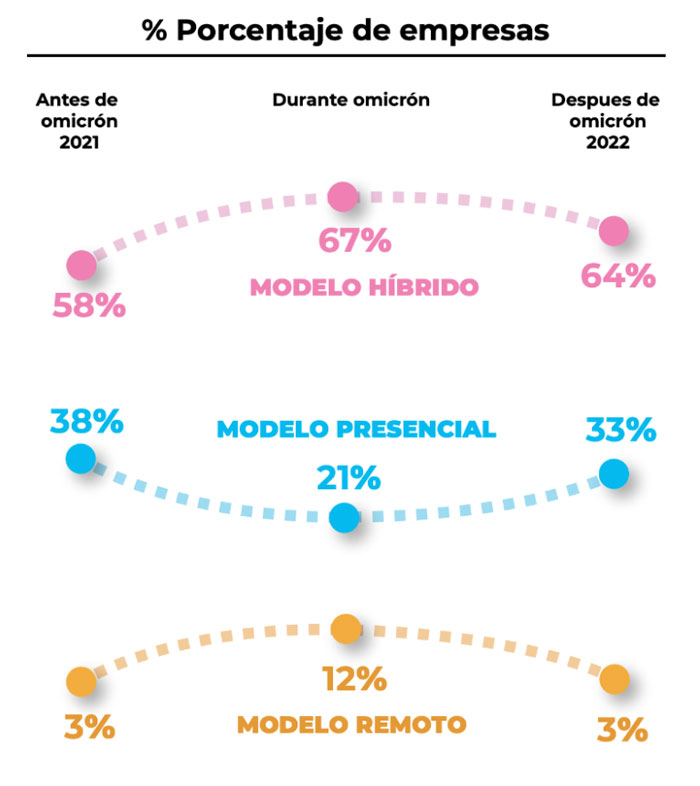
As legislation catches up with these new working models and workers are guaranteed healthy work conditions, the trend will continue to transform how sectors and industries work.
As 2023 begins, there are growing debates in the technology industry around AI ethics, the future of human tasks in the market, and how to navigate the challenges and changes ahead. According to this 2022 paper on AI in the Spanish market, 50% of companies are currently using AI in their operations. The other half is considering its future potential:
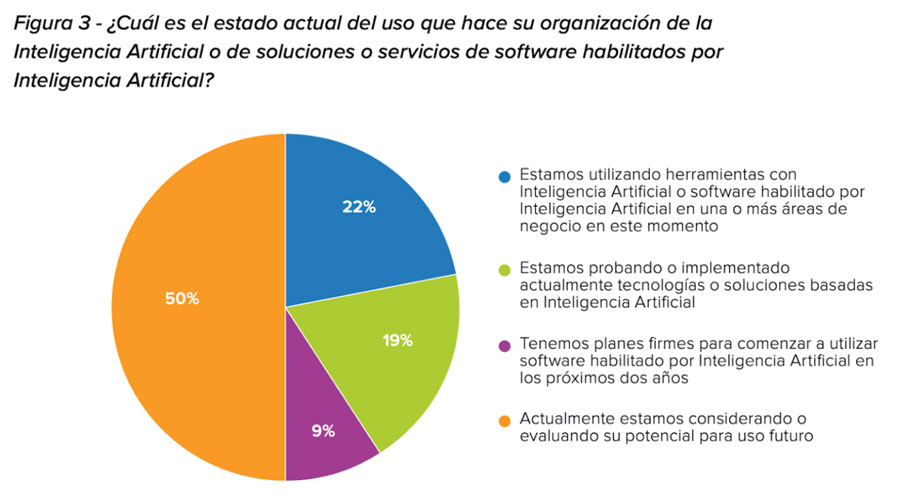
These discussions, covering a broad range of topics such as tech ethics, human-machine interactions in areas like art, education, and research, and the impact of new technologies on society, are ongoing and far from resolved. In the coming years, we can anticipate deeper exploration into responsibility, ethical advancement, and human welfare issues in a rapidly evolving tech industry. It’s important to note that these conversations are technical, social, and cultural and require a multidisciplinary approach to consider the implications fully.

Student testimonials
In these uncertain times, many people are looking to reskill and pivot their careers towards the tech industry. The stability and growth potential of the tech sector, combined with the increasing demand for digital talent, has made it an attractive destination for job seekers. Additionally, the versatility and versatility of tech skills make them highly transferable, allowing individuals to adapt to new roles and industries quickly. To take advantage of these opportunities, many people are enrolling in online courses and upskilling programs to enhance their knowledge and improve their chances of landing a job in tech. The shift towards reskilling and career development in tech is a response to the rapidly changing job market and the need for workers to remain competitive and relevant in the 21st-century workforce.
B., is a sound technician who, after chatting with some friends who were software engineers, decided to take a formal step into pivoting his career towards tech. He had a bit of experience in IT before starting an Ironhack bootcamp, but he wanted to have a more solid foundation that could land him a good job. Before the bootcamp, he had completed several free online courses in Udemy and had some experience working for a startup.
One of his friends had just finished an Ironhack bootcamp and mentioned everyone in her class had gotten jobs, and this really inspired B. to join. He started the Ironhack bootcamp with clear expectations: “I wanted to find a job ASAP as a developer”.
His overall experience in the bootcamp is not positive. For him, the bootcamp came with a series of obstacles that dampened his opinion:
“A lot of obstacles….a lead teacher with questionable qualities, lack of organization in the campus. Very poor human support. Uncomfortable installations in Barcelona. All these obstacles couldn’t be overcome, but rather had to be endured and waited out until the course was finished”.
He does conclude there were some positive aspects also:
“The main positive skill I think I learned is the teamwork in development projects and activities. I was fortunate to be part of a group of people with same ambitions and passion about programming and it was easier to get through the course thanks to my classmates”.
After the bootcamp ended, he decided to study a second course (free) while he looked for a job. It took him about two months to find a job, but the process was difficult.
“It was a hard process investing a lot of time networking and looking for new opportunities every day, trying to be one of the firsts applicants to any offer, making more than 10 interviews, rejected more than 50 times, involved in processes that seemed to never end… Looking for a job was harder for me than the bootcamp itself. Unfortunately, I couldn’t be without a job for any longer due to the lack of incomes and that put a lot of pressure during the process”.
He claims to be content in his current job and is open to continuing reskilling himself.
E. studied environmental engineering and a master’s in applied data for Geographic Information. After entering the workforce, she discovered that Geographic Information System (GIS), which was her main area of expertise, was underdeveloped in Spain. The kind of job she could pursue was very related to public administration, and she didn’t like that.
Combining her degree in environmental sciences with a data mindset, she was able to access jobs related to climate change data analysis and started working for a multinational company. After three years, she felt she had reached a glass ceiling: there was nothing else for her to do, and her career in that particular company couldn’t move forward.
She switched jobs and started working for the European environmental commission. She disliked that job and the work culture there, so she took a step back a decided to invest her time in a data-related bootcamp. She enrolled in the Ironhack bootcamp mainly because she believed Ironhack promotes a lot of networking, and it seemed like the best option.
She chose to study data because she needed a knowledge push to advance her career, and she had already seen how data and GIS were a good combination in the job market. Her impression of the bootcamp was, overall, positive. She didn’t perceive a big mismatch between theory and the “real world”, for example. She makes a point to say that she would have liked to have seen more diversity:
“And now, for example, in the bootcamp, were like 50/50, like… white straight, but for example, the teachers were men, every one that they talked about were men. All the bosses were men, everyone was a man. And they say …Okay, well, diversity. … yeah university. Yeah”.
Her job-hunting process started before she finished the bootcamp, motivated by her own experience on how long this process can last. She claims to be highly motivated and very driven, so she invested a lot of energy into finding the best job:
“It was like,… I know how summer is to get a job and I’m always looking how is the …. How is the market? How are they hidings? For example, salary things and all that because they told us …No you are not going to more than 25,000 year and I say, fuck that. I’m going to do that because I can’t do so”.
After the bootcamp ended, she landed a very good job that met all her expectations, and she admits it’s partly luck and partly determination.
Conclusions
Spain is in a good position in terms of digital development within the European Union. According to the Digital Economy and Society Index 2022, Spain ranks 7th out of 27 EU members.
Despite its strengths in connectivity and digital public services, some challenges need to be addressed, such as improving the digital skills of the population and integrating new technologies with small and medium-sized enterprises, which make up most of the companies in the country. The Spanish government is working towards addressing these challenges through various plans, strategies, and programs.
Spain’s innovation landscape, including its startups, unicorns, and hubs, deserves special recognition. Despite economic difficulties, these startups have helped put the country on the map by attracting foreign investment and talent. If the population’s digital skills were improved, it’s possible that the country could achieve even greater success.
Despite this growth, the industry still faces a significant gender gap, with only 20.6% of employees being women. The gender imbalance in the technology industry starts long before women enter the workforce, with a lack of representation in technology-related education and training programs.
Only 35% of students enrolled in higher education STEM-related degrees are women, and only 3% of female higher education students study Information and Communication Technology (ICT) subjects. Addressing this issue by increasing female representation in technology-related education and training programs is key to closing the gender gap in the technology industry.
Spain is facing a shortage of high-skilled digital workers as it continues its digital transformation. The lack of students enrolled in STEM careers and misalignment between university programs and company hiring requirements contribute to the shortage.
This problem requires collaboration between the education sector, public administration, businesses, media, and society as a whole. A practical solution to this issue could be for universities and businesses to form closer partnerships, such as through incubators or accelerators, to match their offerings and needs better.