Welcome to the

State of Tech 23 | FRANCE

What you'll find out

Digital Technology Vision in France

France has a strong and well-developed digital technology ecosystem, and although it may not be seen as a technological leader on par with the United States and China, it is one of the leading innovators in Europe and has a long history of technological relevance. 

In response to the COVID-19 pandemic, the French government has implemented a program as part of its recovery efforts, focusing on technology. The plan, named “France Relance, sets goals for 2030 and includes a focus on innovation and research. It aims to cover a range of areas of technological development, such as nuclear energy, electric cars, and the robotisation of agriculture. France’s efforts are to become a leader in the tech sector by upgrading its production facilities, investing heavily in future technologies, reducing production taxes, increasing research support, and developing skills and existing national expertise

The government’s strategy is to make France a leader in the sector, but investments in some technological areas are still below its European counterparts, such as the United Kingdom and Germany.

The government wants to remain competitive through investment efforts focused on core areas of development such as research in fields like the green agro-industry or infrastructure to support 5G connectivity. 

«To respond to new activities linked to the ecological transition, the circular economy and digital technology, the recovery plan will increase workforce training availability by about 400,000 people and transform vocational training systems to make France a leader in the area of digital technology and educational innovation

According to the Invest in France platform, France is expected to develop innovation to transform and shape the future of high-technology industries, focusing on maintaining and enhancing its position among the leading industrial powers:
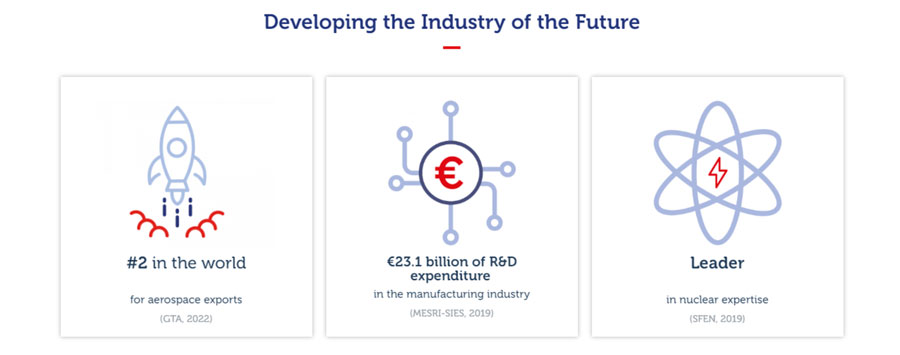
«Innovation is an integral part of the 2025 Productivity Pact. France is aiming to have a breakthrough, technology-based economy by 2025. Innovation is envisaged as part of industrial development, i.e. the focus of technological development will be on industrial growth«.

Source: Investing in France

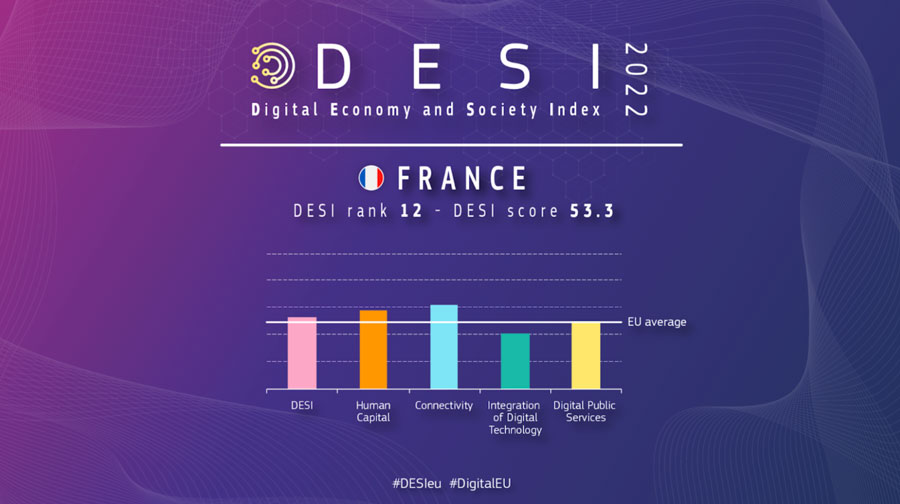
France is among the top 12 European countries in innovationwith some strengths above the European average, but in areas such as the integration of digital technology, it still has room for improvement. Their focus is currently on projects and programmes that develop advanced digital techs such as AI, cloud, cybersecurity, quantum and 5G. 

According to the Digital Economy and Society Index (DESI index), France is considered a strong innovator, and although its position is good, it is below the average of the European countries in this category. France occupies the 12th in the index, with a 53.3 score:
Source: DESSI

According to the European Innovation Scoreboard 2022 report, some of the country’s relative strengths in terms of innovation are focused on training and education, government support for business R&D and Innovative SMEs. There are some areas with opportunities for improvement, such as Job-to-job mobility and ICT training. 

According to numbers from France Digitale, the sector expects good prospects for the next five years, with an expected annual turnover increase of 41%, of which the technology sector will create 6% of the national Gross domestic product (GDP) growth by 2025. The digital technology sector will also be a major employer, with 224,000 jobs expected to be created.

Various stakeholders are working towards the digitalisation of France, with some even arguing that there are too many. The Institute Montaigne, for example, argues that the large number of state agencies is leading to a lack of focus on specific actions. Despite this, multiple initiatives have helped France establish itself as a leader in international digital initiatives, such as the Global Partnership on AI, the Christchurch Call, and Tech For Good initiative.

Taking a look at the digital tech landscape in France, it’s hard to miss the numerous state agencies running programmes. Some of the more prominent ones are the State Secretariat in charge of Digital Transition and Electronic Communication, the digital office of the Direction générale des entreprises, or the Dinum (the Interdepartmental Digital Directorate)

Each institution or agency has separate functions, goals and initiatives, creating an oversaturated landscape that can make government action less efficient.

A thriving startup ecosystem

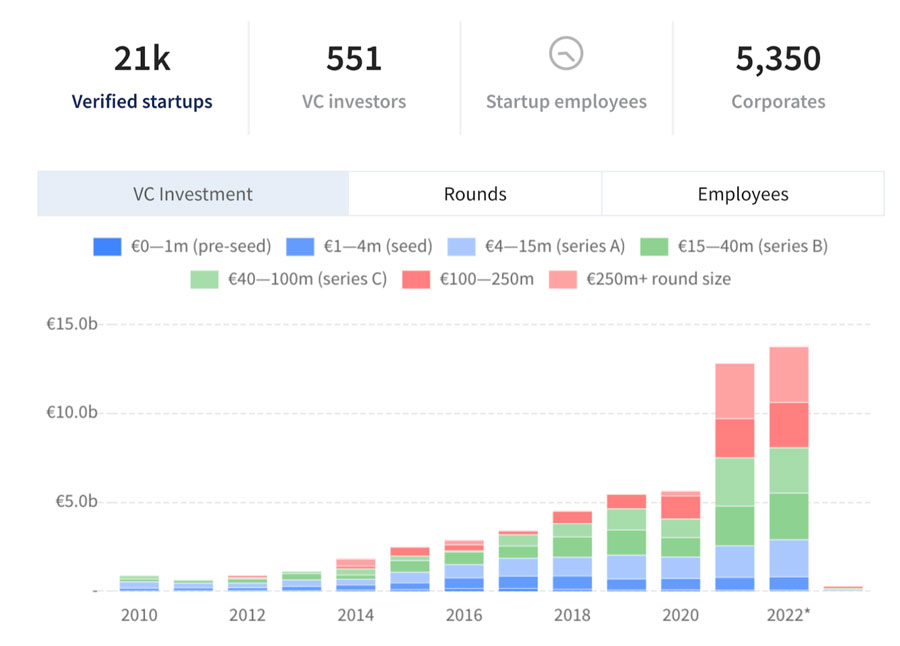
France boasts one of the largest startup ecosystems in Europe, characterised by a well-rounded environment with support from both the government and private sector, a highly skilled workforce, and a broad ecosystem that extends beyond the capital city of Paris. The capital, however, continues to play a significant role in the evolution of the startup scene in the country and is also considered a leader in the European startup scene. The French startup ecosystem has seen rapid growth in recent years, particularly since 2019. There is significant support for investment in the startup industry, leading to a relevant number of unicorns (startups that are valued at over 1 billion). According to data from La French Tech, French startups have been rising since 2010 and have seen exponential growth in the last two years, particularly in startups with investment rounds between €14-250m+.
Source: La French Tech Startups

The tech startup industry employs over 600.000 workers, and the sectors that seem to be thriving in the French ecosystem are Food tech, Education and Transportation

According to Digital Food Lab, 2021 was a pivotal year for the French food tech industry, as it raised 40% more investment than the previous year, reaching €875M. This investment success pushed the food tech sector forward during 2022, and France now has a food tech ecosystem of about 846 companies.

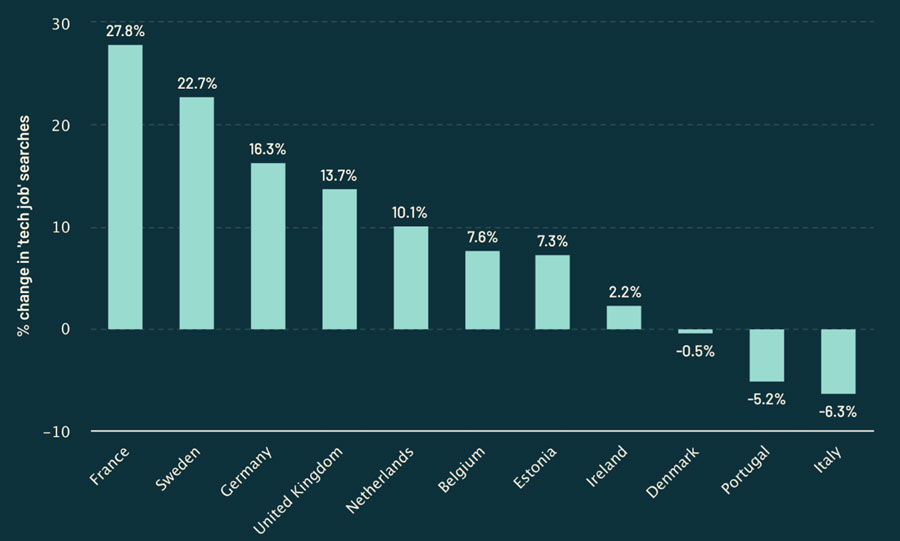
Despite the hardships the European tech industry faces, according to the Atomico France Spotlight report, the overall feeling in France is positive. This optimistic approach to the industry might be behind the increase in searches for tech jobs, which is exceptionally high in France: 
Source: State of European Tech 22

The optimism for France’s thriving startup scene is not only felt in France. According to the same Atomico report, during the 2020-2022 period, France had a considerable influx of talent. The report claims that “for every tech leader that moved out of the country during this period, there were more than two that moved into France.”

In Q2 of 2022, France recorded its highest-ever venture capital funding, raising a total of €3.7 billion in the last three months. This makes France the top European Union tech ecosystem for startup investment in Q2 of 2022, up there with the UK and Germany

The United Kingdom and Germany are also at the forefront of Europe’s unicorn list, but France is catching up fast. Considering that in 2019 France could only count 11 unicorn startups, it’s impressive to see how by mid-2022, the landscape had changed dramatically, and France now has 25 unicorn companies

What’s more, at the last Paris VivaTech conference, the government announced its intention to increase the number of tech unicorns to 100 by the year 2030

The French government recognises the importance of fostering an entrepreneurial environment for the technology sector’s growth. To achieve this, it has implemented a strategy to support startups in order to increase competitiveness. This strategy includes a variety of programs that aim to support all actors within the sector, including small startups, investors, and the creation of laws and regulations to attract investment and recruit talent. The government’s efforts are focused on providing support, creating favourable legislation, and on specific areas crucial for developing the French technology industry, such as sustainability and agriculture.

La French Tech is the country’s most extensive startup network that joins all tech players, from startups and policymakers to investors. With a massive startup campus that offers co-working and community spaces, it’s a clear symbol of France’s efforts to build up a thriving startup scene and attract talent and investment. La French Tech has a wide range of initiatives, programmes and solutions for companies at every stage and across industries. They also created a ranking of the 120 most influential startups in the country in a programme called French Tech Next40/120.

The French government is also heavily involved in the startup community through different funding programmes. Here you can take a look at the numerous financial aids directed at startups and companies in the tech ecosystem. 

France Digitale is another large startup-oriented association for digital entrepreneurs and investors. They work extensively with the public sector to develop frameworks favouring the tech ecosystem, and their network counts over 1.800 entrepreneurs and companies. 

In summary, the digital technology industry in France has been a significant contributor to the country’s economy in recent years. The sector has seen strong growth, with revenues increasing at a steady pace and the number of companies and jobs in the industry expanding. This growth is driven by a number of factors, including the increasing adoption of digital technologies by businesses and consumers, the rise of e-commerce, and the growth of the sharing economy. 

Overall, the digital technology industry in France is expected to continue to play an important role in the country’s economy in the future, driving economic growth and creating jobs. The sector is likely to continue to evolve, with new technologies and business models emerging and existing ones continuing to mature. 

Workplace gap: existing problem between supply and demand in digital technology

The technology industry has had a significant impact in various areas, but one of the most notable changes has been the recruitment of talent. The growing demand for skilled professionals is crucial for the growth of the sector as we have transitioned from a phase of minimal reliance on technology to one of consolidation.

It’s important to remember that the talent shortage is a global issue, that affects all industries and sectors and is threatening macro-economic growth. Although France is facing an overall talent shortage, according to ManPower Group, the IT industry is the second most affected industry in the country

During 2022, and according to data by Comptia Europe, leading roles in demand in France were: Software Developers, Programmers and Web, followed by Systems Analysts and Cybersecurity. Most vacancies were in Paris.

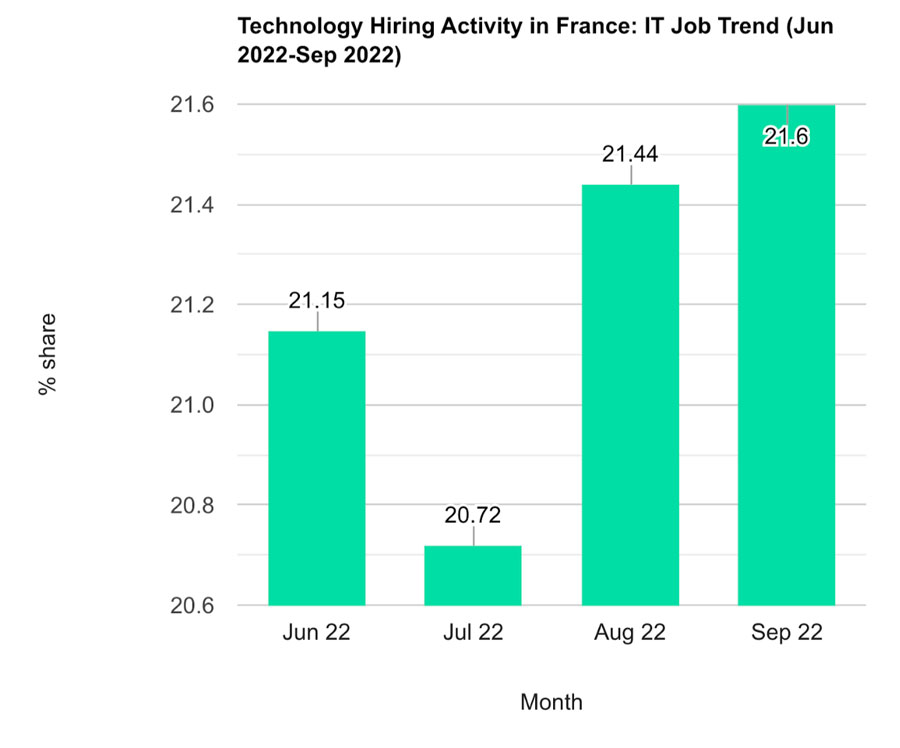
In November 2022, the french tech industry saw a significant rise in recruitment,  where 21% of vacancies were from the IT sector


According to the Robert Half’s Salary Guide 2023, which surveyed CIO’s in digital tech companies, uncovers the top 5 hiring trends for the IT and Digital professions in 2023. The report claims that the french tech industry is characterized by a “Tech exception”: an exacerbated shortage of profiles and a high transfer window resulting in increased competition to attract these essential and highly sought-after profiles.

Surveyed CIOs, despite the uncertain environment, have high levels of confidence in IT projects and expect to increase their search for IT talent, with 73% saying they are more confident in their company’s growth prospects for the year ahead and that IT will continue playing an indispensable role in transforming and driving growth.

There are a number of reasons for the shortage of talent in the technology industry in France. One of the main reasons may be the lack of a sufficient pipeline of skilled workers. On one hand, there aren’t enough students pursuing degrees in fields such as computer science, engineering and mathematics to meet the demand of the market. On another hand, there is also a general issue with the lack of adequate training and education in emerging technologies such as artificial intelligence and data science.

Europe is also facing a worrying trend in regards to job-hopping, and a very large number of people are choosing to change their jobs frequently in the hopes of finding an employer that can offer the benefits and safety they want This trend, dubbed “the great resignation”, is proving to be very difficult to retain talent. 

France is not extemp from the consequences of this trend. At the end of 2021 and the beginning of 2022, there was a historically high level of resignations, with approximately 520,000 resignations per quarter, including 470,000 from permanent contracts.
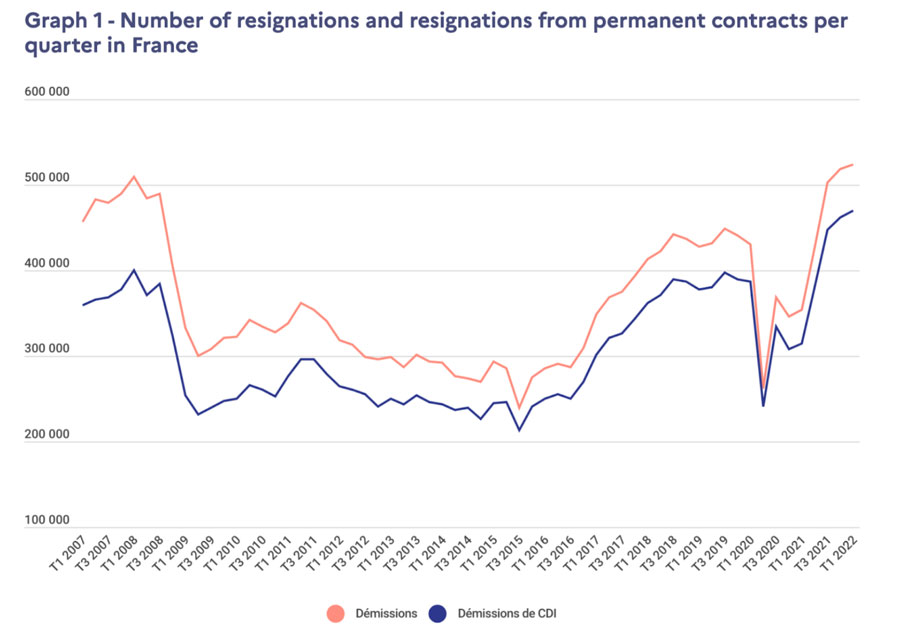
The great resignation is not, of course, the only reason for the shortage, as the return to work, is relatively fast. Of every ten workers who resigned in the second half of 2021, eight were employed within six months.

The gap in digital skills is also a major concern for recruitment, as rapid digitalisation has made work-related digital skills essential. The fast development of technology and the problem the workforce is facing to keep up with the advances is called “the digital skill gap”: the tech industry demands more skilled workers to sustain its growth, but the workforce is unable to meet the demand. 

This gap has been a global problem for many years, but with COVID-19 accelerating digital transformation, it has never been more profound. The impact of this gap is not only problematic for the tech industry; it is now apparent across industries as digital skills become increasingly necessary for all sectors impacted by the consequences of COVID. The impact of the gap is not just economical either: digital skills are more and more essential for day-to-day activities or education. A workforce with inadequate digital skills slows down innovation and productivity.

According to the Digital and Economy and Society Index, France ranks 12th in Europe in terms of human capital, which is above the EU average: 
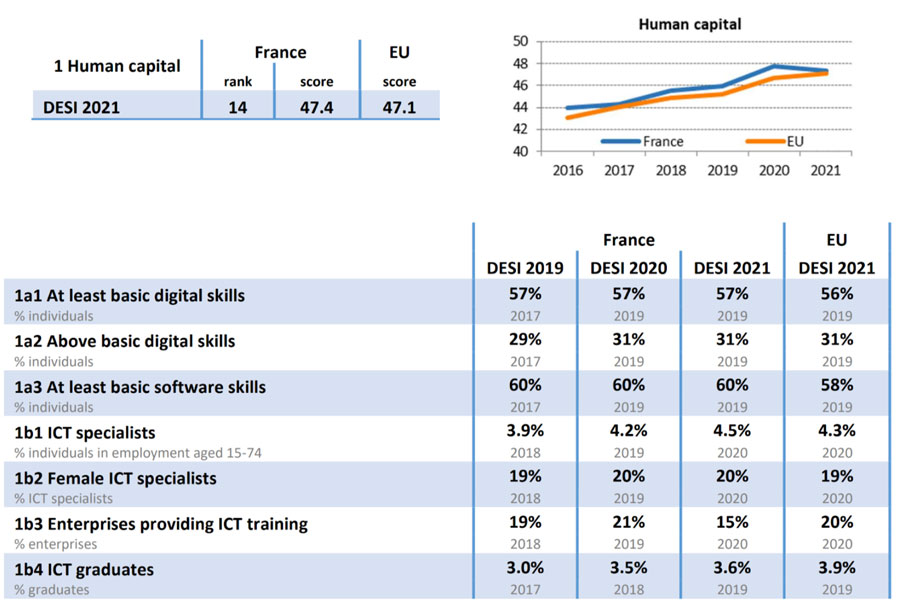
Source: DESI 2022

As the tech industry grows, the demand becomes greater, and the skill gap accelerates. It’s not a trend with a simple solution, and as it currently affects neighbouring markets, it also means that the talent pool is under constant stress, being recruited from every country that can compete. 

According to the Michael Page Group remuneration study, there will be a  bigger lack of technical profiles in the near future. The demand for these profiles is expected to increase in 2023, for many profiles, including cybersecurity experts, SAP, experts in Agile, DevOps or cloud experts.

The skill gap is also problematic for more “traditional” tech roles, such as software developers or engineers. 

In Barometre France 2021, 61% of startups surveyed claimed that the most difficult roles in recruiting are programmers and developers. This shortage, both in general and specialised roles, is expected to grow in 2023. 
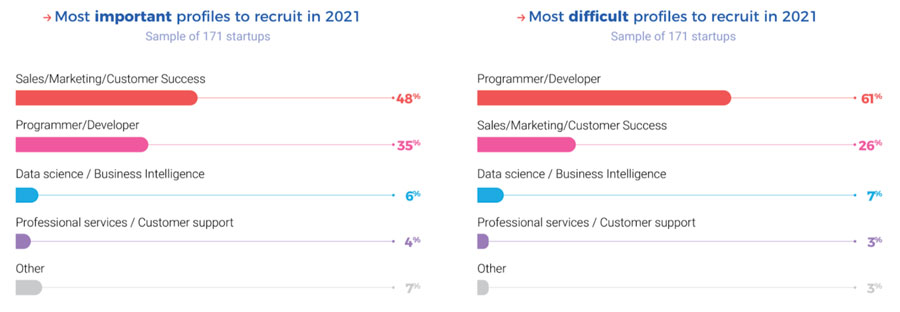
Source: Barometre France 2021

One consequence of the imbalance in the demand and supply of tech roles is how tech salaries have grown in order for companies to attract and retain talent. As time goes on and some roles become more stable, this salary trend will likely slow down. It’s hard to venture a timeline for this potential scenario, as we are currently experiencing a gap that seems to be growing. Some experts point out that we may be facing a five-year gap between demand and talent entering the market.

According to the France Digitale report, 70% of startups claim that retaining talent is one of their main obstacles. Among the main concerns for the future and barriers that startups have to overcome, keeping talent is listed in the first position:
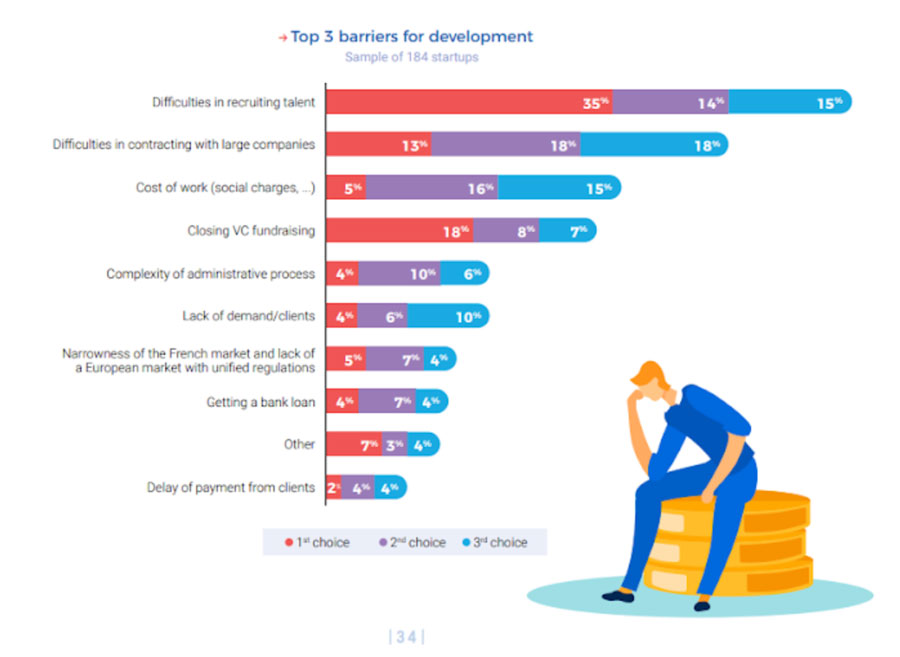
 

Source: Barometre France


The increasing prevalence of technology and the associated risks are driving the need for specialized talent in certain areas, particularly in the field of cybersecurity. The current climate, characterized by frequent cyber-attacks such as the one on a hospital in Corbeil-Essonnes in August 2022, highlights the crucial importance of specialised talent. 

However, the long training times required to develop these careers and the shortage of cybersecurity professionals is projected to lead to a decline in the availability of qualified workers starting in 2025. As a result, companies may turn to alternative solutions such as remote work and near-shore or off-shore staffing.

Experts point out that alternative forms of training will be the basis for meeting the demands in addition to traditional university training. The support for alternative training courses is key to developing talent quickly, so initiatives in the public and private sectors to develop faster training programmes are crucial to promoting employability

As the Robert Hall firm “2023 Salary Guide” points out, until tech training becomes faster and is able to produce talent at an unprecedented pace, the focus will remain on how companies can remain competitive in attracting and retaining talent. According to this study, 68% of companies surveyed are concerned about their current ability to attract the best candidates. What’s more, 90% of CEOs surveyed expect it will be as difficult or more difficult to recruit staff in 2023 than it was in 2022. When it comes to talent retention, the main concern surveyed CEOs expressed is that talent will be poached.

Another common strategy to increase talent retention is to focus heavily on compensation and benefits. As a result, new ways of working have now become part of the hiring benefits package, particularly remote and hybrid work.

With these new trends in the workplace, H.R. departments have had to adapt monitoring tools to measure the well-being of workers, as well as the emergence of new emotional or educational needs. This strategy might not be sustainable in the long term, as constantly increasing perks and benefits to remain competitive could eventually reach a no-return point. 

The European tech market has seen a surge of international talent as companies hire abroad to access larger talent pools.  The French tech scene, however, seems reluctant to hire international workers, as only 11% of french companies are interested in international candidates

As recruiting from outside the company is becoming increasingly difficult and the french market isn’t comfortable with international recruitment yet, the challenge for the future will be to identify internal candidates. As a result, HR technology should continue to see growth in the use of «people analytics» tools to track employees’ career progression within the company and promote internal mobility. The goal can be to move beyond traditional recruitment methods and focus on managing the employee’s entire journey within the company.
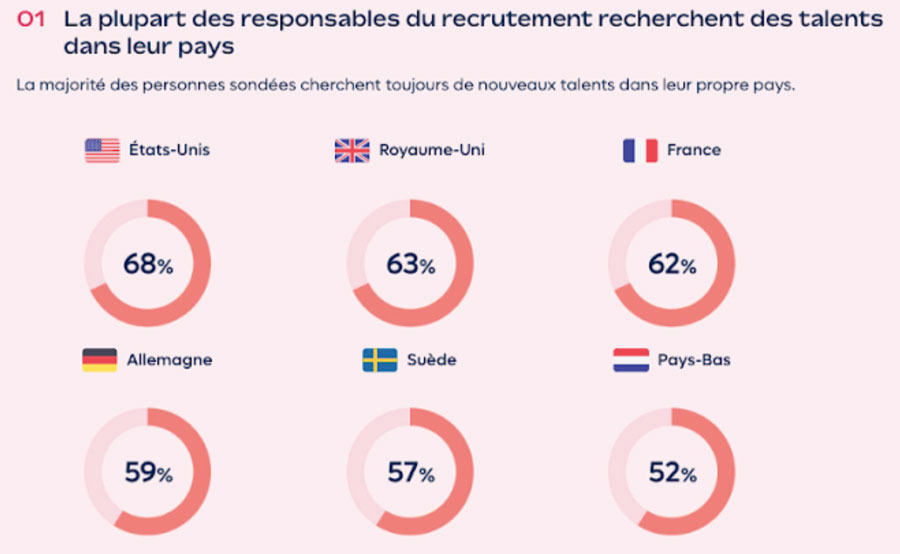
 

Source: Tech talent 2022 study, Remote firm quoted in Culture RH


Overall, the shortage of talent in the technology industry in France is a complex issue with multiple causes, and it will require a combination of efforts to address it. As the market evolves, roles change, and new technologies impact the field of HR, recruitment and employee well-being, we will see a surge of ideas and strategies to combat the skill shortage in the near future.

Gender gap. How big is the gender gap in the digital tech industry, and how is it affecting the sector​

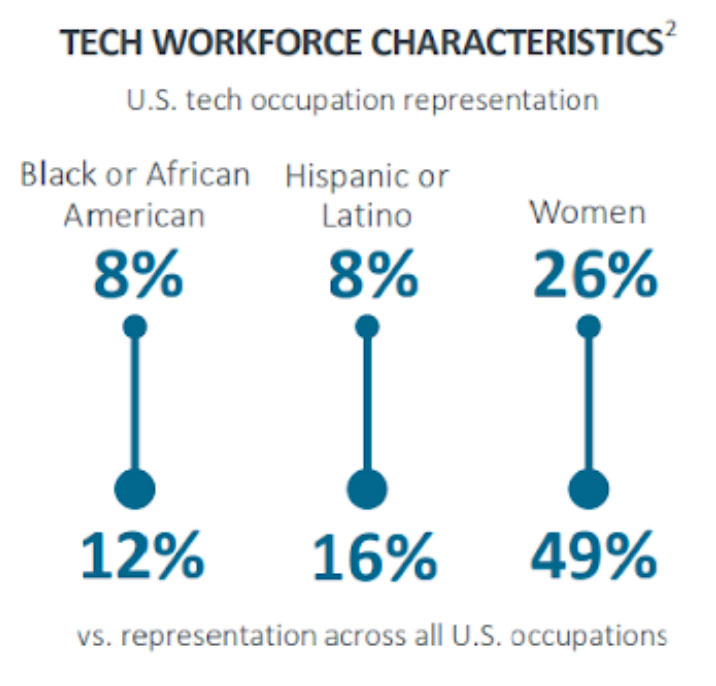
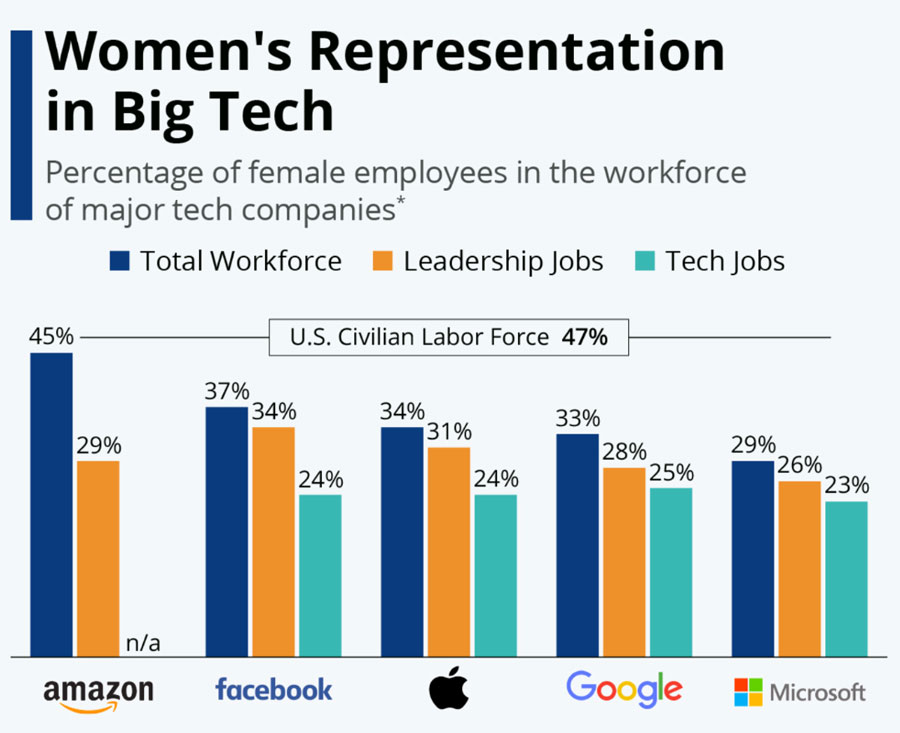
The French tech scene is growing rapidly and experiencing an unprecedented talent shortage. The industry is optimistic about its growth, and the support from public and private initiatives is making the sector flourish. Despite all the positives, less than 20% of the French tech scene is female. The sharp contrast between the booming sector and the slow incorporation of female talent into a “male-dominanted” industry is what we call The Gender Gap

The underrepresentation of women in technology is a global issue that starts in education, social misconceptions around technical careers and stereotypes about women in the workforce. This issue affects the tech industry across fields and sectors, roles and countries. 

The French tech industry has seen a slight improvement over the last two years, and according to the Gender Scan 2022 study, only 17% of the tech workforce was female in 2020. Still, the data is alarming for both female employees and founders.

According to data from the Social and Economic Performance of French Digital Start-ups Report, 12% of french tech startup founders are women and only 11% hold a leadership role such as Chief. Not only are there fewer women leading the industry, but also the revenue received by their startups is lower compared to male-founded ones, which means that female-founded startups are less likely to attract investment. 
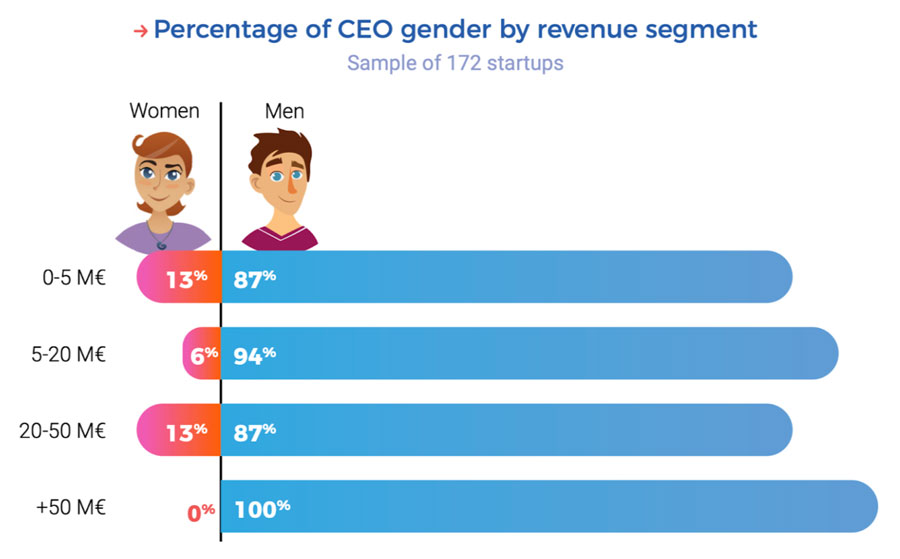
Source: Barometer 2021


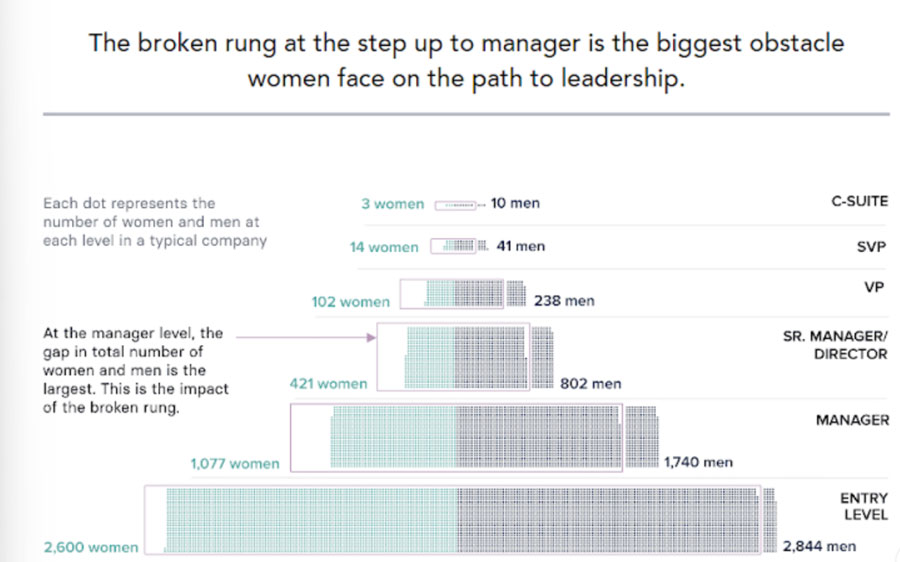
According to a study by Boston Consulting Group (BCG) and SISTA called Quelle place des femmes à la direction des entreprises de demain – French Tech 120, only 22% of women hold management positions in the French Tech 120 startups (FT120). These startups are the 120 most relevant startups selected by La French Tech, which, according to the association, can become world-leading companies. 

The same study reveals that the figure drops to 18% in companies considered “Next 40” (large companies in the ecosystem with the potential to enter the CAC 40 stock index). 

What’s more, the number is even lower if we focus on the core executive leadership positions (CEO, CTO, CFO, CPO, COO, CRO): in the case of the Next 40, women hold only 9% of positions.

The study also found that 25% of FT120 companies have no women in management positions, with 13% having no women managers in the CAC 40.

Some strong initiatives work towards improving parity in the industry. For example, starting in 2023, companies applying to join the French Tech Next 40/120 will receive gender equality monitorisation, and they must commit to providing the results of their gender equality index, as well as actions to improve it. 

La French Tech created a Parity Pact in 2022, and so far, more than sixty-seven startups of the French Tech 120 have signed it.

Startups that sign it commit to several actions in pursuit of gender equity, some of them are: 

  • to reach a minimum threshold of 20% of women sitting on the company’s board by 2025, then 40% by 2028.


  • to train 100% of managers on the challenges of diversity and the fight against discrimination and harassment.


  • to guarantee that 100% of the job descriptions published by the company are aimed at both female and male profiles.


All of the actions found in the Party Pact are aimed at fighting gender biases, actively encouraging companies to give leadership opportunities to women and committing to creating a future industry that can move past its prejudice. 

Another critical set of challenges to address that aren’t easy to quantify and translate into figures is the emotional challenges women face in the industry: the feeling of not belonging, the pressures of the importer syndrome or the challenge of proving stereotypes wrong. One of our interviewees point out that:

It’s not always easy being a woman and a «career shifter» when trying to feel and be legitimate and progress. It’s hard to say because most women in our tech team are junior or «converted» profiles, so in a way, all women in our team have imposter syndrome, and are not (yet) promoted”. 

According to the Gender Scan 2022: “46% of women in tech say they have experienced sexist behaviour” such as gender-related mockery.
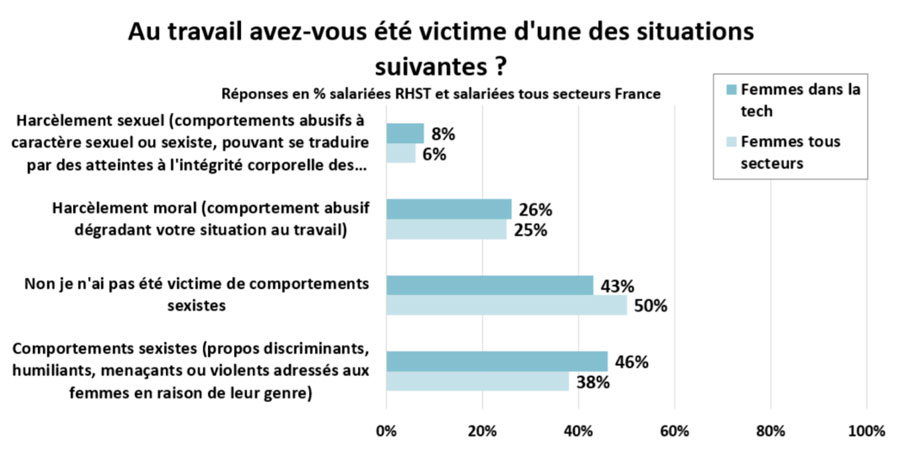
 

Source: Gender ScanTM, 2022 of Global Contact


Some of our interviewees point out that female representation in the tech industry is improving. For example, one person we talked to claims that although feeling that they work in a male-dominated environment, “I’m also in an industry that is very “masculine”. But I know the top management has diversity in mind and for example, our «Product» team is led by a woman and has more women than men”.

The underrepresentation of women in the tech industry, both in leadership roles and technical positions, is not only a problem for the industry itself but also for the economy as a whole. Studies have shown that diverse and inclusive teams are more creative and innovative and that companies with diverse leadership teams perform better financially. The underrepresentation of women in the tech industry has been linked to a lack of innovation and a less inclusive culture. It’s crucial that the industry as a whole takes a proactive approach to address these issues to ensure that the workforce of the future is truly diverse and inclusive.

The training offered by Ironhack to alleviate this problem

Pierre Gimat, City Manager of Ironhack Paris, has a solid experience in the tech industry and has seen it change and evolve over the last ten years. 

When talking about the significant changes the industry has experienced over the previous five or six years, the first thing that comes to mind for Pierre is funding and how the industry has gone from a reckless investment mindset to a much more conservative and responsible investment culture. 

Besides attitudes towards investment and spending, he has seen significant changes in the creation of new recruiting profiles to meet the high market demand and how those roles are a relevant part of the talent pool nowadays. 

He remembers how new and surprising it was for the industry, only five years ago, to reskill professionals into more technical roles in a matter of weeks or months. 

Soundbite:

«It was seen as quite new to do this kind of thing, and to be able, to first, several things to be able to, in a few weeks, in a few months to learn tech and tech skills”. 

Although there was scepticism at the time about how bootcamps or other fast courses could teach tech skills in such a short time, they were already a part of the market, and some companies already understood the importance of training talent in new skill sets. 

According to Pierre, Ironhack stands out in the market for different reasons, the first one being the real possibility to enter the market:

 «People know what you do around Ironhack, and then you find a job, and it’s not a marketing argument, it’s real”. 

The second one is related to Ironhack’s reputation and their efforts in remaining up to date, following market trends and not just focusing on providing skills but also helping people start a new career. 

People studying in Ironhack Paris come from a wide variety of backgrounds, and most of them are choosing to reskill to change career paths. They are also picky and have high expectations for Ironhack’s courses: 

Soundbite:

So backgrounds are very diverse: we have people Between 20 and 45 years old (…) with the majority of the people being between 28 and 34 years old. It’s mostly people who started another career, we have a lot of different backgrounds so I cannot describe a typical student (…) But what I mostly see is people who have started working in services and a few years in, between five and 15 years, they find that it’s not what they want to do anymore and they know that tech is booming”  

Pierre is happy and proud to share that the Paris campus is concerned about making tech more diverse and not just a “guy thing”. Their efforts in inclusion are paying off: the Paris campus is made up of 55% women. According to Pierre, it’s not just crucial to focus on numbers; it’s also necessary to brake stereotypes and clichés such as “men study web development and women study design”. Pierre believes these clichés are starting to disappear in the french tech scene. 

Looking ahead to 2023 and the future, Pierre wants the Paris campus to be a space for events and initiatives that continue to place Ironhack as a big tech player in the French tech industry, so they can continue to train people in hard and soft skills:

“We need to continue to be seen as one of the top providers of tech for companies, and I mean, and yeah, continue to be recognized for the quality of our boot camps”.

Pierre would highlight a career in cybersecurity as a promising field for the upcoming years. He comments:

«companies get attacked more and yeah it’s it’s one thing to build a product to build the website. It’s another thing to protect it. there’s an upcoming trend there”.

In addition to cybersecurity, another role that is proving to be full of career development opportunities is product management because there is not a lot of training and supply available. 

For newcomers to the industry, Pierre provides sensible advice, and he mentions how important it is to discover what fits best for each person: 

Soundbite:

«come to an event he at Irohack, we do a lot of talks and workshops and you can listen to people talking about tech jobs and you can try a little bit yourself, some tools and for an hour, or two, with our teachers, then you can see if you really want to want to pursue this will to switch to a tech job. Then if that’s the case, then apply to a Bootcamp

What do experts say?

The tech industry in France is changing fast and the innovation and startup landscape is constantly transforming: new technologies entering the market, new trends for the future or roles evolving into new profiles and jobs are just some of the constant themes one needs to keep up with. 

Some relevant voices in the French tech scene can guide us through significant changes and issues the industry faces, helping us understand the sector and manage our expectations for the future. 

Roxanne Varza is the Director of Station F, a prominent startup incubator founded by Xavier Niel. In addition, she has co-founded multiple initiatives, such as ech.eu, StartHer and Failcon France.  In her blog, TechBaguette, Roxana talks about tech and politics, women in tech and investment. 

In 2020, Roxanne Varza published an article titled “Are European startups avoiding the topic of downsizing?” where she laid out the beginning of a tech trend that is still very present in the industry: the “grow at all costs” mindset is no longer sustainable. Back in 2020, Varza shared her opinion on mega-rounds of investment and how the market was starting to downsize. Unfortunately, this trend has only gained traction in the last two years, as more layoffs take place and a different investment approach is being fostered. 

At the time, Roxane identified the beginning of an unfortunate trend named “Quiet Firing”, which has damaged the reputation of many companies and somewhat hurt people’s trust in the tech industry as a whole. This practice includes limiting employees’ actions in the company – essentially eliminating their tasks until there is no job to do – demoralising the employee or deliberately excluding them from teams or decisions. 

In her article, Roxanne Varza speaks about the shame culture that links downsizing to failure in the start-up scene. As she puts it:

 it’s not an easy topic and clearly not in line with startup “business-is-always-great” mythology”

Despite this downsizing trend, the tech industry in Europe is well-respected, and the overall perception of the industry is positive. This is because the layoffs and structural changes are rather contained for an industry that grows and demands more work. However, it is interesting to observe the shift in companies’ culture that comes with this more conservative approach to spending and investing since it speaks of a social climate based on regulation, stabilisation and industry maturity. 

Some conservative voices, for example, are embracing this cultural shift and creating new concepts and metrics to view the market’s success, changing from a “hype-based” overlook to a more sustainable approach. According to Bessemer Venture Partners, the industry needs a switch: it’s time to stop fostering a hiper-growth mentality where valuations have lost their meaning. In their State of Cloud 2022, the firm claims:

“The unicorn-or-bust mentality has unfortunately driven many startups and investors to focus on valuation as their primary goal, instead of building a great business (….) we are in need of a new milestone to strive for—one rooted in evidence, cloud fundamentals, and dare we say a milestone based on…revenue?”

The new metric they propose is “The centaur”, a metric to value a  business that reaches $100 million of annual recurring revenue (ARR). This could change the focus from potential to results, and in turn, could change how we focus on sustainable growth. 

Alexandre Dewez, an investor who runs a blog called “Overlook” where he analyses the French tech industry. He claims the French tech ecosystem had a stellar 2022 on paper, but as the year continued, the sector showed signs of feeling the pressure of economic uncertainty. In early 2022, he predicted valuations would adjust, and the ecosystem would experience down-rounds or even face a wave of bankruptcies. 

In his 2022 French Ecosystem report, Dewez claims the market is still experiencing a post-covid hangover, and global economic issues such as inflation or supply-chain crisis are heavily impacting the tech industry. He also claims, however, that the European market seems more resilient than the US one and that the current climate can be an excellent opportunity to build up companies without the pressures of funding to scale before achieving a correct market-product fit. 

Dewez anticipates that when stakeholders are able to adapt to the new shift in the tech industry, the ecosystem as a whole will continue to progress and reach “a next level”: more long-lasting capital at growth stage, prioritising diversity and a more robust international mindset. 

Experience of employees with career changes

In recent years, the trend referred to as «the great resignation» has been significantly altering the job market in various countries, affecting individuals’ decisions about their next career move and their reasons for remaining in their current job or industry. 

This trend is intricate and varied and can be seen as a cultural shift due to its impact on workers’ attitudes and how companies approach hiring. Some factors crucial in understanding this market transformation include the emphasis on company culture and alignment with company values, the increase in remote work, the prioritisation of work-life balance, and the presence of other desirable job opportunities.

Anne studied Business Administration in college with no clear expectations of what she wanted to do with her career. She went on to work as a manager for different companies in her native Philippines until she moved to France in 2019. 

She expresses how she always thought about getting into tech but didn’t see herself learning to code. In 2019, UX and UI design was at an all-time high, according to Anne, and the popularity of the role led her to come across many publications, tests and information on the tech industry. At the time, she worked remotely for a company in the Philippines and searched for UX courses. 

She found a three-month Bootcamp in Paris and her transition to the job market wasn’t entirely smooth: 

Soundbite:

And then, after a boot camp, it’s really difficult to find a stable UX career. I did try to get in touch with a lot of startups to do internships, but, like internships, you start for free, and then the demand for the work is really high” .

Coincidently, Anne turned out to be a former Ironhack student. She mentions how she searched for a Bootcamp that offered the possibility to study in English, close to where she was living at the time and wasn’t purely online. Her experience was overall positive, and she remembers it as an intense, challenging experience where she learnt all the basics to enter the market. 

After a long journey, she eventually found a job at a lead UX design firm, where she got hired as a lead UX designer. This means she can use her management experience, but at the same time, the role doesn’t involve a lot of design hours. 

Her current job also involves a lot of training, teaching and working with junior designers. She enjoys how varied UX is: 

Soundbite:

«In UX, specifically, what I like about it is that not every day is the same. Let’s say for a developer, every day could be coding some meetings, but that’s it. With UX. You have research. You could be leading a workshop on a Wednesday and do some UI on a Thursday. So it’s always different«.

However, she does identify some negative aspects within the field, mainly related to how wide the role can be and some of her perceptions on job retention: 

Soundbite:

«I think the profile that I’ve seen, based on just my observation, is that either they go on freelance or they move a lot, meaning move from one company to another, I think by just a year or two or less, even. I think that was the thing that I’ve noticed quite a bit in France«.

For the future of the role, Anne feels like the field is entering a new, more specialised era. The position is becoming less general, and new roles are emerging:  

Soundbite:

«I’ve noticed that before people will only look for UX and UI and that’s it. Now they are separating UX expertise and then UI expertise. Now they are separating UX designers to UX researchers. And UX researchers have also two blankets where it’s qualitative and then quantitative. So there’s specialties coming out, I think one by one for me, if I want to move on to like UX, I think I would focus more now on research. So if there was a position that I would apply for maybe tomorrow, I think it’s going to be UX researcher«.

Regarding switching careers, one of our interviewees said:

Soundbite:

«I think that in a few years, everyone is going to be switching careers at some point because everything is leaning into not really everything, but most of the things are leaning into tech”.

Celine had a similar experience: after working for over ten years in an industry that wasn’t aligned with her values, where she felt career evolution was difficult. So she studied at ESCP Business School, encouraged by teachers and parents, and after graduating, she went on to get a job in marketing for a luxury brand. 

The technology industry was an opportunity to change from an area where she felt burned out and disappointed by the working conditions:

«The lifestyle around it seemed perfect for me (flexibility, working from home)”.

 For many people, the journey into the technology industry usually starts when a contact who is already in the industry acts as a guide or mentor. Celine experienced this while still exploring if the tech scene was for her: «I was interacting with developers for websites and digital tools and wanted to understand them better». 

Looking for a change, she chose to train in a field she considered a “safe bet”: 

«I wanted to learn something that I could use really fast, and JavaScript enables coding in frontend and backend with only one language so it seemed pretty convenient, plus it is widely used in start-ups in Paris so it was likely that I would get more jobs opportunities”.

Before deciding and changing career paths, she had to go through a lengthy research process. Celine felt worried about the possibility of following a fading trend that wouldn’t even exist in five years:

“Are people going to be hiring for this position, or is it just something like something new and not really going to be existing in the next five years? So I really did deep research, and also not just research, but also kind of like identifying my personal skills as well”.

Celine felt that even if other tech areas, such as design or testing, seemed easier at first, she was fascinated by more significant challenges:

«I took a short «coding workshop» which made me realize this might be the perfect next move for me. It felt like I was «using my brain» again, and the tech environment seemed more exciting than the old industries I was working for in the past». 

As Anne pointed out, the tech environment seems very attractive for those who want to work in conditions that can be considered different from traditional industries:

Soundbite:

«Learning all the time. Finding solutions. Having an impact. Making something, producing instead of just coordinating». Being able to solve problems seems one of the most interesting things for some to switch to tech«.

Just like Anne did, Celine looked for a Bootcamp where she could learn the skill sets she needed to enter the job market. She considered different options, but bootcapms seemed the fastest one without sacrificing quality: 

 «I had to train as I knew nothing about code…I chose to train doing bootcamps to go as fast as possible back in the job market. There was a lot to learn and understand«.

Both Celine and Anne found it complicated to enter the job market. Celine mentions that some of the skills she had developed in her previous jobs helped her:

«I knew how to network and look for a job. Also as a former marketing & sales, I knew about a company’s organisation, how people interact, what a customer is… I know how to manage (people and projects). My soft skills were a good asset”

Despite feeling confident in her soft skills, she was met with some resistance in the industry, and recruiters didn’t always understand her career path: 

“Then I had to find a job as a junior and my profile was not always understood by companies plus not a lot of them hire juniors when they do they tend to go for Computer Science graduates. Finally, I had (and still sort of have) a huge imposter syndrome”

The profiles of career changers are varied, and there is no unique way to transition from a different industry or role. For example, both Anne and Cecile were looking to change from a job that felt stagnant and boring, but they were also looking for job security. The technology industry is known for its stability and growth potential, with many technology companies experiencing steady growth and high demand for their products and services. This can significantly appeal to individuals looking for a stable career in an uncertain economy.

Additionally, the technology industry offers many opportunities for career advancement, as the industry is constantly evolving, and there are many opportunities to learn new skills and advance in one’s career.

The social impact that the technology industry has today is making it more appealing for people to join the sector. With the rise of digital technologies, the tech industry has become more relevant to society, and people in the industry feel they are making a meaningful impact. However, it’s important to note that these reasons may vary from person to person, and some are more relevant for some than others. 

Trends by sectors:

Web development

France has an estimated 60 million internet users, and the latest considerable increase was between 2020 and 2021 when 1.4 million users joined the internet. France is the seventh largest e-commerce market in the world, generating US$92 billion in 2021. The French e-commerce market is expected to grow 10% rate a year between 2021 and 2025. 

As the number of internet users grows and France continues to become more and more digital, web development will continue to be in great demand in the country. The French currently use the internet across all activities of their lives, from education to shopping and working. Therefore, all areas of our personal, professional and social lives are affected by internet use. To face this massive demand for internet usage, web and software development will continue to grow and thrive. 

The size of the French web developing industry is enormous: in 2022, the industry generated €10.9bn in revenue and has been growing 0.3% per year on average since 2018. 
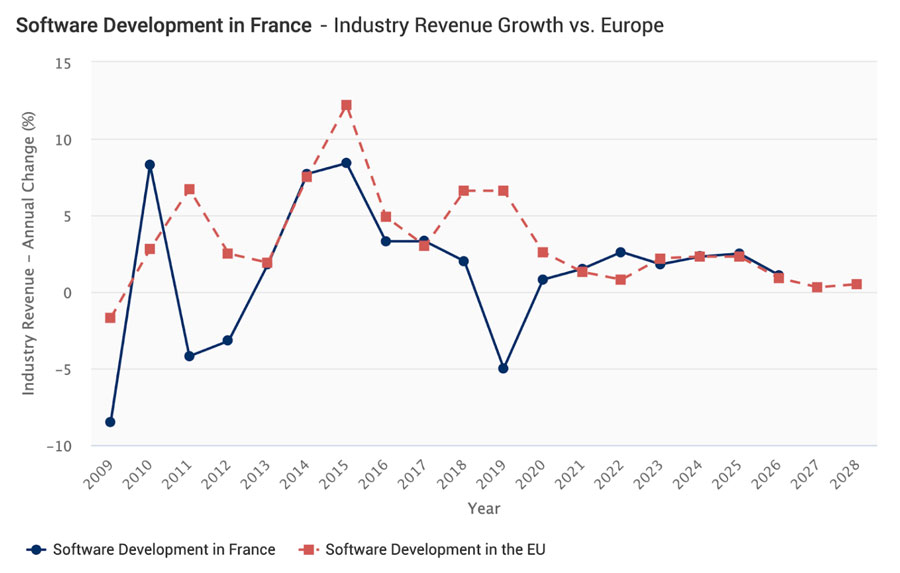
Source: Software Development in France – Industry Statistics | IBISWorld

The demand for software developers throughout various cities in France has grown steadily over the last decade, and in 2022, salaries ranged from 40,000€ to 60,000€ a year

The tech industry is facing a talent shortage, and as a result, salaries are skyrocketing as companies compete fiercely to acquire and retain top talent. This is particularly true as digital technologies continue to advance and become more prevalent in various industries.

For instance, the rise of cloud computing, artificial intelligence, and data analytics all require highly skilled professionals in software development, and the demand for these skills is expected to continue to rise in the coming years.

In 2023, experts predict that industries will continue to invest in cutting-edge technologies such as cloud computing, web 3, artificial intelligence, machine learning, metaverse, augmented and virtual reality, Internet of Things, and software 2.0. These technologies will continue to grow in popularity and become increasingly essential for everyday internet usage. Innovation is progressing rapidly, making a significant leap forward in technology research and development each year.

A study by McKinsey & Company even predicts that by 2050, half of today’s work activities could be automated, and the time required for software development and analytics could be 30 times faster.

According to Nicole Dieker in this CIS article, many macro technology trends will impact how websites are developed in 2023. It will be imperative for all sectors to have a digital platform, and web development is expected to grow by 13% by 2030. The increases in data transfer and the constant exchange of data will allow the creation of more personalised experiences, but with a twist through automation and artificial intelligence, always taking into account data protection.

Other technology trends to keep an eye on for 2023 include: 

  • Low-code/ no-code platforms, which are becoming more popular as they can help speed up innovation and deliver projects faster. 

  • Progressive Web Apps (PWAs), which are simpler to create and maintain and provide a better user experience. 

  • A Microservices architecture, which allows teams to work more efficiently and handle larger amounts of data. 

  • 5G networks will significantly impact internet speeds and pave the way for technologies such as virtual reality and artificial intelligence to advance. 

  • Cross-platform app development, which allows developers to create apps that can easily switch between Android and iOS, providing a seamless user experience. 

  • The Internet of Behavior (IoB), is a new form of human-machine interaction that is gaining traction quickly.

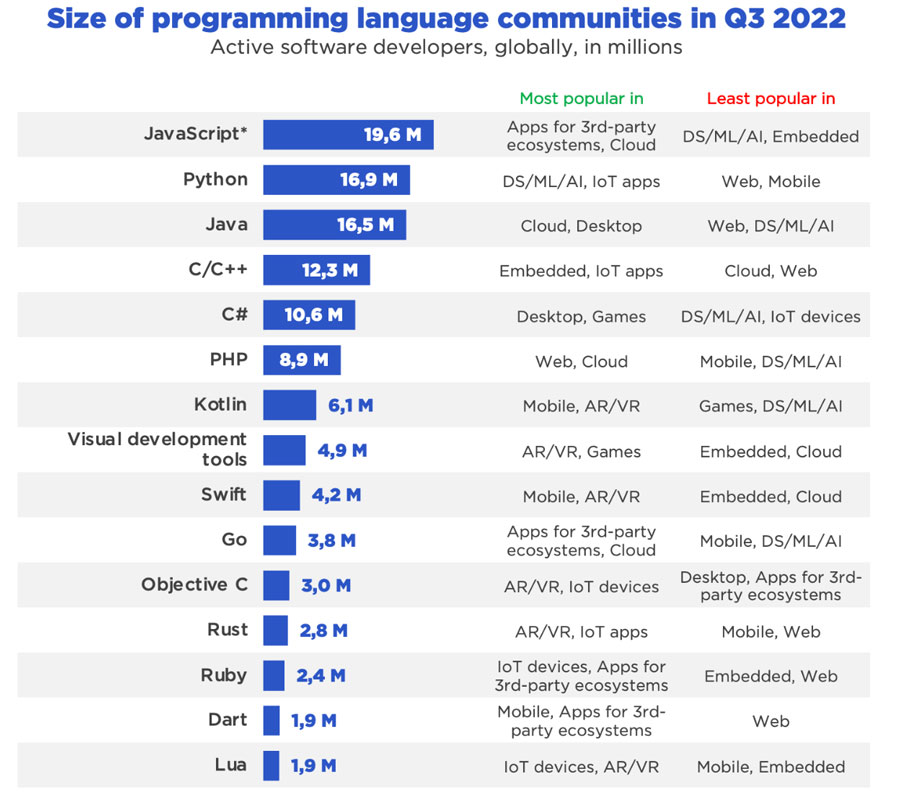
In a global survey conducted by slashdata, where over 30,000 developers from over 100 countries participated, they assessed the most popular programming languages in late 2022: 
Data Analytics

Data analysis has become a prevalent trend in the technology sector due to the ever-growing amount of data being generated and collected by businesses, estimated to reach 180 zettabytes by 2025

This data can be used as leverage to gain valuable insights and make data-driven decisions, ultimately improving company operations and driving growth. Technological advancements have also made it more feasible and cost-effective to acquire, store, and process large amounts of data, further fueling the trend towards data analysis in the technology industry.

According to a study by Kantar, called «The future of data professions seen by large French groups», 29% of digital activity managers and Human Resources managers of large companies put business and data skills at the top of the «major issues related to the evolution of data businesses in the years to come». The shortage of data roles is increasing competition and driving salaries up. Furthermore, more and more industries are recognising the value of data in driving growth, and sectors that previously had little interest in data are now exploring ways to gather and utilise it, such as healthcare, security, and hospitality. 

The shortage of data talent is not only a matter of quantity but also quality. The challenge is finding experts who possess not only technical skills but also the ability to apply them to real-world scenarios. This is where the demand is highest, and the talent is lacking. Over time, data skills have become vital for many emerging technologies, and companies seek data experts with diverse skill sets and objectives. The field has also evolved from routine-based to highly specialised jobs requiring advanced problem-solving abilities and strong communication skills.

According to the study by Kantar, Data specialisations such as Data Engineer, Data Steward or Data Architect require specific training, which makes upskilling methods difficult. Only 43% of respondents consider that the training courses offered today by higher education in France for data professions are sufficiently linked to the business world.

In 2023 and the coming years, it will become increasingly important for organisations to invest in upskilling their employees in data-related skills such as data processing, gathering, and analysis. This will also enable teams to gain fundamental data skills, which is crucial as organisations move towards a data-driven culture where decisions are based on data insights rather than intuition. This cultural shift is often referred to as «data democratisation», in which data becomes more accessible to entire teams, empowering them to work more efficiently.

Real-time or «modern data» is becoming a powerful tool for companies, allowing them to make decisions based on the most up-to-date information. However, managing and extracting value from live data requires a team of highly skilled data experts.

Data is also becoming more commonly available as a service (Daas or Data as a service), which allows companies to access and utilise data sets that have already been gathered, curated, and processed. This reduces the need for companies to build their data, which can be costly, and enables them to use third-party data sets to inform their decisions, products, and user experiences.

UX/UI Design

The rise of personal computers, the internet, and increased media attention, are some factors that have led to exponential growth in the field of UX and UI design. A study predicts that by 2050, there will be 100 million UX professionals worldwide.

The job market for UX and UI design is also quite diverse, as experts in this field are in high demand across various industries, company sizes, and teams. In 2022, UX and UI designers’ average salary was around 41,800€

According to the Design Salary Survey 2022 by The Product Crew, 71% of managers recruited design profiles in 2022, and design teams increased by 58%. However positive this data seems, French recruiters experienced significant issues recruiting designer roles during 2022: only 27% of companies indicated they were successful in recruitment. 

Hiring trends seem to be more cautious in 2023, as 19.7% of respondents are employing staff to cope with significant growth, a lower figure than at the beginning of the year (32%). Finally, 20.7% of companies have frozen recruitment. 

As the UX and UI design field continues to evolve, designers are adapting to new expectations and challenges. The role of UX/UI designers is becoming increasingly inclusive and requires a broader set of skills, including coding, design, leadership, and analytics. As a result, professionals in this field must continually develop diverse skills to remain competitive. This evolution within the industry has led to confusion and fragmentation in the definition of UX and UI design, with more specialised roles and subcategories emerging.

For example, companies increasingly seek specific experts such as UX/UI combined designers, UX researchers, gestural interface experts, voice-guided UI specialists, and interaction designers. In order to succeed in this field, professionals must diversify their expertise, and newcomers should choose a specific area of expertise to focus on early in their careers.

Some of the trends that are expected to impact the UX and UI market in the coming years include: 

  • Minimal to no-contact interfaces that have become popular in the wake of the COVID-19 pandemic, relying on voice commands instead of touch. This trend is expected to grow in popularity in public services and home-use products. 

  • Motion design and gestural interfaces, which allow for a more seamless connection between users and devices.

  • VR and AR design is becoming increasingly popular in e-commerce and requires designers to learn new ways to create engaging and seamless digital experiences. 

  • Cross-platform development is essential for ensuring a consistent and user-friendly experience across different devices. 

  • Accessibility, which is becoming more important as the tech industry works towards greater inclusivity and diversity. 

  • Working with AI in the UX/UI design process, using tools to assist in organisation and analysis.

Cybersecurity

According to numbers from France Digitale, 13% of startups suffered cyber-attacks in 2020. Cybersecurity will continue to be very present in the coming years, regardless of the size of the companies and the industry, as digital transformation continues to increase the need for technology across industries.  The demand for talent will continue to increase, raising salaries and competition among companies.

Cybersecurity is a concern not only for private companies but also in the context of increasing geopolitical tensions. Cyberattacks are predicted to continue as a preferred method of attack, making the need for skilled professionals in this field vital in both the private and public sectors. This is a worldwide issue, with estimates suggesting a global shortage of 3.4 million workers in a field that currently employs around 4.7 million professionals worldwide.

According to a study by the Michael Page firm, titled «France Cybersécurité: les profils et compétences à recruiter«, 1 in 6 companies that suffered a cyber-attack in 2021 saw its viability threatened. It’s crucial to remember that a cyberattack produced a great impact on business production, availability, relationship with customers and providers or company culture.  

Recruiting cybersecurity experts in France is a difficult task. According to Microsoft, there were around 15,000 professionals missing in the French tech industry in 2022. This study by PWC assesses different reasons to explain the shortage of cybersecurity talent in the country: lack of high-quality specialised training available. These recruiters aren’t familiar with the technical nature of the role and a lack of women and diversity in the field. 

According to the study conducted by Michael Page France, «on the one hand, there are not enough experts or young graduates every year to meet the growing demand and, on the other hand, faced with new threats to companies, there is always a perceived mismatch between training and the skills they need». The complexity of attacks will require more and more specialised talent.

One of the biggest cybersecurity threats in 2023 will be ransomware, which is a malware designed to prevent access to files. As a result, technology designed to detect and combat ransomware is expected to become more prevalent.

Phishing attacks, a common form of cyber-attack, are becoming increasingly localised and geo-targeted, making them harder to identify and track. Therefore, training and AI tools will become more critical in preventing and responding to these attacks by reducing the possibility of human error. However, it’s also important to note that certain AI tools can threaten security, such as deepfakes or voice recognition. As a result, user awareness is expected to increase in the coming years as cybersecurity becomes a more personal concern.

Product Management

The field of Product Management has gained significant attention in recent years. One trend that has contributed to this is the rise of product-led marketing strategies, which require strong product talent to be successful. Product Managers are expected to have a wide range of skills and often have a technical background to support their leadership role.

This increase in demand for product talent has made recruitment difficult and led to an upward trend in salaries to attract and retain top talent. However, as the market becomes more saturated and the role becomes better understood, it is possible that responsibilities and expectations for Product Managers may change, even if salaries remain the same. In the meantime, the high wages and growing field awareness may incentivise job-hopping within the Product Management market. The average salary in 2022 was around 55,000€

As the role and demand for Product Management evolves, there are several trends that we can expect to see gain momentum in 2023 and beyond:

  • Data-driven product management: Product Managers are increasingly using evidence-based decision-making processes with the help of AI tools and data analysis. A greater emphasis on research in product development also contributes to using insights in management.

  • A customer-centric approach to delivering value through products: The importance of a user-centric approach and focus on meeting the needs and wants of consumers will remain crucial for both consumers and product teams. Understanding customer priorities is a vital aspect of a Product Manager’s role, and the ability to successfully guide a team to deliver a product that positively impacts users’ lives will be essential.

  • Time and team management continue to be relevant in a market where new work strategies emerge. Hybrid work, remote work and prioritising work/life balance are all important aspects of day-to-day team management.

Career Development

In 2023 and the years to come, we can anticipate a significant increase in talent demand within the digital technology industry. The ongoing tech skill gap will continue to present challenges for recruitment, tech development, and economic growth.

The global talent shortage is expected to widen, and the issues that come with it will continue to pose problems for companies, individuals, and nations. However, the skill shortage also presents unique opportunities for individuals: the tech industry is an attractive option for those looking to change career paths and continues to attract new talent with the promise of stable income, a positive work environment, and a rapidly growing industry.

While the tech industry may seem appealing to newcomers, those already in the industry need to be realistic about the disadvantages and not contribute to an idealised portrayal of the sector. It is essential to understand the pros and cons of tech roles or other non-technical roles within the industry.

According to the Robert Half IT and Digital 2023 Salary Guide,  the top jobs that French recruiters consider relevant for this new year are: 

  • Sales executive.

  • Developer/lead developer.

  • Systems and network administrator.

  • Product owner.

  • Cybersecurity consultant.

The study also claims that finding talent with the right skills will be the biggest challenge for 2023. Finding people with the correct hard-soft skill set combination can be truly difficult. These are the most sought-after skills, according to participants: 
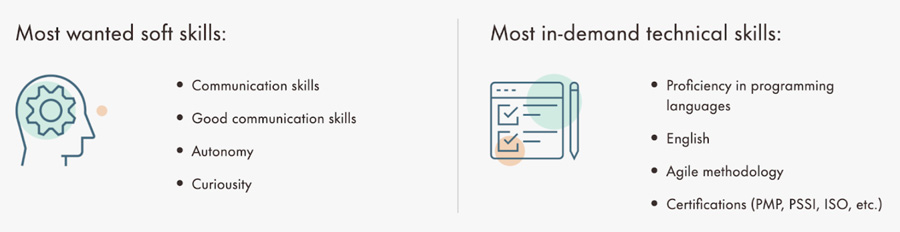


Developing soft skills will be increasingly relevant in the search for talent in the technology industry. Specific soft skills will be necessary to deal with the lack of technical knowledge, experience or enough talent in the team. 

At the same way, due to the changing nature of the industry in general, profiles that not only have the technical skills but are able to adapt to change, with the ability to work in ambiguous environments, with a high capacity for rapid learning, highly motivated, passionate and achievement-oriented will be valued.

In the France Digitale webinar, What kinds of skills are needed to join French Tech companies?,  Nadia Vedrunes, Head of Talent ManoMano, claims that in order to move forward in large-scale recruitment and meet the needs of the sector, companies could focus on attracting diversity. 

Louis Coulon, a co-founder at Clever Connect, adds that there is a great need for innovation in recruitment and that companies should identify potential and not just what they see in CVs. He also points out that the skills required are not always the same because of the nature of the companies and different cultures: early-stage companies may look for more versatile profiles with the ability to solve problems quickly and do a lot of things. More mature companies can segment work and look for more specialised roles. 

Remote and hybrid work environments require a particular set of skills, such as responsibility, autonomy, accountability and strong communication.

New future trends and paradigm shifts

As the year progresses, it’s clear that there are many unknowns in the current climate. Economic concerns are widespread globally, and political tensions and resource allocation remain major sources of uncertainty and conflict. The technology industry is not immune to these global issues and has been greatly affected by them. Moreover, the tech landscape is shifting as new paradigms emerge in the industry; some call this “the shifting era”, the “4.0 Industry”, a new industrial revolution.

The future of technology in Europe and the world is closely tied to new societal movements, sustainability, and economic shifts. As a vast industry that impacts nearly all aspects of life, the technology sector cannot be separated from cultural and societal changes. Global priorities significantly impact the tech market and shape its growth and future trajectory.

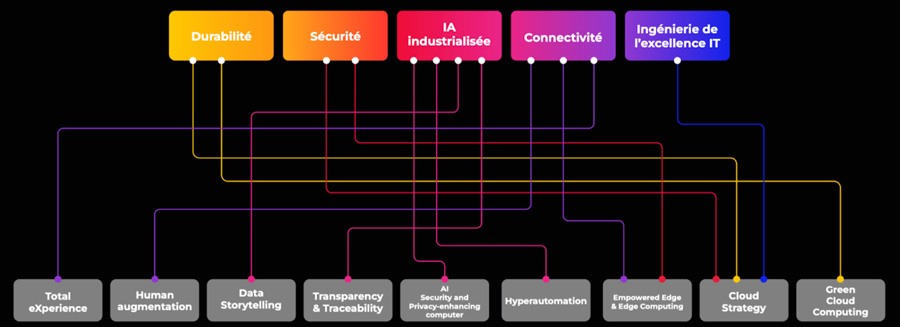
According to the Cellenza Tech Vision 22 report, trends are immersed in a broader vision, and they must be connected in order to understand their evolution: 


France is strategically developing its position in the global tech market, actively working to fund innovation, boost the startup scene, set up different initiatives to help the industry thrive, and partner with neighbouring countries to develop cutting-edge tech. The French tech industry remains resilient in the face of uncertainty, massive competition and an unstable European political climate. 

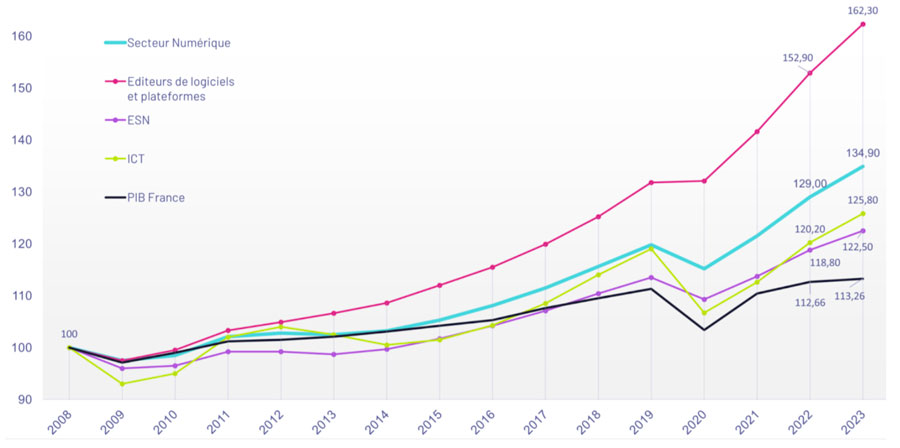
This chart represents the growth of the digital tech industry in France between 2008 and 2023: 
The tech industry is settling into a more conservative approach to growth. Layoffs, downsizing and new ways of working have become significant concerns for the market and have dampened some optimism in the industry. Growth is no longer valid at all costs, and this new perspective is transforming how many people view their careers in tech and prepare for the future. 

Given the uncertainties we can expect in 2023, greater emphasis will be placed on business process modernisation, automation, supply risk management and employee experience. As a result, innovation strategies will move away from large, overly ambitious innovation programmes towards a more pragmatic approach to gradually improve operational resilience and adaptability. In addition, the volatile market conditions will force companies to rely on innovation networks and foster collaborations outside the traditional areas of technology and business processes. 

All sides of the digital tech industry are changing as the industry itself transforms: from consumers to workers, from companies to startups. 

Consumers, for example, are finding new ways to connect to devices and use technology in their day-to-day life. According to the WGSN “Top Consumer Tech Trends for 2023 & Beyond”, consumers are exploring new ways to use tech to achieve their goals or optimise their activities, changing how companies provide tech-based solutions. From Calm tech to everyday AR, users are re-shaping the role tech has in their life, and the industry is adapting to them.

Workers’ day-to-day experience has also changed drastically in the last few years.  Many tech professionals, forced to switch to remote work by the COVID-19 pandemic, have now adopted this way of work as a permanent situation.

According to this 2021 Dares study, 26% of employees worked remotely. At the end of 2022, nearly one in every three French worked remotely.

Remote and hybrid work is not entirely ideal for workers and companies, and there are still issues and inequality to face in these new work styles. According to the National Agency for the Improvement of Working Conditions (Anact), 65% of women have a material environment suitable for teleworking compared to 71% of men. Many workers face environmental issues when working remotely, such as small spaces, sharing space with others or coordinating family responsibilities. 

The digital transformation of working areas and routines is experienced by workers and companies responsible for managing teams in a new remote work reality. Among other initiatives designed to attract and retain talent in their workforce, 38% of CIOs surveyed in this study claim to offer more opportunities for flexible and remote work:
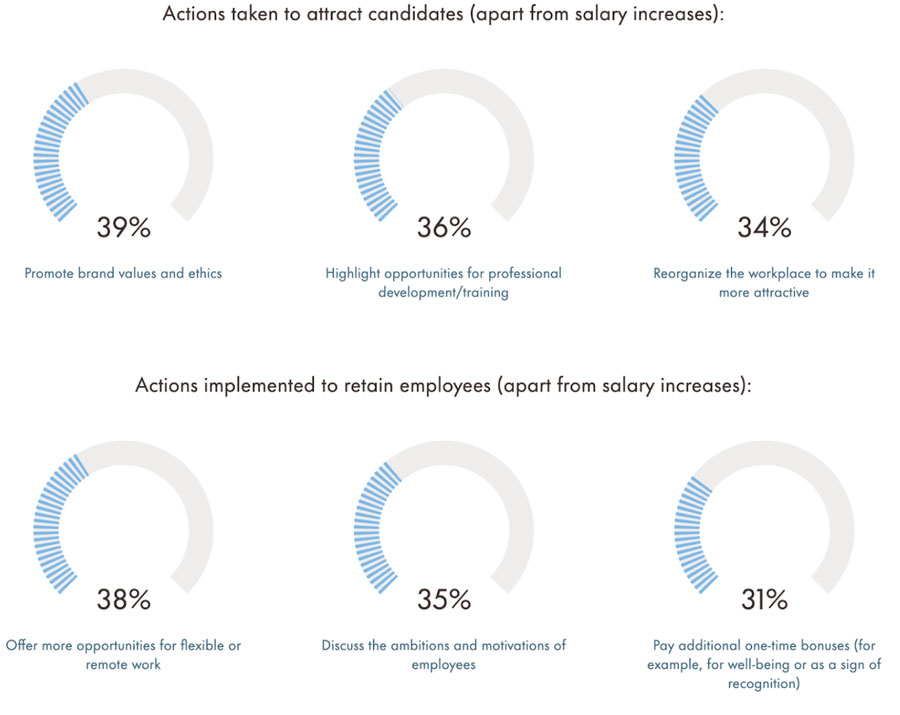
Additionally, in the same survey, 39% of CIOs are considering implementing a 4-day work week for the same salary and considering other initiatives to support well-being and reinforce flexibility as a part of their company’s culture. 

As we enter 2023, new developments in AI and other technologies have sparked meaningful conversations about ethics in the tech industry, the role of human tasks in the market, and how we can prepare for the challenges and changes. These conversations, which touch on topics such as tech ethics, human-machine relationships in areas like art, education, and research, and the impact of new technologies in a wide range of fields, are far from over. In 2023 and the years to come, we can expect to delve deeper into issues of accountability, ethical progress, and human safety in the face of a rapidly changing tech landscape. It’s worth mentioning that these discussions and debates are technical, social and cultural and must be considered from multiple perspectives.

Student testimonials

A person’s decision to change their career path, upskill or retrain themselves can come from many reasons, such as feeling burnt out in previous jobs or seeking better work opportunities with improved conditions and flexibility for enhancing one’s quality of life. However, there are always some common elements in their journey: friends, acquaintances, and coaches play an important role as guides and have a significant influence on the path they choose. Their experiences in choosing a new path, getting a job and changing the direction of their professional life are deeply personal.

Armelle is in her thirties, and she studied journalism at University. After graduating, she worked as a freelance documentary filmmaker for over ten years. In 2021 she was planning to move away from Paris, but before she could do that, she needed to find other career paths since all her clients were Paris-based.

Exploring different options is how she tried out coding for the first time and taught herself how to code a little bit using free resources she found online. 

“At first I just tried and then I saw that I liked it, so I kept going. And then I quickly felt that it could be my new job”.

After a couple of months of self-learning how to code she decided to start an Ironhack Bootcamp, mainly motivated by the idea that she could:

 “be able to find a job in that field after and be able to work from anywhere”. 

She describes her approach to tech as “completely random”, and at first, her motivation for learning to code was a mix of curiosity and interest. As with other Ironhacks students that have chosen to participate in this research, Armelle found herself encouraged by a friend who had studied at Ironhack:

 «a friend of mine, I just finished Ironhack and I didn’t know anything at all really. I knew I had done it, but I had no idea what it was about”.

For Armelle, the Bootcamp proved to be a very hard and intense experience: 

Soundbite:

It was hard, haha. It was super intense. I knew because she told me that it was super intense and I knew she was better prepared than I was. Like, she had more experience and knowledge and web deaf than I did when I started. So when she told me it was intense, I knew it was going to be super intense. And it was honestly, I haven’t worked that hard, I don’t think ever in my life before” .

Even if her experience was challenging and she felt overwhelmed by so much new information, she pushed herself to continue working hard. One of the biggest takeaways she gets from the Bootcamp is how she learnt the basics of her job and she can use those foundations for any new aspects of her work: 

“I’m able to do this job and work on a new language because I’ve done the boot camp and I know how to look for the information. I know how to understand the documentation. And the general process of building a website stays the same, even though the language is different” 

Armelle explains that the technical part of her current job is completely different from what she learnt at Ironhack. Still, she claims that learning a programming language during the Bootcamp made it easier for her to learn another one. As she puts it: 

“it’s not so much about being proficient in one language than rather like understanding the underlying structure and knowing how to look for the information” 

She described her job search as lucky, as she used a friend’s contact to get an interview at a company based in the southwest of France, where she wanted to live. She started her new job and moved within two months of finishing the Bootcamp. 

Armelle’s expectations of the tech industry are interesting, as she describes herself as someone “not super excited by the tech sector world”. She remembers that, during the Bootcamp, she had talks with former Ironhack students who described the industry as highly competitive and the workload as extreme. Armelle wants a different lifestyle, and she initially felt interested in the industry because it provided remote work opportunities and a good life-work balance.  Her feelings towards the industry also shape her feelings about upcoming trends: 

Soundbite:

I’m not super worried. I’m trying to stay in touch for sure and I’m trying to have an eye on what’s going on but I’m not like super geeky following all the latest trends. Like for instance, I’m not interested at all in everything that is like Web Three and Xg and cryptocurrencies. Like everyone’s getting mad about this. I couldn’t be less interested. So I’m more interested in the text of that can be useful, let’s say”.

Looking ahead, Armelle would like to be a freelance again and believes her web development career provides many freelance work opportunities. 

Stanislas, another Ironhack graduate, had a complex career path before he joined the tech industry: he studied English and Economics at University and went on to study for a Master’s degree in Business (heavily encouraged by his parents). He then worked abroad for a luxury brand, and when he returned to France, he completed a second master’s in Luxury Management. Although he enjoyed his work in the fashion luxury industry, he wasn’t completely satisfied with his career. 

After returning to France and diving into his professional future, Stanislas was open to exploring different options. At the unemployment office, he was suggested to explore the tech industry, and they recommended Ironhack. 

In his own words: 

Soundbite:

 “And so I was like, Well, I’ll give it a shot. And I got accepted. I was like, oh, well, that’s super interesting. And I just fell in love with the design thinking method and I’m really glad that I did the jump”.

For Stanislas, choosing design was an obvious choice, as he had been interested in the user and consumer side of the industry since his business degree. His experience during the Bootcamp was overall positive, and he explains he wasn’t surprised by the amount of hard work. He mentions, however, that the hardest part of the experience was learning new ways of working: 

Soundbite:

It was hard to just work with random people that I didn’t know, but that’s what you get in a work-life situation as well. But what was harder as well is that we all have our own individualities and we all wanted to make something super special as designers are aspiring designers. So we had like, clashing personalities all throughout the bootcamp, which was somewhat annoying, I have to say” .

After graduating from the Bootcamp, Stanislas took a few weeks to breathe and reflected on his new career path. He describes the job hunt as simple, and within three months, he was employed.

He mentions that Ironhack was recognised by the person who hired him and it gave him a competitive edge over other candidates: 

Soundbite:

So I had an interview with the human resources and with my soon to be manager, and then with one of the directors of the company. And later on he told me, we know that when you do Ironhack, you have very solid bases. You learn about all the design processes, but not just that. You learn how to do user research, you learn how to do user interviews, you learn how to do analysis, competitive analysis, and all the jazz. And that’s very complete. And they say they like that” .

He now works as a UI consultant and sometimes feels frustrated at his role for not being able to use all the skill set he acquired during the Bootcamp. He occasionally acts as a “spot designer”, but he would like his role to be more involved in product design. He also expresses some frustration regarding his adaptation to the industry’s culture: in his role, he comes in contact with many other professionals, and when we started his tech career, he didn’t know what his relationship with different roles and experts looked like. 

“So it’s not about the soft skills. Soft skills, I feel like I learned I have my own and it can always be improved, but it’s more about the construction of a team and how the designer works within the team. And that Ironhack didn’t really deliver on because I felt like it was not the main idea of the course, the main idea of being, we’ll teach you how to do design thinking”.

In his company and current team, Stanislas doesn’t perceive a gender gap, and he thinks that the industry is well-balanced. 

For newcomers getting into the digital tech industry, Stanislas recommends choosing carefully the direction you want to take and, from there, matching your skills to the job you plan to have. 

“And once that’s done, you match the skills you have and the things you want to do with what is expected from you as whatever job there is in the industry. So say you’re good at making figures speak, you’re good at making sense out of data sheets, you’re good at making translating figures into a business strategy, Just go for data stuff”.

Armelle’s advice is to talk to people who are in the industry before making any decisions, asking a lot of questions and learning from their experience.

Conclusions

France has a strong and well-developed digital technology ecosystem and is one of the leading innovators in Europe. 

The French government has implemented several programmes and initiatives framed under a strategy that focuses on technology development. Their goals for 2030 include a focus on innovation and research, aiming to cover a range of areas of technological development such as nuclear energy, electric cars and the robotisation of agriculture.

The French government’s strategy is to make France a leader in the tech sector by upgrading production facilities, investing heavily in future technologies, reducing production taxes, increasing research support and developing skills and existing national expertise. However, investments in some technological areas are still below their European counterparts, such as the United Kingdom and Germany. 

The plan also includes increasing workforce training availability by about 400,000 people and transforming vocational training systems to make France a leader in the area of digital technology and educational innovation.

France is among the top 12 European countries in innovation, with strengths above the European average in certain areas, but still has room for improvement in areas such as the integration of digital technology. According to the Digital Economy and Society Index (DESI index), France is considered a strong innovator, but its position is below the European average in this category.

According to the European Innovation Scoreboard 2022 report, France has strengths in training and education, government support for business R&D and Innovative SMEs, but opportunities for improvement in job-to-job mobility and ICT training.

Some reports claim the tech sector expects good prospects for the next five years, with an expected annual turnover increase of 41%, and the sector will create 6% of the national Gross domestic product (GDP) growth by 2025. The digital technology sector will also be a major employer. 

Significant gaps remain in terms of gender representation in the country’s technology industry. Women make up only around 20% of positions at different levels, including company management. The underrepresentation of women in the sector is one of the industry’s most pressing challenges. While strategies and programs have been developed to address this issue, there is still a long way to go to achieve parity.

France boasts one of the largest startup ecosystems in Europe, characterised by a well-rounded environment with support from both the government and private sector, a highly skilled workforce, and a broad ecosystem that extends beyond the capital city of Paris. In recent years, the French startup ecosystem has seen rapid growth, particularly since 2019, with significant support and investment, leading to a relevant number of unicorns. 

The tech startup industry employs over 600,000 workers, and the sectors that seem to be thriving in the French ecosystem are Foodtech, Education and Transportation. Despite the hardships the European tech industry faces, the overall feeling in France is positive, and this optimistic approach to the industry is reflected in the high number of job searches in the tech sector.

The optimism for France’s thriving startup scene is not only felt in France, as the country has also seen an influx of talent. The French government recognises the importance of fostering an entrepreneurial environment for the technology sector’s growth and has implemented a strategy to support startups and increase competitiveness.

This strategy includes a variety of programs that aim to support all actors within the sector, including small startups, investors, and the creation of laws and regulations to attract investment and recruit talent. The government’s efforts are focused on providing support, creating favourable legislation, and on specific areas crucial for developing the French technology industry, such as sustainability and agriculture.

Table of Contents

Digital Technology Vision in the France

A thriving startup ecosystem

Workplace gap: existing problem between supply and demand in digital technology

Gender gap. How big is the gender gap in the digital tech industry, and how is it affecting the sector​

The training offered by Ironhack to alleviate this problem

What do experts say?

Experience of employees with career changes

Trends by sectors:

Web development

Data Analytics

UX/UI Design

Cybersecurity

Product Management

Career Development

New future trends and paradigm shifts

Student testimonials

Conclusions

Where do you wanna go?

What is this study about?

Ironhack is the second biggest school in the world, with more than 10.000 students. They have 10 campuses and since Covid, have started an online teaching program. They are specialized on digital technologies, and their main focus is to reduce the gap between supply of workforce and the demand of the companies.

From 2023 on, they want to start publishing reports to position themselves as thought leaders in tech areas. They have contacted us to help them build this reports. We’ll start building the State of Tech in 2023 report, to be ready this January. If the relationship goes on, they will need another report on september.

IRONHACK wants to use this report as a source of knowledge to build “hero content” for their communication channels throughout the year.

Thanks to this efforts, they expect to:

  1. Drive brand awareness online.
  2. Establish their brand as thought leader in the tech industry recruitment space.
  3. To show how well they understand the skills gap in the sector.
  4. To gain more lead for the top of the funnel.
  5. To drive more traffic to their website.
  6. To nurture their funnel, resulting in more apps.

Audience of the contents of this report:

  1. B2C: Career changers and recent grads, looking to understand the viability of a career in tech, the long term benefits of getting into tech and what kind of jobs are out there in 2023. They should come away from reading the report feeling motivated to get into tech, with an idea of what job they want and how to get it.

  2. B2B: Hiring managers and recruiters, looking to understand the skills and current pools currently available in the market. They should come away from reading the report feeling more certain of the kinds of profiles they should be looking for.

The study includes: 

  • 9 Reports on the State of Digital Tech 2023, in 9 countries. 
  • 1 Global Report on the State of Digital Tech 2023. 
  • 1 light Gender Report.
  • 1 Global Survey about the State of Digital Tech 2023.
  • 109 Interviews

Interviews: 

  • 9 Ironhack Local Outcome Managers
  • 9 Gender Experts
  • 18 Ironhack Students
  • 18 Key Opinion Leaders (KOL)
  • 27 Chiefs
  • 27 Career Changers

Discover more about this study in the Research Proposal

Chose your country

Europe

New!

America

Europe

UK

PO

FR

NL

GM

SP

America

The Survey

The Survey was intended to be delivered in for this research through LinkedIn Ads, but after designing the campaigns and test-launching it, we noticed bad results in terms of Survey submissions. 

The Survey strategy is being rethought at the moment. 

You can access the ongoing Survey here.