What you'll find out
Digital Technology Vision in Germany
Developing a robust digital identity and industry in Germany has been a challenging process, replete with optimism and disappointment. Nevertheless, the nation currently finds itself at a pivotal juncture where general sentiments suggest a willingness to adopt a stronger digital identity. While the public sector may be prone to retracing previous missteps, the private industry is ready to move forward and adapt to a new European digital age.
The overall trend is that a new era for digital identity in Germany is imminent; solutions are being crafted by the public sector and through public/private collaborations, and consumer behaviour is shifting.
The German technology sector plays a crucial role in the digital age, making up 7% of Germany’s economic output, according to data from a Deloitte study, «Germany’s Technology Sector«. The sector drives innovation and enables new business models in other industries through its products and services.
In 2021, around one million people were employed in IT services and software in Germany, according to Statista. In the same year, the industry generated around 106 billion euros in revenue, and the software industry was responsible for 29.8 billion of that.
In 2022, the EU Digital Economy and Society Index, accountable for monitoring Europe’s digitalisation efforts, ranked Germany in the 13th spot out of the 27 members.
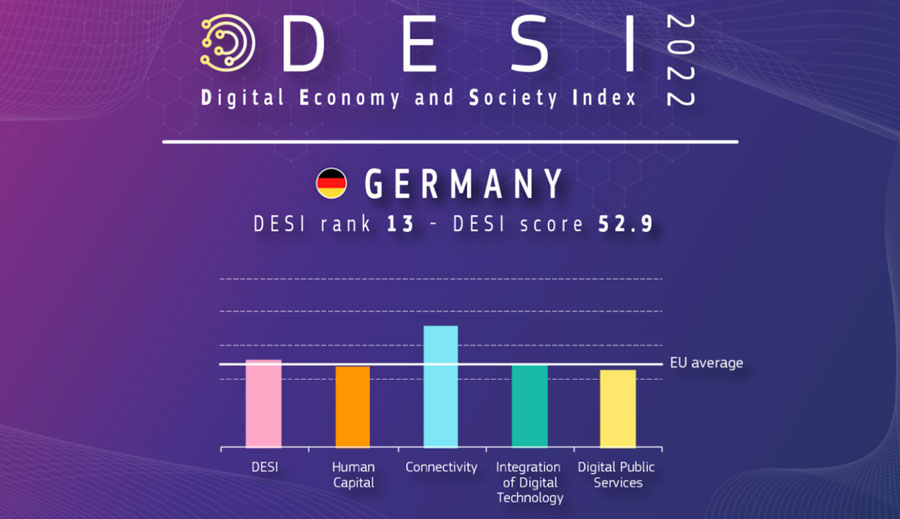
Image Source: Germany in the Digital Economy and Society Index
A spirit of innovation can also characterise German industry, and the country is internationally recognised as a leader in innovation. The Global Innovation Index, for example, ranks Germany as the 10th among the 51 high-income group economies and 7th among the 39 economies in Europe.
Despite having a strong economy and thriving industries, Germany needs to catch up in the digitalisation process compared to other EU countries. The country is facing some challenges in achieving the same level of technological development as its European peers, partly due to connectivity and digital infrastructure issues. Although the German tech sector continues to make significant contributions to the economy, the country still has work to do in order to fully realise its potential as a leader in the digital age.
Despite having a high internet penetration, at around 91%, high-speed connectivity is spotty and deficient. Germany is considered to have relatively slow internet speeds compared to some other developed countries, an issue that isn’t new. In 2017, Germany already struggled with slow internet, ranking in the 25th position in the ranking of countries with the fastest Internet access. This is partly due to a lack of investment in upgrading the country’s infrastructure and the challenges of providing internet access in rural areas.
Germany’s network infrastructure mainly relies on fibre optics, except for the final stretch connecting distribution boxes to homes. Telekom has a monopoly over these
boxes due to its use of vectoring technology, leading to a lack of motivation for innovation or improvement. Moreover, upgrading to fibre optics for the «last mile» can be a lengthy and costly process, particularly in rural areas.
While the expansion of fibre optics is progressing slowly, by the end of 2021 was at around 15%, and 89% of households had internet access of at least 100Mbit/s (5% more than in the same period in 2020).
In 2013 the then-German Chancellor was mocked for calling the internet «uncharted territory,» and seven years later, the COVID-19 pandemic highlighted persistent digital weaknesses in Germany’s public sector. The country had to deal with a pandemic and its devastating effects on top of schools with outdated computers or health centres relying on fax machines.
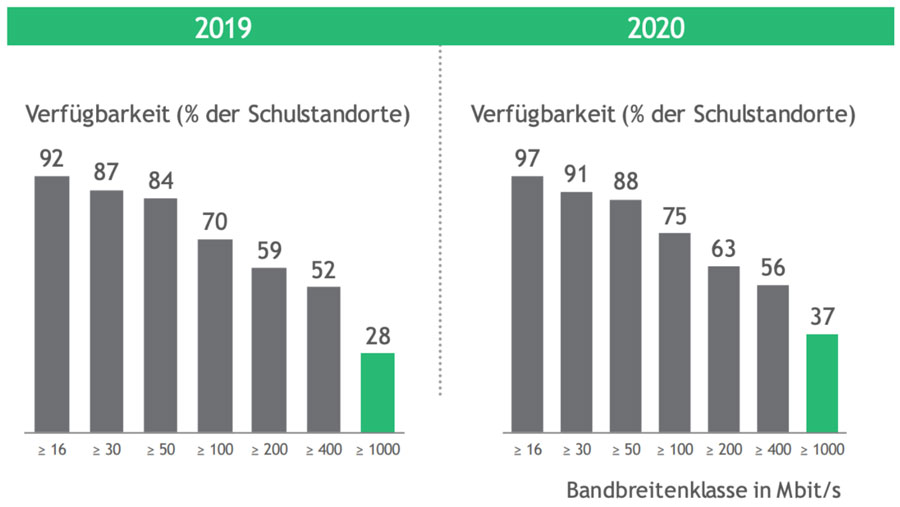
With the sudden shift to remote work and online learning, many people have come to rely heavily on the internet to maintain their daily routines. However, slow or unreliable internet can hinder productivity and make it difficult for individuals to complete essential tasks. In addition, low connectivity can also impact businesses, making it challenging for them to remain competitive and operate effectively in a digital age. The COVID-19 pandemic has highlighted the importance of digital infrastructure, highlighting the need for countries to invest in and improve their digital networks. For example, according to this study by Boston Consultancy Group, the coverage of schools with adequate broadband access was less than 40% at the time of the first Covid wave:
Germany is actively working to catch up in the tech sector. The government has set ambitious goals to improve the country’s digital infrastructure. By the end of 2025, half of all German households are expected to have access to fast fibre optic connections, and the goal is to eliminate mobile dead zones by the end of 2026. Other measures include digitising health records, digitalising administration to allow for online vehicle registration and ID applications, analysing mobility data to improve transportation infrastructure, and using technology to address the effects of the climate crisis.
Germany’s digital awakening
During the first waves of the COVID-19 pandemic in 2020, Germany had to face a fact that it had been ignoring for quite some time: the country urgently needed digitalisation and, compared to other European neighbours, proved deficient in its efforts to go digital. Germany’s digital deficiency is multifaceted and somewhat difficult to understand: it’s a wealthy and powerful nation that has been trying to catch up to other countries digitalisation progress despite ample resources and effort.
Germany’s issues with digitalisation aren’t new, and they were being addressed long before COVID, with minimal impact. In 2014, the government released its first digital strategy paper, which was already focused on building a digital infrastructure that could support innovation. It predicted that society would be more digital in the years to come and needed safer and faster access to the internet.
In the following years, other digital agendas came and went without successfully implementing all the changes they promised or not meeting the goals the government established. This has left Germany, now in 2022 – 23, increasingly dependent on other’s hardware and software, which can be considered a problem.
This reliance on technology from abroad is now referred to as “digital sovereignty”, which is defined by The World Economic Forum as “the ability to have control over your own digital destiny – the data, hardware and software that you rely on and create”. It’s an emerging concern for all European Union members as they strive to reach EU sovereignty together. Europe, particularly Germany, is facing the reality of over-relying on non-European tech providers and struggling with concerns regarding security regarding some providers and their monopoly-like position.
Achieving stronger control over tech development and data means that Germany will have greater strategic autonomy with the capacity to make autonomous decisions in security, digital policies, infrastructure or innovation. It will also result in a healthier ability to respond to challenges and stay competitive in a constantly changing market.
In August 2022, the government released its newest digital agenda, which plans to turn the situation around and boost Germany’s digitalisation process by setting concrete goals for the next three years. This digital agenda, titled Digitalstrategie: Gemeinsam digitale Werte schöpfen (“digital strategy: creating digital values together”), focuses on some of the nation’s greater challenges and proposes specific goals to accomplish by 2025.
Some of these objectives are:
- The supply of at least half of the stationary connections with fiber optics and the nationwide availability of uninterrupted wireless voice and data services for all end users.
- The establishment of an education ecosystem that offers equal opportunities and barrier-free access to digital education and is actively used by people at all stages of life.
- A modern legal framework for the successful development of the data economy and the improved use of data through interconnected data spaces in science, research, economy, administration and society.
- The strengthening of the skilled workforce for digitization and more diversity in the digital industry.
- The comprehensive digitization of administrative services.
- The strengthening of our digital sovereignty through targeted innovation support, the expansion of expertise in key technologies and the promotion of open source.
The Digitalstrategie provides information on 18 projects aimed at achieving these goals, contributed by every Federal Ministry. All these flagship projects are divided into three separate fields of action: “Connected and digitally sovereign society”, “Innovative economy, work, science and research”, and “Learning, the digital government”.
The Federal government hopes these projects, embedded in the new strategy, can boost Germany into a top-ten spot in the DESI index. Some, however, consider the digital agenda unambitious and would have liked to see more concrete objectives on how the country plans to catch up with its neighbours. According to the digital association ECO, 70% of German citizens are not satisfied with any aspect of digital policy.
It seems that a general concern is the lack of vision this strategy provides since it recycles projects and goals that have been in the works for years and even drafted into past strategy agendas but never accomplished. Another big point of debate is budget due to the lack of budget information clarified by the government.
The outcome of Germany’s digital strategy remains to be seen, but it is making significant investments to improve its digital infrastructure and technology sector. However, the full impact of these efforts will depend on the successful implementation of these initiatives and the continued efforts to address the challenges that come with digital transformation. Nevertheless, with a strong economy and thriving industries, Germany is well-positioned to reap the benefits of a successful digital strategy and remain competitive in the global economy.
A healthy startup ecosystem
Although Germany has struggled with digitalisation in the public sector, its private sector is more digitally advanced, particularly in terms of startups. The startup scene in Germany is thriving, with numerous successful companies emerging in recent years, including around 25 unicorns (companies valued at over 1Bn). The country has a robust ecosystem for startups, with supportive government policies, a large pool of talented individuals, and access to capital.
Germany has a diverse and decentralised startup landscape, making it unique compared to other countries. This is reflected in the diversity of regional startup ecosystems across the country, which showcase Germany’s decentralised economic structure. The following image illustrates how diverse the startup scene looked at the end of 2021, shown in the Deutscher Startup Monitor 2021:
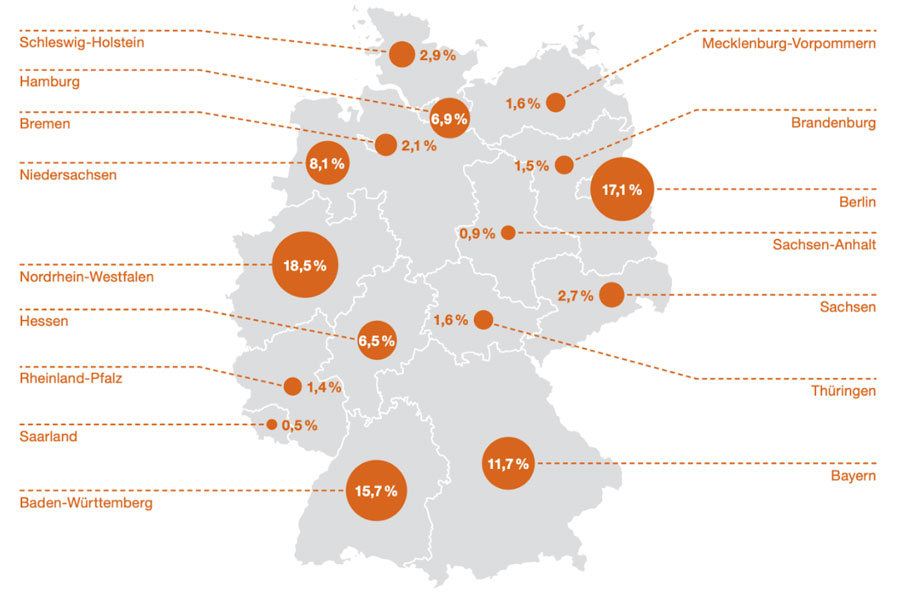
Image Source: Deutscher Startup Monitor 2021
The presence of a wide range of start-up ecosystems provides opportunities for entrepreneurs and innovators to find the right environment to develop and grow their businesses, regardless of location.
Startups play a vital role in driving innovation across all sectors of the economy. The primary industry is still information and communication technology, accounting for 30% of all startups. The medical and healthcare, as well as the nutrition and food/consumer goods sectors, are among the top 3, according to the German Startup Monitor 2022.
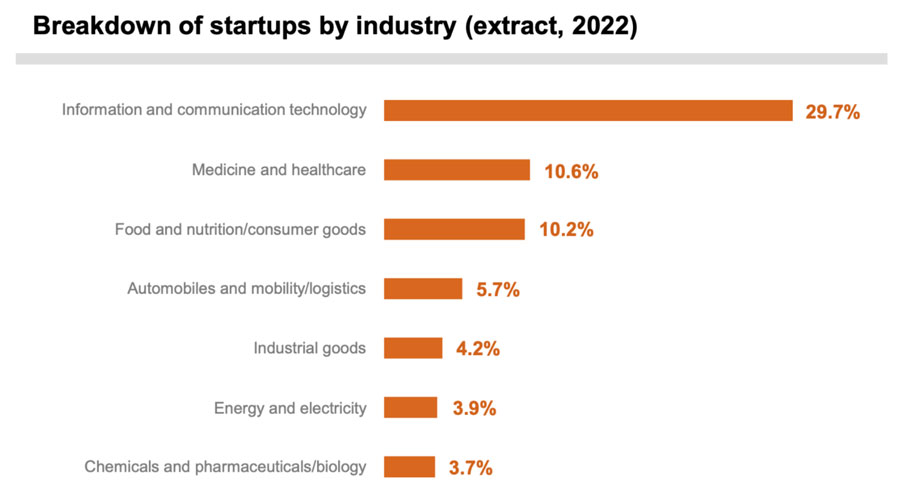
Image Source: German Startup Monitor 2022
According to Startup Genome, 10% of all new startups established since 2018 are Fintech companies. The favourable environment for Fintech startups is primarily due to a well-considered regulatory approach that simplifies compliance. Berlin is also a hub for developing AI solutions in the healthcare sector. The annual revenue generated by AI companies in the city is predicted to exceed €2 billion by 2025.
Additionally, in March 2021, appliedAI created the «German AI Startup Landscape«, a central database of AI startups, businesses, and SMEs.
According to Startup Verband, the German startup scene employs over 415,000 people, and in the German Startup Monitor 2022, they claim the sector continues to plan new hires. In this report, Fintech and software employ the most significant number of people:
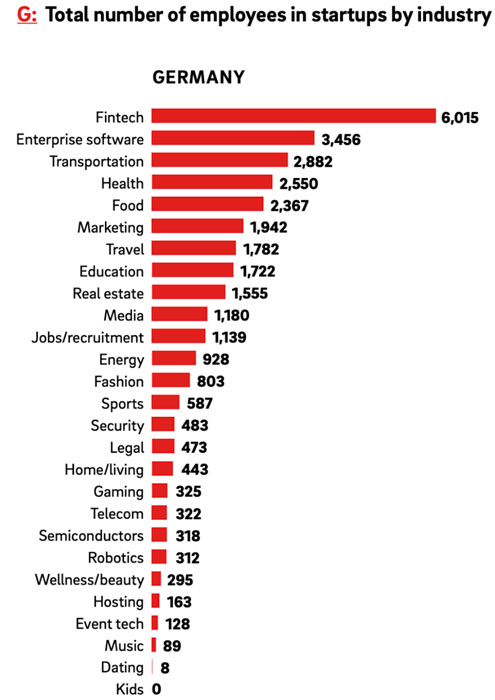
Image Source: Gender Diversity in German and French Startups
The same report states that Germany’s startup scene is known for its diversity, with over a quarter of startup employees coming from international backgrounds. This diversity is particularly pronounced in cities such as Berlin and Munich, where the representation of international employees reaches 41% and 36%, respectively.
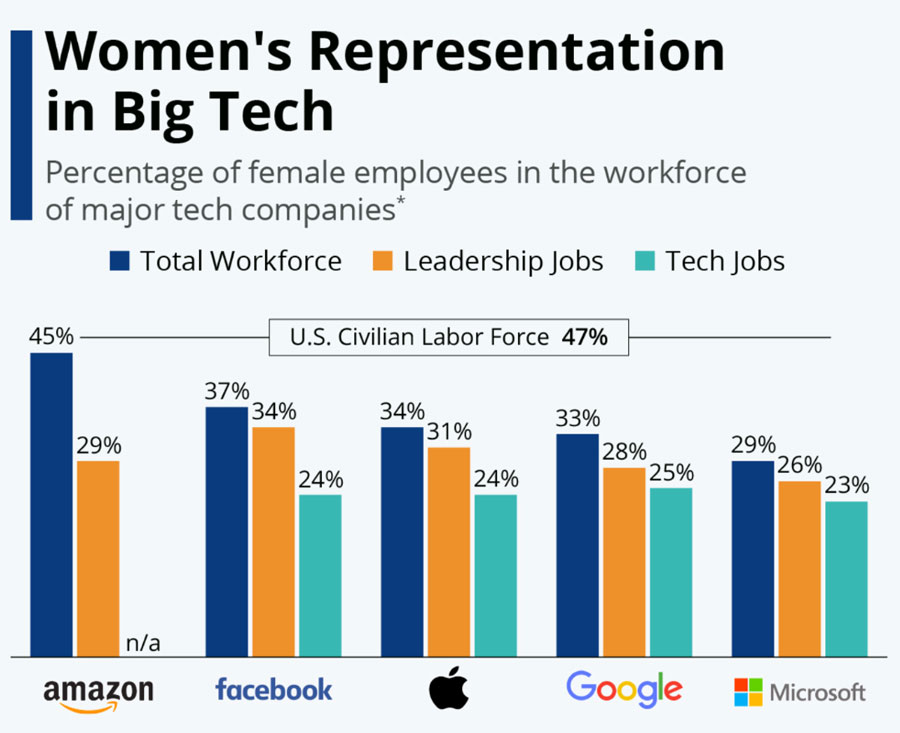
Despite this, there is still room for improvement regarding gender diversity within the tech ecosystem. Although women make up 47% of the general workforce in Germany, the representation of women among employees of startups is lower, at only 37%. This highlights the need for continued efforts to promote diversity and inclusiveness in the German startup scene. Diversity in startups is not just a question of gender parity but also greater human representation and economic growth.
In the MacKinsey Entrepreneurship zeitgeist 2030 report, a study that examines how the German startup scene could improve, data suggests that supporting migrant talent pools could reinforce the startup scene considerably. Currently, 59% of migrants or their descendants express a higher interest in starting a business compared to 49% of non-migrants; however, they only make up 20% of current business founders. With systematic support, this growing talent pool could result in an additional 180 start-ups being established in Germany annually by 2030.
According to Startup Genome, Berlin is one of Europe’s thriving startup scenes, with €10.5 billion invested in 2021, accounting for 60% of the total capital invested in Germany. In their annual rankings, they place Berlin as one of the top five startups ecosystems and in high positions in performance and funding:
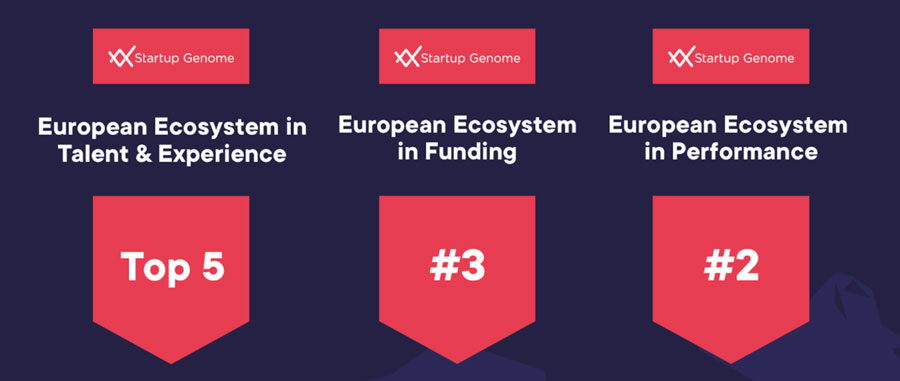
Image Source: Startupgenome
The government has pledged €10 billion to support startups in their growth phase, distributed via an investment fund (Zukunftsfonds, or “Future Fund”). This is not the only step the Federal Government has taken in order to solidify its startup scene. In the country’s first comprehensive policy roadmap for startups, with a 10-point plan that aims to enhance financial support for startups, overhaul the tax system for employee stock options, streamline spinouts at universities, and promote diversity.
This Startup Strategy includes some critical action plans:
- Funding: faster and easier access to grants and financing for citizens and companies through a centralised digital funding portal that will allow interested parties to search, apply and process funding in a user-friendly manner. The government will work with private investors to mobilise more private and public capital for Germany as a venture capital location.
- Strengthen the ecosystem: make it easier for start-ups to attract talent, promote diversity and help remove obstacles for women and people with a migration background in accessing financing and subsidies and offer better access to venture capital. Facilitate access to public data sets and facilitate start-up spin-offs from science.
- Focus on quality: prioritise social impact over maximising profit. Provide social impact startups with better access to funding through special financing instruments, such as European structural funds. This will support the growth and expansion of socially focused startups, enabling them to make a more significant positive impact.
- Nourish the sector: Mobilize start-up skills for public contracts, and enhance the connections between all important players in the startup ecosystem. To achieve this, the government will hold the first «Start-up Summit Germany» in collaboration with key stakeholders. A network of startup contact points will also be established in all federal ministries and affiliated organisations.
However, startups in Germany rely on more than just public funding but also on venture capital (VC) investments, for which 2021 was a record year, reaching $20.4bn.
This level of growth was significant compared to the previous two years: in 2019 and 2020, investment volume amounted to 6.2€ billion and 5.3€ billion, respectively. The country ranked second in Europe for startup investment volume, behind only the United Kingdom. Despite having a record year in terms of funding during 2021, 2022 was characterised by a more conservative approach, only reaching $11.4bn.
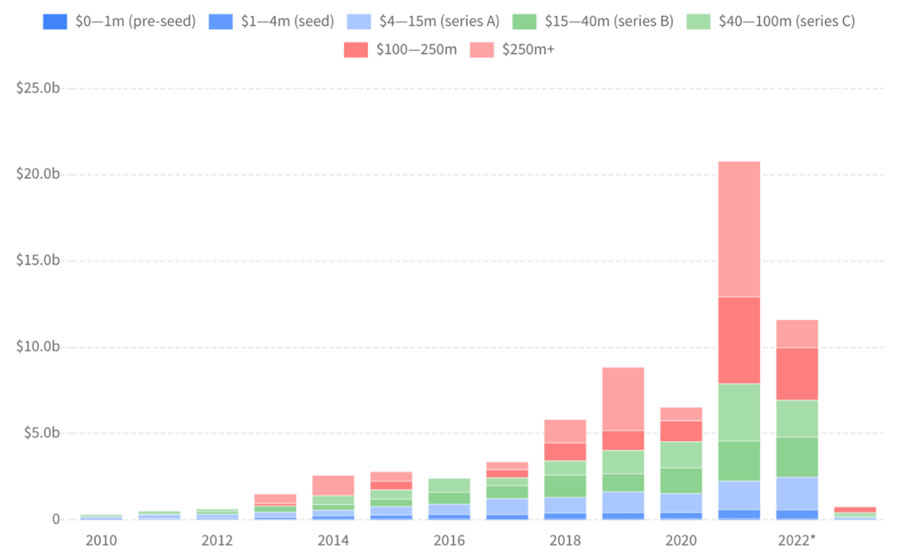
Image Source: Funding Rounds | Dealroom
Germany, just like Europe, has been impacted by layoffs in tech companies. Some well-known European startups have had to significantly reduce their workforce to control expenses and maintain their cash flow during the global economic slowdown. As a result, VCs are becoming more cautious in their investments.
According to Morphais, the total value of investments in German startups fell by -46%. Despite this, VC investment decreased in the latter half of the year, but there is still a large amount of capital available in the market. This is due to a continuous increase in the number of new VC funds and their total fund volume in recent years. The data shows that fund volumes have continued to increase since 2020.
Despite some challenges in the German startup ecosystem, such as downsizing and layoffs, the overall sentiment remains positive. The entrepreneurial spirit is alive and well in Germany, and many startups are rising to the challenge of a more competitive landscape. The German startup community’s diversity and strength give hope and optimism for the future, and investors and stakeholders remain confident in the potential for success and growth.
Workplace gap: existing problem between supply and demand in digital technology
The German tech industry has undergone significant changes in recent years, driven by the acceleration of digitalisation and the impact of the Covid-19 pandemic on social and political factors. According to this German Market Analysis, the IT industry is expected to reach a value of US$133.02 billion by 2026.
As the tech industry continues to expand, the demand for skilled professionals in the field also increases. The tech industry currently employs over 1 million workers, and 137,000 jobs are vacant in the IT industry, according to Make it in Germany, the Federal Government’s portal. Specialists are particularly in demand in the following areas: software development, application support (maintenance and support of software and hardware), IT security and data science.
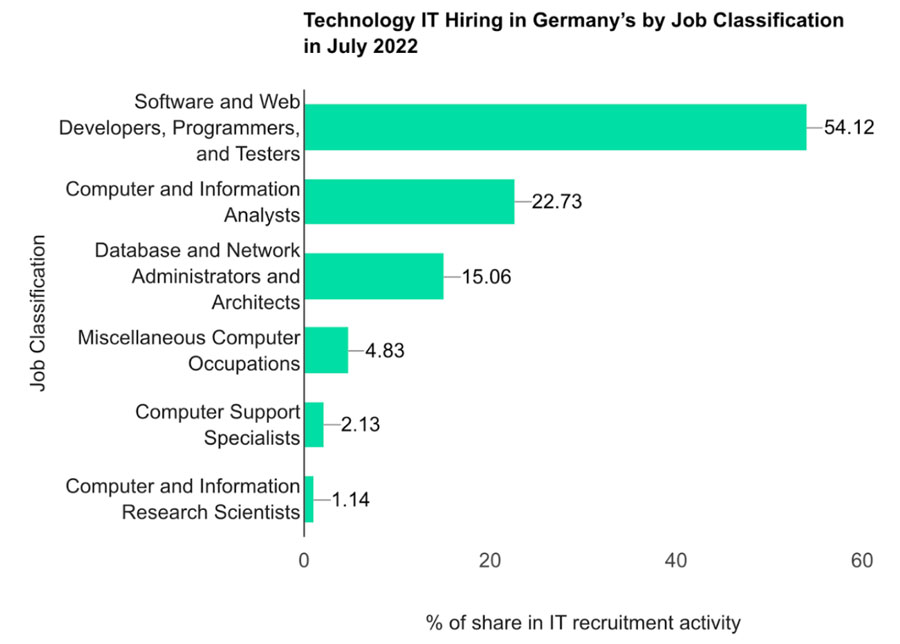
Image Source: Germany’s technology industry IT recruitment activity drops 3.7% in July 2022
As new technologies are developed and existing ones become more sophisticated, companies in the tech sector need talented individuals to help bring their visions to life.
Additionally, the demand for tech talent is not limited to tech companies; industries across the board are becoming more reliant on technology, further fueling the demand for tech talent in the job market. As a result, individuals with skills in the tech sector are in high demand, making it a lucrative career path with plenty of growth opportunities.
The talent shortage is already impacting the job market negatively. According to Gallup, 14% of German workers are actively looking for a new job, and it’s taking recruiters an average of 122 days to fill a vacancy with a qualified employee. This recent workplace study conducted by Gallup revealed that a significant portion of workers is considering quitting their jobs.
The study found that 39% of respondents stated that they would stop working entirely if they had the financial means to do so, which is a significant increase from the 25% recorded in 2016. This shift is a departure from Germany’s traditionally strong work ethic culture. At the same time, the study also showed that 40% of workers are actively searching for a new job, which represents the highest number of job seekers ever recorded in Germany. These results suggest that the German labour market is becoming increasingly volatile, approaching the level of job market fluctuation in the United States, which is known as the «Great Resignation.»
The labour shortage in the German job market is not only changing the tech landscape. As observed in the following image, data from the Ifo Institute shows how the talent shortage is affecting the overall economy and different industries:
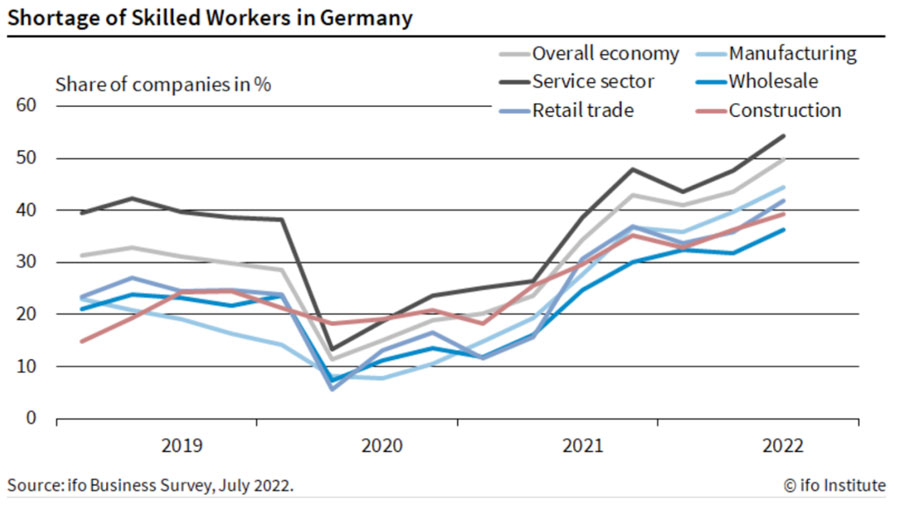
The talent shortages have devastating effects on the country’s overall economy, and it could become dramatically worse as the deficit is projected to reach seven million by 2035.
The most impacted industries include IT, healthcare, education, and hospitality. To address this pressing issue and secure a bright future for the country’s economy, the German government has implemented various supportive measures, such as easing immigration laws to allow skilled workers from both within and outside the EU to join the workforce.
The Covid-19 pandemic has changed the world of work dramatically. The transition to remote work, the changes in social life and the opportunity to consider different options in a time of extraordinary stillness have transformed many people’s priorities. Perhaps now more than ever, we are experiencing a realignment in the workforce, where workers wish to connect to the companies they work for more meaningfully. They now also prioritise work-life balance, mental health and personal growth.
In Germany, the term Quereinsteiger, which loosely translates as “lateral entrant” is helping end the job-to-job jump stigma. As more people in Germany reevaluate their work priorities and what they expect from an employer, the number of people considering changing careers is increasing. This job-changing trend results in a significant concern for companies: retaining talent. The Gallup Engagement Index Deutschland data in 2021 shows that 69% of German employees are not engaged, and 14% are actively disengaged, leaving just 17% among the engaged.
This work-change trend often dubbed the «Great Reshuffle», presents a prime opportunity to both bring in and retain top talent, including existing employees. However, to take advantage of this opportunity, employers must provide the desirable workplace experience that workers seek.
This may prove to be a significant challenge, as such work environments typically have a strong focus on values, are flexible, and are led by leaders and skilled managers who prioritise the company’s mission, capitalise on employee abilities, and show genuine concern for their employees as individuals.
Shortages shape the tech landscape, and layoffs also impact the industry. The tech industry is undergoing a significant shift, as some tech markets, particularly the US, are laying off workers while others are in dire need of talent, and the German tech market is embracing newcomers.
Skills needed for the future
The digital skills gap in Germany refers to the mismatch between the demand for digital skills in the German labour market and the supply of workers with these skills. This gap has been caused by the rapid adoption of technology in the workplace, leading to a need for workers with digital skills to keep up with new developments and meet the demands of employers. It directly impacts the number of workers with the necessary digital skills to fill jobs in the technology sector and many other industries that are becoming increasingly digitalised.
As the world gets increasingly technological, people lacking digital skills and digital literacy experience great difficulties participating in society.
A study titled Digital Sovereignty 2021: Starting Off into a Digital Post-Covid World? examines how in the aftermath of the pandemic, people in Germany have a greater appreciation for digital technologies and their capacity for self-sufficiency compared to two years prior. The significance of Internet usage has increased for 4 out of 10 respondents after the Covid-19 pandemic, with younger people and women considering it more important compared to older people and men.
The importance of the Internet also increases with higher levels of education. Almost half of 14-29-year-olds say using the Internet has become more important due to the shift to online education. Older individuals could benefit from using digital technologies; however, the study shows that older people have less importance attached to Internet use compared to pre-pandemic and have a lower self-assessment of their digital skills. This image illustrates internet usage before and after the pandemic:
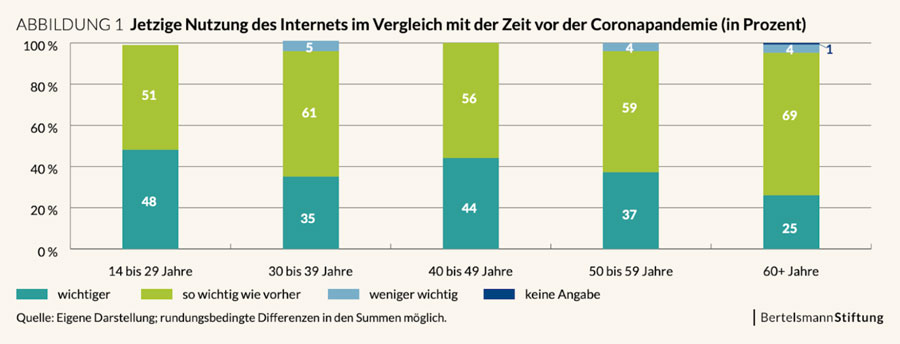
Image Source: Digital Divide in Society is widening.
The study’s data show that different generations have varying views on the internet’s significance, leading to a divide between those who have the digital skills necessary to navigate the increasingly digital world and those who do not. The rapid shift towards digitalisation exacerbates existing differences in digital proficiency among citizens, which is what we call “a digital divide”.
The D21 Digital Index 2021-2022 shows that the digital divide is slowly improving, as there are fewer digital marginalised than in their 2020 research. In fact, the study suggests that at the current rate of digitalisation, all German citizens could be using the internet in five years. Despite still having an enormous division in terms of generation, many parts of German society are catching up in terms of their degree of digitisation; this is especially true for people with formal middle and lower education as well as for people from rural areas.
According to the latest D21 Digital Index study, Generations Z and Y are at a comparably high index level and have high digital proficiency. Generation X can still keep up well, but baby boomers and the post-war generation follow at a clear distance, and the oldest generation up to 1945 consists mainly of digital outsiders.
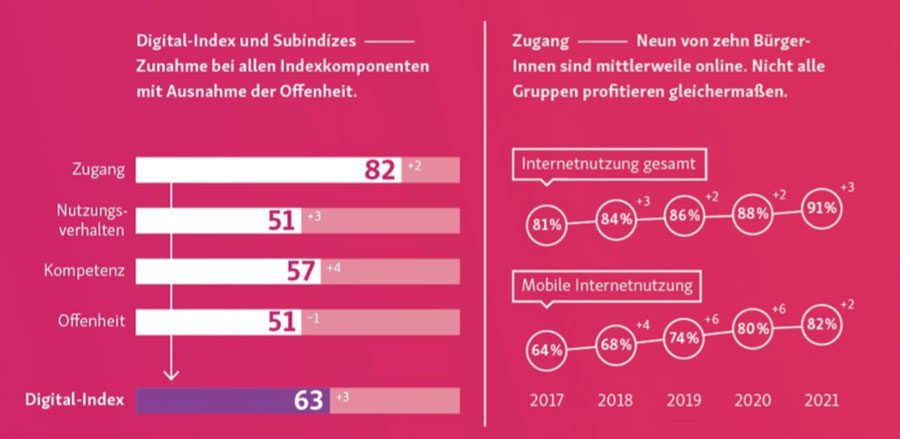
Image Source: Flickr | D21-Digital Index 2021-2022
Bridging the digital skill gap can help to reduce inequality and ensure that all members of society have equal opportunities in the digital world, but it’s also crucial to alleviate the talent shortage by providing a larger pool of qualified individuals who can contribute to the growth and innovation of the digital industry.
As the tech industry faces talent shortages across skills and competencies, companies struggle to acquire talent that can provide the necessary skills. Generally, companies can solve a specific skill gap through recruitment, outsourcing or providing their workers with further training. In the long run, providing constant training seems the most suitable to face the future, as it looks ever-changing in the face of tech’s rapid evolution.
According to MacKinsey’s Germany 2030: Creative Renewal report, by the year 2030, approximately 4 million employees will need to transition to different careers, representing nearly 10% of the workforce. Furthermore, over 6.5 million will require significant skill development to keep pace with advancing digitisation. A comprehensive and ongoing education system prioritising lifelong learning will prepare the workforce for the evolving job market.
To overcome the talent shortage in the tech industry, companies must invest in training and upskilling or reskilling their existing employees. Training helps employees acquire new skills and knowledge and leads to higher employee retention and reduced turnover, allowing companies to retain valuable talent and avoid the cost and effort of constantly searching for new hires. Moreover, investing in employee training helps companies stay ahead of the competition and stay relevant in an ever-changing technological landscape.
According to data from Eurostat, 27% of German enterprises are actively providing training for their employees, just above the EU average.
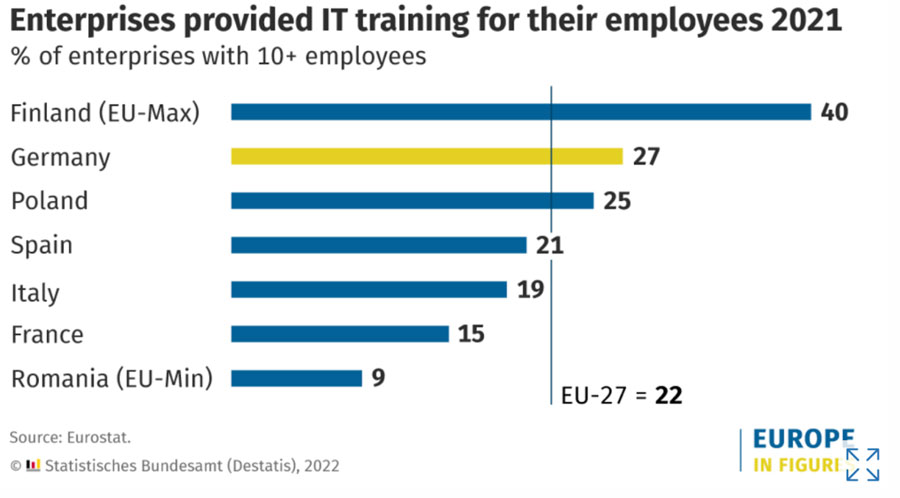
Image Source: Eurostat
Gender gap. How big is the gender gap in the digital tech industry, and how is it affecting the sector?
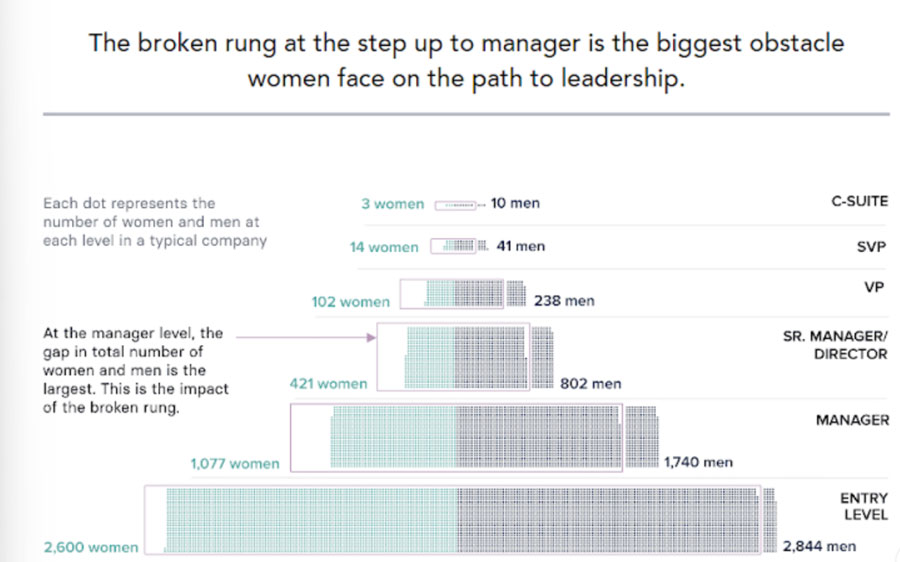
The tech industry in Germany employs around one million people, but just 17% of tech jobs are held by women, despite the fact that women make up nearly half of the country’s workforce. This disparity between the number of women working in the tech industry compared to the overall workforce is referred to as the Gender Gap.
The lack of representation of women in technology is not just a problem for companies and their diversity and inclusion initiatives. It starts long before people enter the workforce and is already evident in students’ career choices. According to data from Erudera, Women made up nearly 35% of students in STEM courses at German higher education institutions during 2021, despite being 52% of higher education overall.
Negative stereotypes can play a significant role in preventing girls from pursuing careers in STEM fields, including in Germany. The stereotype that STEM fields are only for men or that women are not as naturally gifted in these areas can create a self-fulfilling prophecy and discourage girls from pursuing STEM degrees. Girls may also experience a lack of female role models in STEM or face gender bias in the classroom or workplace, further hindering their interest and involvement in the field. Addressing and combating these harmful stereotypes is crucial in promoting gender equality and encouraging girls to pursue careers in STEM.
These stereotypes are vital to understanding women’s underrepresentation in the tech industry and their overall perception of tech, and the role it plays in their lives. According to the Digital Gender Gap study, women tend to achieve a lower level of digitalisation than men, which can limit access to information, hinder job opportunities, reduce efficiency in various industries, and contribute to the digital divide between different socioeconomic groups. Additionally, lower levels of digital literacy can lead to increased vulnerabilities to cybercrime and misinformation. Bridging the digital divide and promoting digitalisation is essential for ensuring a level playing field and equal opportunities for all. Differences in digitalisation (or self-perception of digitalisation) become apparent at young ages:
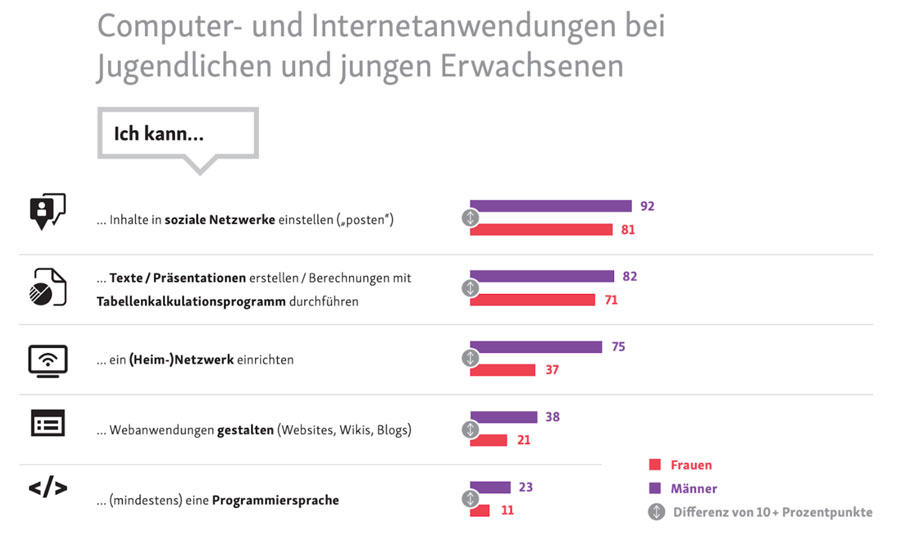
Image Source: Digital Gender Gap
This digitalisation divide can impact how people feel towards studying STEM-related degrees and pursuing a career in the technology industry. This divide, unfortunately, is not only limited to self-perception in younger ages, it continues throughout higher education, and it’s also apparent when women join the workforce.
One of the Key Opinion Leaders, N. is the CEO and founder of a platform that connects women across the IT industry and provides initiatives for female founders. Regarding women entering the tech industry, she points out:
Soundbite:
N. also mentions how women in the German tech scene hardly have any role models representing women in leadership roles. The lack of role models in the industry severely impacts how young girls perceive tech and the possibilities they have.
According to a European survey by Microsoft, most girls become interested in STEM at the age of 11 but reconsider when they are 15. Surveyed girls named “a lack of female role models” as the main reason they didn’t pursue a career in the sector. Moreover, 60% of participants said they would feel more confident pursuing a career in STEM fields if they knew men and women were equally employed in those professions.
N. talks bout how superstition in the industry plays a significant role in how women are perceived in the industry:
Soundbite:
When women overcome these initial access barriers and pursue a tech career, they can still face significant challenges within the sector. One of these challenges is a gender-based pay gap. In late 2019, a Honeypot study revealed that the German gender pay gap in the tech industry is one of the worst in Europe, with only Greece, Poland, Estonia, Slovakia, Lithuania, and the Czech Republic having a lower ranking. To be exact, male tech workers in Germany earn, on average, almost 15,000€ more per year than their female counterparts.
This pay gap is not exclusive to the tech industry, as 2020 data suggests that Germany remains among the EU states with the highest pay disparity:
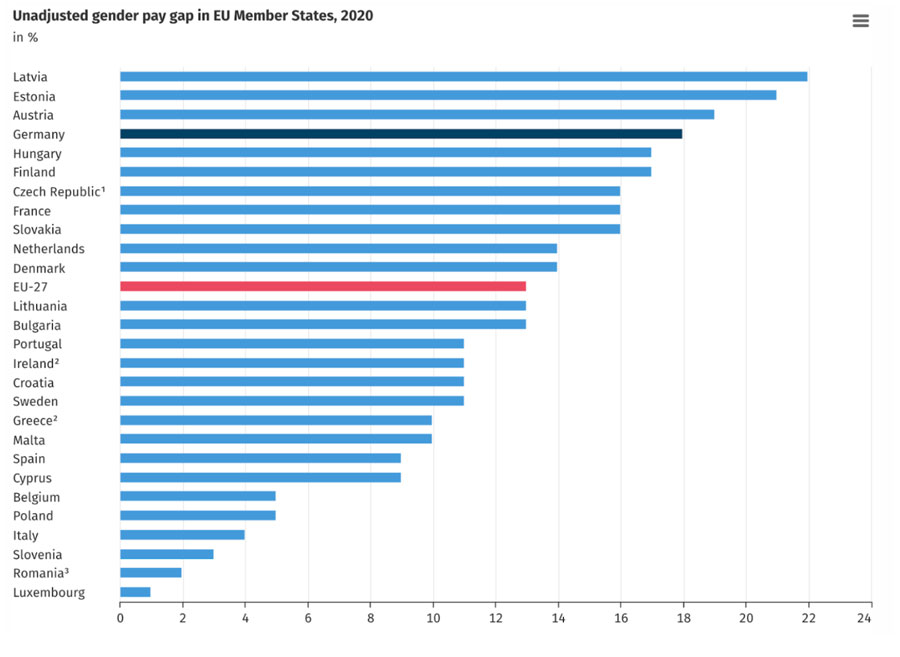
Image Source: https: Destatis
There are two leading social reasons why women earn less, and in Chapter 8 of this volume, titled Gender Equity in STEM in Higher Education, authors Jennifer Dusdal and Frank Fernandez use the engineering sector in Germany as an example. Some researchers believe that pay disparities are due to the gender makeup of certain professions, with women earning less in male-dominated fields and more in female-dominated fields. Others believe that women earn less because they tend to work part-time. Studies have shown that in Germany, the pay gap between women and men is smaller when limited to full-time employees, and German women appear to be more willing to choose part-time jobs. The Covid-19 pandemic exacerbated the shift towards female part-time work.
Women can also face social and cultural challenges once they enter the tech industry. As N. explains, they may face bias and myths about their performance, criteria or skills:
Soundbite:
Facing academic, social and workplace challenges contributes to women exiting the tech industry earlier and more frequently than men. By the age of 30, only 20% of women in the EU are still working in the IT profession for which they have been educated; by the age of 45, the figure is as low as 9%, according to data from Third Equality Report of the German federal government.
Female tech founders face different challenges, but they are still significant and relevant for the overall state of the industry. According to the Female Founders Monitor 2022, the share of female founders in Germany has risen to 20%, and 37% of founding teams currently include at least one woman – but they remain significantly underrepresented. For example, only 6% of female founders are active as business angels. The Female Founders Monitor also found that Female teams have a stronger focus on sustainability as part of their corporate strategy, and 61% say that their startups are committed to social entrepreneurship.
This overall map represents the Gender Gap in entrepreneurship from the Female Founders Monitor 2022:
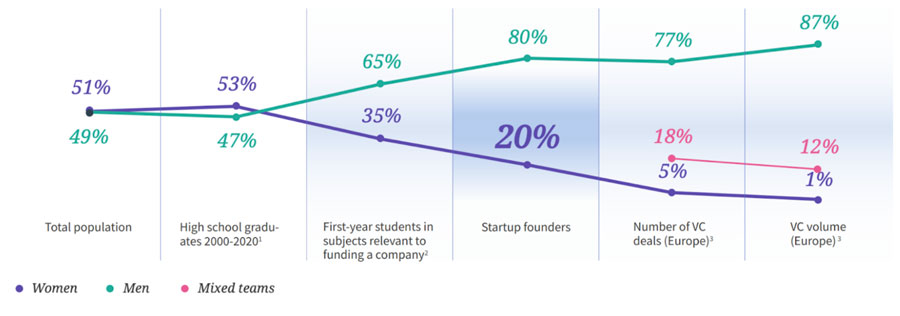
The percentage of female founders in the German startup ecosystem has increased by 7.5% since 2013. Despite this progress, 63% of startups still only have male founders, indicating that there are still structural barriers in place and much work to be done in areas like networks and balancing work and life.
Data from the Gender Diversity in German and French Startups suggests that women are highly underrepresented as founders in all startup categories.
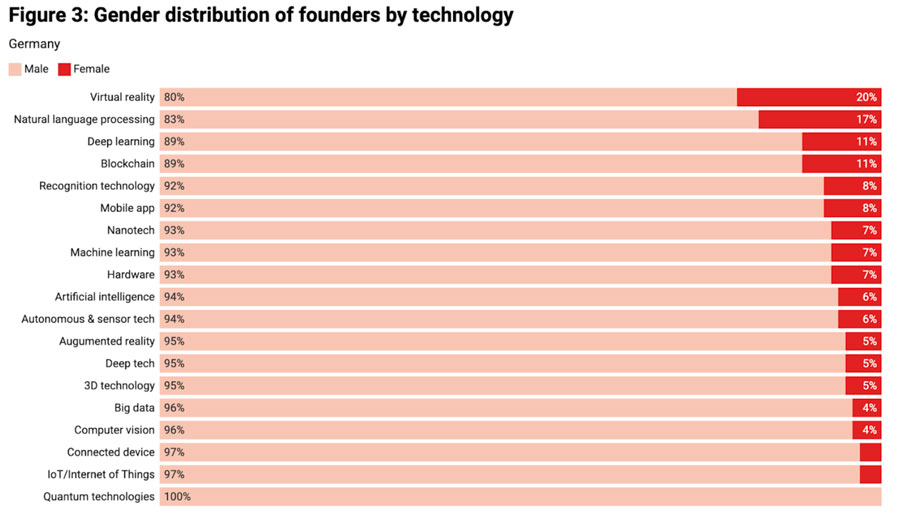
Funding is also a concern for Female Founders, as women-led start-ups in Germany have an 18% lower chance of acquiring investor funds after their foundation. In the third round of financing, the probability of success is even 90% lower.
According to a 2019-2020 Boston Consulting Group study on German Startups Diversity, statistics demonstrate that there are still significant structural barriers in place for women in the startup world and that more work needs to be done in areas such as networks and work-life balance. Unfortunately, Germany lags behind other countries, such as France and the United Kingdom, regarding gender diversity in the startup world. At the present rate, the BCG study suggests that parity will not be reached in the German entrepreneurial ecosystem until 2139.
In Germany, start-ups founded by women face a significant disadvantage in securing funding compared to those founded by men. According to the BCG report, female start-ups are 18% less likely to receive funding, receiving 25% less funding from prominent investors, 40% less likely to secure series-A (second round) funding, and a staggering 90% less likely to secure series-B (third round) funding.
The average funding received by female start-ups in Germany is also lower, coming in at 3.1 times less than that obtained by male-led start-ups, which is a broader gap compared to the UK (1.3 times) and France (2.5 times). This disparity is even more pronounced regarding valuation, with female start-ups valued 16.4 times lower than their male counterparts when raising seed funding.
The Female Founder Monitor expands on this funding disparity, adding that female teams are slightly less likely to secure funding (62% vs 64%). Still, the amount of funding they receive is vastly different. On average, female teams plan to raise external capital at a lower rate than male teams (65% vs 70%) and aim to raise smaller amounts. Female teams have a more cautious approach, targeting an average capital demand of €1.6 million, which is three times less than that of male teams.
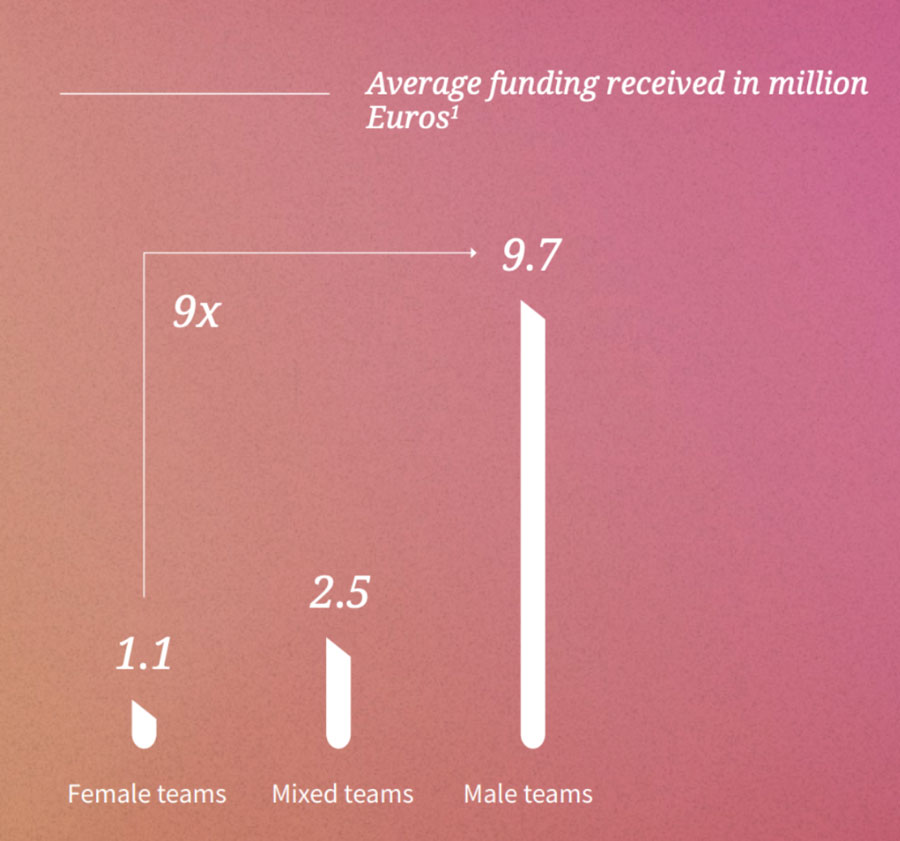
Image Source: 2022 Female Founders Monitor
The absence of women in the tech sector, both in key leadership positions and technical roles, is detrimental not only to the industry but also to the economy’s potential growth. The homogeneity in the tech industry has been shown to be a hindrance to innovation and foster a less inclusive culture. For these reasons, the tech industry must take a proactive approach to promote diversity and inclusivity to build a workforce that reflects society’s rich diversity in the future.
What do experts say?
N. is an American woman, living in Berlin for over 15 years. She studied at a doctoral level in modern Middle East history. After finishing her PhD, she felt familiar with the digitalisation process that was starting in academia and started working for a custom software development company that focused on educational and e-learning products for Industry, as well as for universities.
After diving into a career in tech and moving to Germany, she founded the company she currently runs: a digital platform that connects women across the IT industry and provides initiatives for female founders, mentorships, classes and digital tech information. She is also part of the expanded board of a large startup association, invests in technology startups as an angel investor with Atomico, and has academic connections with various research institutions.
When asked about what motivated her to found her company, she mentioned:
“That started because of the gaps that I saw in the market. And that started because I wasn’t happy with the options that I saw that were available for women to break into the tech industry, specifically women with immigrants. I saw a lot of resistance to any Non-male non-white, non-germans working in the tech sector in technical capacities”
S. is currently an HR consultant for different European firms. She studied global leadership at college and international affairs for her master’s and has travelled the world working on how multinational companies manage diverse workforces.
Her career in the tech industry started as somewhat of an accident. She moved to a small United States town where her husband had been offered an academic
position. In that area, which was very limited in jobs, she started working as a project coordinator and new business development at a small high-efficiency engine manufacturer that provided parts for NASA. In 2017, when her family relocated to Germany, she started working for a serial entrepreneur in the software industry, and the change was big for her:
Soundbite:
F. has earned a Bachelor’s degree in Business Law and a Master’s degree in International Business Law. Following her education, she has held various positions as a legal advisor, including a role as a data protection advisor at a conglomerate. During her work in data protection, she became increasingly interested in the field of new technologies and realised her enjoyment in technical subjects. She recognised the significance of data protection as a foundation for new technologies and the advancement of the interconnected world, which led to her decision to switch careers in the tech industry. She currently works as a data governance consultant in a strategic IT consulting.
She is passionate about her job and how data can transform the industry:
“Buzzwords like AI and machine learning are hyped up. But in my opinion, data is the core of any technological innovation. So it is urgently necessary to know what makes a high-quality data set, for example, one that is used for machine learning? That means that every company should have data quality measurements, a governance framework, and above all a data strategy based on the company’s strategy”.
What makes German’s tech industry different
N. mentions how the startup and tech industry feeds off a culture that is mostly north american and is based on stereotypes and superstition. These social and cultural ideas are holding the industry back by promoting a unique vision of what a tech founder looks like or what a tech company should achieve:
“there is a knee-jerk reaction to the US, the North American, tech founder with a unicorn company that is being replicated with local modifications (…) it’s very much about stereotypes that have gotten us this far and the perception that anything that departs from that stereotype that has been successful and a norm should probably not be changed”.
When N. first moved to Germany, she felt shocked at how exclusive, elitist and male-centric the tech sector was. She was horrified at the comments she heard about women’s capabilities in the software industry and felt surprised to hear such stereotypes overtly, comparing it to her experience in the US, where these stereotypes weren’t as obvious.
She has experienced a massive shift in the last ten years, and the German tech scene doesn’t consider software “the holy grail” anymore. She now can see a strong movement that relies on automation:
“there is such pressure on companies to appear to be cutting edge that there’s a real eagerness to present engineers as capable of doing it all”.
S. also recounts social and cultural changes in the last few years. For her, the biggest change in the German tech scene has to do with social accountability, and no one wants to “move fast and break things anymore”.
Soundbite:
These cultural and social changes in the industry can also be related to a more conservative approach to growth and company building. According to S., funding has transformed over the last few years:
“There had been four or five years where money was really easy. If you had a relatively good idea and a decent enough team and came from a decent enough university and we’re convincing enough, you get like seven million in pre-seed funding now. There’s still funding in the pre-seed area but you have to have a real idea and it’s kind of back to where it was 10 years ago which was if you wanted to get funding. Then you needed to have at least three, or four people who say that they were going to buy your product and then and only then would maybe you get three or four million in precede funding to get your idea off the ground”.
N. agrees with S.’s assessment of how the industry is becoming slower to fund and build and cultivating a conservative mindset regarding funding.
F. also mentions how the tech job market in Germany is currently experiencing high demand for skilled professionals, such as programming languages such as Java and Python, as well as expertise in data analytics, machine learning, and cybersecurity.
“The tech job market in Germany is also characterised by a high level of job-to-job resignation, with many tech professionals moving between companies in search of new opportunities and better compensation”.
Tech needs more diversity
N., with years of experience mentoring female founders and helping women in tech advance their careers. She comments on the superstitions and myths surrounding the industry and how difficult it is for women to break into the industry when many people making hiring decisions have decided that hiring women is a risk. That is especially true, according to N., when we look at data in management positions. Decision-making people tend to “wait for a white man with a PhD”.
N. explains how the tech industry can be perceived as less structured than traditional industries, where everyone is free “playing hacky sack in the office” and, with the right skills, anyone can fit right in. However, N. explains that this outside perception is not true and contributes to an idea that, in reality, prevents people from seeing the lack of diversity and issues inside the sector. That is, according to N., the role of “employee branding specialist”, that works hard to sell a fantasy that is attractive for newcomers because: “they hype up the concept of tech work as a glamorous fun place where everyone is having such a fun time”.
In S.’s opinion, it’s not the industry that can work towards being more inclusive and welcoming to women, but there are also significant social aspects that contribute to women’s roles in the workforce.
“(…) those women drop out of the workforce because of a lot of social pressures to do so here, it’s so uncommon for women to work. They even have this derogatory term for women who work called Rabenmutter, which means like this raven mother who basically abandons their kid and like Flies back to work. So there’s a lot of social things that need to change and ideologies that need to change”
She explains that women who choose to work a full-time job need help from family members or nannies to achieve a successful work-life balance. S. acknowledges that the cultural aspects she describes are improving, and companies can provide help and negotiate with their female workers.
F. agrees with this, adding that:
“(…) the lack of diversity in tech companies, which can create a culture that is not welcoming or inclusive for women. Additionally, societal and cultural biases and stereotypes can discourage women from pursuing careers in tech. Efforts are being made to address the gender gap in tech and increase the representation of women in the industry. However, more work needs to be done to ensure that the tech industry is truly inclusive and representative of the diverse society it serves”.
Trends in the industry
According to S., the German tech industry has shifted towards sustainability.
Soundbite:
In her particular field of expertise, HR, S. thinks the trends are pointing towards retention:
“Internal mobility….I think that will be the big focus of 2023. How do we recognize internal talent and have …grow internal talent, not just to address the shortages experienced in the talent but also to promote internal retention. As everyone loves ….everyone loves a origin story. So you want to find your… your stars internally. You want to spotlight them, you want to make sure that you’re giving them all of the tools to rise within your organization”.
F. can see AI shaping the future of the industry. In her words:
“Artificial intelligence (AI) is expected to play an increasingly important role in the tech industry in the coming years. AI technologies, such as machine learning and natural language processing, are being used to automate tasks and analyze data… But also Internet of Things (…) is expected to continue to expand in the coming years, with an increasing number of devices becoming connected and the development of new applications and services that make use of this connectivity. Last one is Privacy and security. They are likely to continue to be major concerns in the tech industry in the coming years, as the use of personal data becomes increasingly prevalent and the risks of cyber attacks increase. Tech companies are likely to focus on developing new technologies and practices to protect the privacy and security of their users”.
Experience of employees with career changes
The trend referred to as «the great resignation» has been reshaping the job market in many countries in recent years, altering the reasons for and motivations behind people’s career changes or their decision to stay in their current roles.
This trend is intricate and has many factors, and it can be seen as a cultural shift, affecting both workers’ perspectives and the way companies approach hiring. Some of the contributing factors include the emphasis placed on company culture and values, the increase in remote work, the prioritisation of work-life balance, and the availability of attractive job opportunities.
Understanding the reasons behind the mass resignation of people leaving their jobs for new companies or industries is crucial, not only for employers and recruiters facing the challenge of retaining talent but also for comprehending how the market and individuals are changing their outlook and relationship with their careers.
Alhelí moved to Germany over eight years ago from Mexico. She holds two bachelor’s degrees, the first one in French Literature and the second in English philology. When
she was in university, her goal was to work as a translator. Her ideal scenario was working as a book translator, but she discovered the publishing industry was harder than anticipated.
After working for three years in the industry, translating technical texts, she finally admitted to herself that it wasn’t her dream job.
Soundbite:
When she moved to Germany, she was already interested in pursuing a different career path. As she was unsure which direction she wanted to choose, she decided to study a master’s called History, Economics and Philosophy of Science. While studying, she focused on opening as many doors for herself as possible, so she took on marketing jobs and even taught herself graphic design.
“when I was studying, my main focus was innovation management and I actually my master’s thesis was related to creativity within innovation. So I was looking for something where I could apply this knowledge. So I found the opportunity in a small branch of the company where I’m working for”
The company she refers to is a big energy company that, during the Covid-19 pandemic, had to accelerate digitalisation within the company. The branch where Alhelí works is responsible for this internal digitalisation process and also for developing innovative solutions to company challenges. She particularly loves that her job involves constant learning:
Soundbite:
At the beginning of her journey in the company, and due to Covid’s impact, all their job was centred around making teams work in a digital environment. Her team ensured every worker had the right tools and the correct software and managed that transition to remote work smoothly. In that early stage, she claims internet connections were a problem, as many people didn’t have a stable home connection.
The branch’s job also evolved as the covid-19 pandemic and its regulations changed. They now overlook digitalisation and innovation in a broader sense.
Her company encourages workers to learn and practice new skills, which, from her point of view, can foster creativity and innovation. She believes her company is actively trying to make “learning part of the culture”.
She used coding as an example of a skill that she uses for some elements of her job and that motivates her to continue learning:
“So to say so I kind of started learning by doing and now this I don’t I’m not a developer or anything but I use it mostly for when I have to make videos or when I have to edit some websites and so on. So it’s something that I I think I spent most of my time learning”.
For Alhelí, the jump to tech wasn’t a tough transition; she claims that is because of her personal motivation to be a constant learner and how she was able to transform some of her previous job skills into her new industry:
“I mean you can when you talk about tech you always… you never think about human but in the end human beings are behind the whole process and studying (…) Also, when you say Languages is just okay, you learn to speak to write to, I don’t know. And anything else produce something in a language. But actually, you learn a lot about culture and about people and about. Yeah, you get to, I don’t know if I can say that but to analyze people from a deeper perspective”.
In her opinion, paying attention to people and their culture, what they mean to say, or their language helps her be a better team member.
Looking ahead at her future, Alhelí plans to continue developing a career in the tech industry. She feels qualified and prepared to tackle new challenges as the industry changes because she is constantly reskilling herself.
Trends by sectors:
Web development
According to data from Statista, during 2022, the number of internet users in Germany was around 67 million people, which compared to 49 million in 2010 supposed to be a significant development, and this upward trend is expected to grow in the following years. The Internet penetration rate is expected to arrive at 93.08% in 2027, compared to 89.26% of the total population at the start of 2022. The “coronavirus surge” brought a digital boost to the population, making many daily activities shift into digital space. The older demographic has shown a growing openness to the digital world, which has driven the digitalisation process forward.
Germany has the largest software market in Europe, accounting for around a quarter of the European market by value. The country is home to many globally recognised software companies known for their innovative solutions, quality, and strong presence in the international market.
The demand for web developers and software engineers is increasing in this context which focuses continuously on IT and technology advancement. Regarding wages, the average web developer’s salary in Germany is €41.127. Software engineers have higher incomes, with an average wage of €55.800.
The German web development industry constantly evolves, with new trends emerging yearly.
Some of the key trends in German web development include
- Progressive Web Apps (PWAs): Progressive web apps are web applications that look and feel like native mobile apps but can be accessed from a web browser. PWAs have become increasingly popular, as they offer a cost-effective alternative to traditional native apps and are easily accessible from any device. To understand the relevance of PWAs, let’s look at the fact German e-commerce market is the 5th largest market with an annual growth rate (CAGR 2023-2027) of 8.6%. Because of this, it is important for companies to have immersive and usable websites that engage the consumer.
- Artificial Intelligence (AI) and Machine Learning (ML): AI and ML are rapidly gaining traction in the German web development industry, with a growing number of companies incorporating these technologies into their products and services, according to the latest Bitkom study. AI and ML are helping companies to provide more personalised and efficient customer experiences in all areas of people’s lives.
- Internet of Things (IoT). This industry englobes all the home devices, appliances and wearables connected to the Internet. It has become one of Germany’s most powerful web development trends, becoming the world’s third-largest IoT revenue market, just behind the US and China. What’s more, the Internet of Behavior (IoB) is a modern communication ecosystem that allows recollecting of data about people’s behaviour. It’s the logical progression of the IoT and has great healthcare applications.
- Blockchain technology. This advanced database mechanism allows transparent information sharing. Despite a slight slowdown in blockchain venture funding activity, Germany is still in a leading position in Europe’s blockchain scene, being the home to the largest number of blockchain companies across the whole EU. Banking is the sector with the highest adoption of blockchain technology.
Data Analytics
Data analysis has become a key sector in the tech industry due to the continuous rising of data generated by companies.
32% of IT companies operate Data Sharing very efficiently, meaning they can receive and process data from external sources.
Regarding data usage, IT companies primarily give (further) development of products, services and business models, automation and control of processes, and prediction of market and process changes.
The expansion of AI, Deep Learning and IoT has increased the quantity of data, but all this data means nothing if no one analyses it. Here’s where data scientists organise data into usable formats and build prediction systems and machine-learning algorithms. Data analytics is important for companies of all sizes because it has huge benefits such as minimising financial loss, personalising customer experience, enhancing operational efficiency and improving risk management. Data science analyses current and historical data from various sources to describe a context and identify trends and patterns in data.
While data science has yet to impact public administration and governance significantly, it holds tremendous potential for improving how decisions are made and resources are utilised. The German federal government has recognised the value of data and has set a goal to increase its use in decision-making. The government has even allocated funding to establish data labs in various federal ministries. However, implementing data science in the public sector comes with its own set of challenges.
Data scientists in this field have a significant level of responsibility, and their work can have long-lasting impacts on large populations. Additionally, the practical implementation of data units can be complex, as data teams may struggle to find suitable partners within the organisation and rigid administrative processes can be a hindrance. High transparency standards also impose limitations on the use of data science.
Despite the widespread implementation of the European General Data Protection Regulation (GDPR) among companies, it is still far from achieving its goal of uniform data protection rules across Europe. A recent survey by Accenture and Bitkom of 503 companies in Germany found that 67% appreciate the global standards set by the GDPR, and 50% believe it will level the playing field within the EU. However, 70% do not see uniform data protection throughout the EU due to member states’ varying interpretations of the GDPR. Additionally, 40% of companies surveyed do not see any competitive advantage on the international market as a result of the GDPR, and 30% even see it as a disadvantage.
According to Jobs of Tomorrow 2020, a study by the World Economic Forum, Data and AI professional clusters exhibit the highest growth rates. Data scientist positions have slower annual growth rates than other professionals but form the third-largest opportunity among the set of growing professionals.
Based on data provided by Glassdoor, in Germany, the average salary of data scientists is €66,000, whereas senior data scientists can earn up to €86,000, and the lead data scientists can earn over €106,000. This data locates the German data scientists as the best paid in Europe, above the UK and France, with €56,000 and €45,000, respectively.
According to the BARC, it will be another year without hype trends in the data analytics field because companies are getting to the root of their challenges by improving data quality and building a data-driven corporate culture. This cultural data shift signifies that companies are moving towards thinking more critically and being willing to focus on the users. Also, advanced analytics driven by AI and deep learning will allow businesses to discover patterns and connections in data.
UX/UI Design
It’s meaningful to know that, according to Zippia, 88% of users will not return to a site after having a bad experience, and 53% of mobile web visitors will leave a page if it doesn’t load in 3 seconds. Even more, slow-loading websites can cost businesses $6.7 billionannually.
With the continuous expansion of the internet and mobile devices, with 78.02 million internet users in Germany, which supposes 93% of the total population, User Experience (UX) pops up as the process of creating products that are meaningful and coherent to users. This discipline thinks about the product as more than just a product but a cohesive and integrated set of experiences. UX create user-centric products and services, which inevitably lead to higher customer satisfaction, loyalty and engagement.
Let’s look at some statistics about user behaviour. 94% of first impressions are related to design, and it takes about 0.05 seconds for a website visitor to form an opinion about a website. Research by McKinsey shows that design-led companies have higher revenue and better performance overall. What’s more, the data presented by Toptal Design, presents the high return on investment (ROI) of UX/UI design.
This positive trend will continue due to UX’s ability to solve productivity problems and bring better business results.
The outlook for a career in UX is favourable. The demand is steadily increasing, and according to a study by the Niesen Norman Group, by 2050, it’s expected to be 100 million UX professionals worldwide. Due to the democratisation of technology, UX and UI skills are among the top 5 demanded tech skills for 2023 listed by Forbes. Businesses agree that technology needs to be usable for anyone, including those users with scarce digital skills, so the demand for UX designers is in high demand.
Regarding wages, the average salary for a UX designer in Germany is €45.239. Comparing with France, where a UX designer gains €39.400 a year, and the UK, €36.379, the Germans have the highest average salary in Europe.
UX designers probably have the broadest range of skills, including coding, analytics, psychology, qualitative and quantitative research and team building. The interdisciplinary nature of UX/UI has turned into one of the most elected paths for career changers to penetrate the tech workforce.
The future trends to watch in UX/UI are:
- Language assistance. Voice-based interactions have increased as a result of the COVID-19 pandemic. Machine Learning is empowering this field where UX and UI, especially Voice User Interface (VUI), must research how users interact with their devices and support multiple languages for better inclusivity.
- Augmented reality (AR) and Virtual reality (VR). The link between the online and offline world allows brands to experience their products and try out completely new business experiences.
- Emotional design. Design that evokes emotions. By incorporating design elements that create positive associations with the brand and its products, the emotional design aims to engage users on a deeper level. Nostalgic design trends are predicted to be incorporated into websites and apps by designers.
- Eco-design and Web Sustainability. Digital products significantly impact our environment, so with this trend, the idea is to show how the use of the product protects the earth. An example of this is Green Web Hosting, websites that draw electricity from renewable sources.
Cybersecurity
In the current world, the Internet has become an essential part of people’s lives, and it interferes with their daily routine in an intersectional way. The internet and electronic devices affect everything from shopping, entertainment, education, work, transport, banking, healthcare, and even social interactions. Moreover, our data are exposed more than ever to cyberattacks and cyber threats.
With over 70% of German companies being subject to a successful cyberattack within 12 months, it’s no wonder that 40,4% of German internet users aged 16 to 64 are worried about how companies use their data online, highly over the worldwide average of 33,2%.
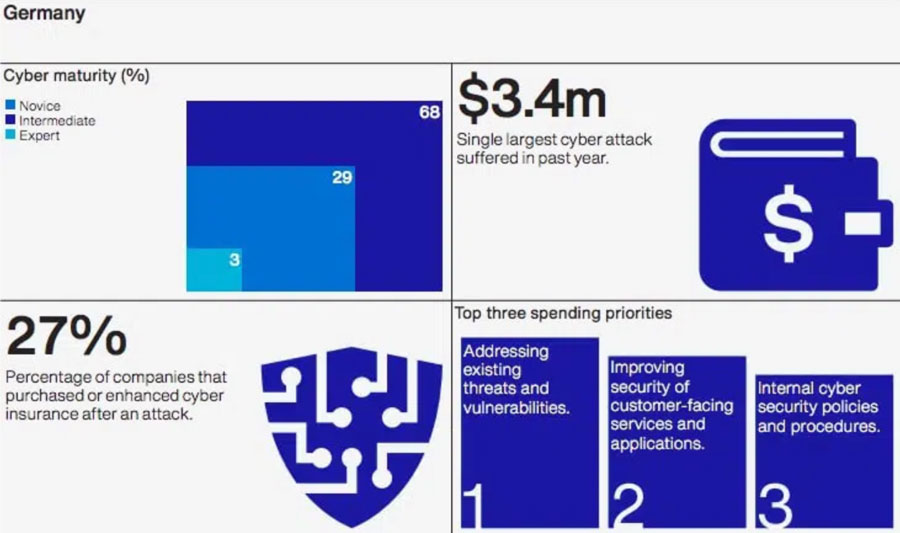
Image Source: Cyber Readiness Report 2022
The cybersecurity market is expected to show an annual growth rate of 7.7% from 2023 to 2027.
Regarding cybersecurity, Germany is pushing itself as a technologically independent country like the US and China. In August 2020, the government announced the launch of a federal agency dedicated to strengthening the country’s digital security against cyberattacks. According to the Cost of Data Breach Report by IBM statistics, Germany was in the top 5 nations with the highest average data breach cost, costing $4.85 million in 2022.
As innovative solutions for implementing the cyber security strategy are needed in all economic and societal sectors, the Federal Government has adopted the 2021 Cyber Security strategy for Germany to improve the overall framework for safeguarding security. This policy provides a roadmap to cyber resilience, defined by Cisco as “the ability to anticipate, withstand, recover from and adapt to adverse conditions, stresses, attacks, or compromises on systems that use or are enabled by cyber resources”.
Also, the IT security “Made in Germany” is an internationally recognised mark of quality and a long-term research funding programme launched by the Bundesministerium für Bildung and Forschung (BMBF, Federal Ministery of Education and Research). It focuses on strengthening the country’s position as an industrial location and protecting the data and privacy of its citizens.
Image Source: GDATA
According to Mordor Intelligence, over the past few years, security systems have focused on making it difficult for attackers to reach critical data, but with the increase of generated data and the quickly changing technologies, the solutions need to be updated constantly to avoid security exposure.
Due to this, many organisations struggle to fill positions on their security teams because of a skill gap, which according to the study by IBM on The Cost of Data Breach, has immediate implications for the cost of a data breach. Training highly skilled workers has become an important aspect of German IT security research sustainability, so the BMBF founded the KASTEL competence centre, an Institute of Information Security and Dependability which certificates specialists in the IT security area.
When it comes to wages, according to Payscale, the average salary for a Cyber Security Analyst is 53.328€. Compared with the UK, where the average wage is 37.000€ and France, 41.311€, German workers are the best paid in Europe.
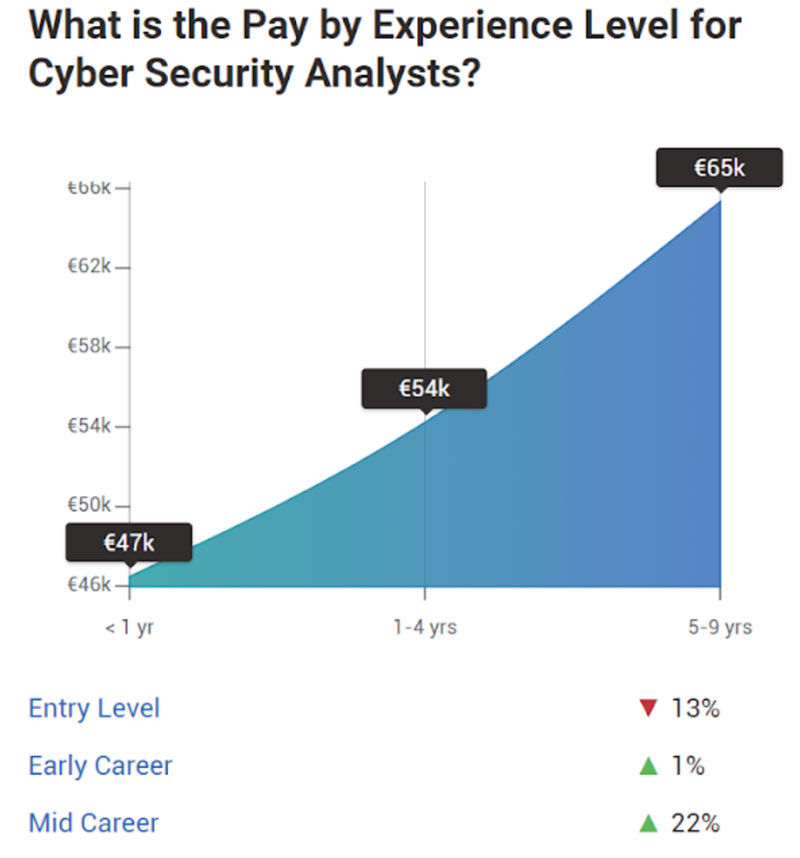
Image Source: PayScale
The general trends for cybersecurity in 2023 will be:
- Adaptation to new legislation. The new edition of the European Union’s next Network and Information Security Directive (NIS2) regulates the security requirements and reporting obligations that companies and state-owned enterprises must fulfil.
- The impact of AI. Following the 2022 tendency, AI will continue to impact the cybersecurity environment significantly, taking on an important role in businesses, creating real-time solutions faster than humans and performing various security-related tasks. Deepfake videos will be among the most worrying AI regarding fake news and cybercrime.
- Security in the Cloud and Zero-Trust architecture development. Virtual Private Networks (VPNs) cannot meet the scalability demands with the rising remote working trends, so the Zero Trust security framework will become the major solution for authentification and validation before receiving access to applications and data in the cloud.

Product Management
Product managers are the professionals responsible for overseeing the entire life cycle of a product or service. Their role as coordinators of the different stages makes them an incredibly strategic function for businesses. Moreover, LinkedIn considers product management the fastest-growing role in the market, although it’s still considered a new discipline. The principal benefits of a product-led business are meeting long-term goals and more market competitiveness. As a result, in 2023, many companies are expected to adopt the product management operating model.
Product Managers come from diverse backgrounds, often with a mix of technical expertise and a strong understanding of business and team management. This diverse skill set enables them to understand user needs better and act as intermediaries between the business, users, and team, balancing the interests of all parties.
Regarding wages, the average salary of a product manager in Germany is €59.849. The profiles of Product Managers are diverse, which means that they are usually people who don’t just have a career in the tech path but have broad knowledge about businesses and team management. This allows a better understanding of the users’ needs and gives product managers intermediary roles between the business interests, the users’ needs and the team’s demands.
In 2023 and beyond, we anticipate the growth of several key trends for product teams:
- Applying machine learning and AI tools to augment the product manager’s decision-making. Based on the IBM Global AI Adoption Index 2022, 21% of product managers use AI, which puts them in the top 10 user groups worldwide. Using the advance of AI as an advantage makes decision-making more efficient.
- A deeper focus on data without losing empathy for users. Striking a balance between quantitative and qualitative approaches will be crucial to ensure that customer needs are not neglected.
- More focus on long-term strategies. A greater emphasis will be placed on long-term strategies as the current economic climate has highlighted the importance of having a clear product vision and investing in comprehensive planning.
Career Development
The digital skill gap will continue to grow in 2023 and beyond due to the demand for digital talent not only in the tech industry and other industries embracing new technology. The accelerated pace of technological advance is a challenge for companies that need to dive into the talent pool to search for highly skilled workers. However, this is also a significant opportunity for people who want to transition into the tech industry.
The continuous specialisation of roles has become a rising trend. Every time there are new job requirements for particular roles. When companies grow, they need more specific workers to cover all the areas with unique productivity.
As the tech industry is a dynamic field, it’s paramount to have an attitude towards continuous learning to keep in touch with the newest trends. Career development trends in today’s job market involve acquiring new skills through online courses and staying up-to-date on the latest trends and developments.
New future trends and paradigm shifts
The German tech industry has a long history of innovation and technological advancement, and the future looks bright for this vital sector of the German economy. In the coming years, several trends and paradigm shifts will be poised to reshape the tech landscape in Germany and beyond.
One of the biggest trends in the German tech industry will be the increasing importance of automation. Artificial Intelligence and machine learning technologies are becoming progressively more sophisticated and are being used to automate a growing range of tasks, from customer service and product development to manufacturing and supply chain management. This increased automation will increase efficiency and cost savings and improve customer experiences.
With a global market size of $119.78 billion in 2022, AI will transform every aspect of our lives. Moreover, according to Research and Markets, the German AI market is estimated to grow at a CAGR of 34.1% during 2019-2025. This growing rate significates that the AI industry will be a huge part of the future German tech field, and companies that are able to harness the power of AI and machine learning will be well-positioned to succeed.
However, great responsibility comes with great power, and numerous ethical implications associated with AI need to be carefully considered and addressed.
One of the primary ethical concerns with AI is the potential for bias in algorithms and decision-making processes. AI systems are only as good as the data they are trained on; if this data is biased, the AI system will also be biased. This can result in unfair and discriminatory outcomes, particularly in sensitive areas such as employment, criminal justice, and health care.
Another ethical issue with AI is the potential for job displacement. As AI systems become more sophisticated, they may be able to automate tasks that were previously performed by humans. Even though automation is already having a significant impact in manufacturing and customer service areas, the debate lays more on how the workforce will adapt to this new situation and take advantage of it.
Finally, there is the issue of accountability and transparency. AI systems can be challenging to understand and explain, and it is often unclear who is responsible when something goes wrong. This lack of transparency and accountability can lead to confusion and mistrust and could prevent the widespread adoption of AI technologies. The Observatory for Artificial Intelligence in Work and Society is a project of the Digital Policy Lab that works on a scientific approach to AI’s role in our daily lives.
The German government is aware of these ethical implications and is taking steps to mitigate them. For example, the Federal Government launched the Artificial Intelligence Strategy in 2018 (updated in 2020), which outlines a responsible AI development and deployment framework. This strategy includes addressing technology transfers and commercialisation issues, social inclusiveness, and sustainability.
The three ministries responsible for the strategy –the Federal Ministry of Labour and Social Affairs, the Federal Ministry of Education and Research and the Federal Ministry of Economic Affairs and Energy – are also taking steps to promote the development of AI technologies aligned with ethical principles.
The German AI Strategy takes a holist approach to pursue the following goals:
- Secure Germany’s future competitiveness while making Germany and Europe the leading locations for the development and applications of AI technologies.
- Ensure that AI use and development are responsible and focused on the common good.
- Embed AI ethically, legally, culturally and institutionally through broad societal dialogue and active political efforts.
Another trend likely to shape the future of the German tech industry is the increasing demand for cloud-based solutions. As more and more companies move their operations to the cloud, humans previously performed, and solutions will continue to grow. This trend will be driven by the many benefits that cloud computing offers, such as increased scalability, lower costs, and improved security.
Companies in the tech industry that can provide innovative and effective cloud-based solutions will be in high demand in the coming years. Moreover, promoting increased use of cloud services and developing a competitive industry for cloud services are key points to achieving Digital Sovereignty, and it’s one of the core areas of action of The new High-Tech Strategy Innovations for Germany. This paper aims to move Germany forward on its way to becoming a worldwide innovation leader. According to the Eurostat report, Germany is one of the fastest-growing countries in the adoption of cloud computing technologies in Europe, rising from 33% of companies using cloud services in 2020 to 42% in 2021.
In addition to these technological trends, there will also be a paradigm shift in how German tech industry companies approach innovation. In the past, companies often focused on developing new technologies and products, but this is switching to an increasing focus on using technology to solve real-world problems and create meaningful impact. This shift will require companies to take a more collaborative and interdisciplinary approach, working with experts from fields such as social sciences, environmental studies, and public policy to develop innovative solutions to complex problems.
In conclusion, the German tech industry is poised for a bright future, with numerous trends and paradigm shifts likely to shape the industry in the coming years. From the increasing importance of AI and machine learning to the growing demand for cloud-based solutions, Germany’s tech industry will continue to innovate and lead the way in the future.
Leading the climate tech industry
There will be a growing focus on sustainability in the German tech industry. As consumers and companies become more conscious of their environmental impact, there will be a growing demand for sustainable technologies and solutions.
In recent years, the German tech industry has placed a strong emphasis on sustainability, recognising that it is essential for the long-term success and growth of the sector. The tech industry has significant potential to contribute to sustainability through its products and services, operations, and supply chain management.
One key area where the German tech industry is focused on sustainability is through the development of sustainable technologies. Germany leads the market of climate tech startups in Europe, with 252 enterprises, also called Green Startups. The German Federal Environmental Foundation (DBU) is Europe’s largest environmental foundation that supports the exchange between science, business, technology, research, communication and the protection of natural and cultural assets. The DBU’s Green Startup Monitor shows that 79% of German startups see their ecological and social impact as important as corporate strategy.
Another area of focus for the German tech industry is the circular economy, where waste is reduced, and resources are conserved through reusing and recycling. German tech companies are adopting circular business models and developing products designed for reuse and recycling. For instance, many electronics manufacturers are designing products with recyclable materials and are developing take-back and recycling programs to encourage consumers to return their products for responsible disposal.
Regarding data centres, the Frankfurt/Rhine-Main area is Europe’s most important data centre location. With a projected average annual growth rate of 15.7%, it is a vital driver of the infrastructure and operating sector. This gives insights into a highly developed market which has led Germany to be considered the data centre of the European Union. The German Data Centre Association is working towards mitigating traditional data centres’ carbon footprint to have a climate-neutral network of data centres by 2030.
Also, German tech companies have spotlighted sustainability in their supply chain management as a field that needs transformation. Sustainable sourcing policies are working with suppliers to reduce waste and emissions. This focus on sustainability in the supply chain helps ensure that the entire industry contributes to a more sustainable future.
In conclusion, the German tech industry is leading in the transition to a more sustainable future. Through investment in sustainable technologies, adoption of circular business models, and focus on sustainability in the supply chain, the industry is demonstrating its commitment to creating a more sustainable future for all. The tech industry has a significant role to play in addressing some of the biggest environmental and social challenges of our time, and the focus on sustainability in Germany provides an encouraging example for other industries to follow.
Student testimonials
An individual’s choice to shift their career direction, enhance their skills or undergo retraining can stem from a variety of motivations, like feeling exhausted in previous roles or seeking improved job prospects with better conditions and flexibility to enhance their overall well-being. Nonetheless, there are certain common threads in their journey, where friends, acquaintances and coaches serve as influential guides and play a crucial role in shaping the path they choose. The process of selecting a new career path, securing a job and altering the direction of their professional life is a deeply personal experience.
Julia has a degree in Fashion Tailoring and studied Fashion Design after school. She remembers choosing what to study as a difficult one, motivated mainly by her creativity and her family’s background in the fashion industry.
In 2017 she got an internship with a well-established fashion house in Berlín, where they offered her a permanent position once her internship finished. Her job entailed coordinating production, being in charge of new internships and making custom dresses for events. In her words:“ that was way too much.”
Apart from a few tasks related to creativity, she didn’t enjoy her job or the fashion industry.
Soundbite:
She describes the fashion industry as highly competitive, where workers are disposable and small brands treat employees badly. She quit her job after a little over a year and got a second job in fashion, which was better, but it helped her decide she needed to move away from the fashion industry.
During the 2020 Covid-19 lockdowns, she had more time to think, and she felt forced to consider her life options and take a step back to care for her mental health:
«That’s also when I met my then partner and he used to work in software as well and he was home office and were spending a lot of time together because I was really not much else to do, right? I saw him in his work environment and like how his colleagues and him and his …Yeah, like a whole workplace communication there and like they treated each other and how he just like closed his laptop at 6pm and then was just done with the day. I was like that is really nice. Like, what exactly is he doing there?».
Her partner’s job inspired her to research and try out some free coding classes online. She felt more attracted to the environment and work style than the actual job. She had never considered a career in tech:
«Because growing up in school, for me, that was never really an option. I don’t know how you experienced that in school…. but like, STEM related fields were never really, for girls, like not really a topic. And I was at a school that was more focusing on like creative, things like music and So, I never really had much contact with coding at all».
Coding was, after all, something completely new for her to discover. The motivation and the inspiration of her first few steps in coding were followed by the realisation that she had many useful skills for the tech industry:
Soundbite:
After a few months of research and free courses, it was time for her to find a more formal education:
Soundbite:
She discovered Ironhack through the app Vinted when they offered scholarships for women who wanted to join the tech industry. Even if Ironhack wasn’t completely focused on women in tech, she felt their Vinted partnership showed they cared about girls in tech. After looking at the courses Ironhack offered, she chose web development, and the experience in the bootcamp was overall positive. At times, the volume of all the new things she had to learn overwhelmed her a bit, but she persisted and was pleasantly surprised by how creative coding could be.
She completed a couple of interviews when she finished the course in November 2021. In total, it took her four weeks to land a job in a small local company. She enjoys the work, the environment and the separation between work and personal life.
Soundbite:
Working for this small company limits her views on the industry as a whole since she works in a small team and can’t compare her current experience to other tech companies.
Conclusions
Germany is a leading player in the digital tech industry, with a strong and highly skilled workforce. However, like many other countries, Germany is facing a number of challenges in the digital tech sector, including a shortage of skilled workers, which is expected to reach seven million by 2035, a rough transition to digitalisation and a large digital divide.
The country has experienced a painful digital awakening as it has struggled to adapt to an increasingly digital world, accelerated by the Covid-19 pandemic. The public sector and the workforce are experiencing a fast digitalisation process, which is absolutely necessary for the country to maintain its economic leadership position in Europe.
Despite these challenges, the tech sector is booming: it employs over 1 million workers and generates over 100 billion euros in revenue. German’s startup scene is also growing, and it’s amongst the healthiest in Europe. The startup ecosystem is internationally recognised as one of the best, attracting investment and talent worldwide.
There is a marked imbalance in terms of gender representation in Germany’s technology sector, where women only occupy a minority of positions across all levels, including management roles. This disparity represents a pressing challenge for the industry, and although efforts have been made to address it through various initiatives and programs, much work remains to be done in order to reach gender equality.
The tech industry is known for its fast-paced growth and innovative investments, but in recent times, there has been a shift towards a more conservative approach. Companies are becoming increasingly cautious in terms of where and how they invest their resources as the industry experiences a slowdown in growth. The focus has shifted from rapid expansion to sustainable and profitable growth as companies seek to protect their bottom line and navigate the uncertain economic landscape. This shift towards conservatism is leading to a more measured approach to investment and a greater emphasis on long-term planning as the tech industry seeks to maintain its position as a leader in innovation and growth.